
Contents
Show
1
How to Select Industrial Compressor for Polysilicon Process Gas?
How to Select Industrial Compressor for Polysilicon Process Gas?
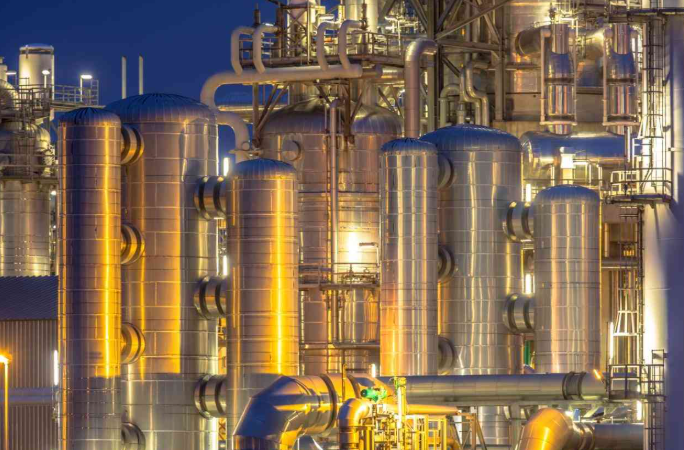
The modified Siemens method for high-purity polysilicon production relies on centrifugal compressors systems for process gas transportation and pressurization. Polysilicon process gas contains hydrogen, chlorosilane and suspended silicon powder, presenting rigorous risks including corrosion, particle erosion, flammability and toxicity.
These harsh conditions easily cause component wear, seal failure and unplanned downtime. This article introduces the working mechanism, professional anti-corrosion measures and zero-leakage sealing & maintenance strategies of Oil-Free Centrifugal Compressors, guiding stable and safe long-term operation of polysilicon production equipment.
1. Working Characteristics and Failure Hazards of Polysilicon Centrifugal Compressors
Polysilicon production involves extremely harsh operating conditions. Though dry chlorosilane is weakly corrosive, even tiny moisture causes hydrolysis and produces corrosive HCl, forming a strong acidic environment. Meanwhile, high-speed micron silicon powder continuously erodes industrial compressor internal components.
Industry data indicates more than 70% of polysilicon compressor failures are caused by corrosion, particle erosion and seal leakage. Seal faults may lead to toxic gas leakage and explosion risks, while component damage lowers efficiency and raises operational costs. Therefore, targeted anti-corrosion and sealing solutions are essential for reliable long-term operation.
1.1 Electrochemical Acid Corrosion (Primary Corrosion Type)
Polysilicon production systems require extremely low water content. However, trace moisture inevitably enters the system through raw materials, pipeline gaps or air infiltration during shutdown. Chlorosilane hydrolyzes to form dilute hydrochloric acid, causing severe pitting corrosion, intergranular corrosion and crevice corrosion on industrial compressor impellers, casings and bearing components. Carbon steel and low-alloy steel are completely unsuitable for such working conditions, which will suffer rusting, perforation and wall thinning in a short service cycle.

1.2 High-speed Erosion Wear Caused by Silicon Powder
Micron-sized silicon powder particles flow through compressor passages at a high speed of tens of meters per second. Long-term scouring leads to blade wear, passage scratching and seal surface abrasion, resulting in increased internal clearance, reduced pressure efficiency and insufficient exhaust volume, and greatly increases the risk of seal failure.
1.3 Medium Permeation Corrosion and Static Corrosion
During equipment shutdown and standby periods, residual chlorosilane and hydrogen chloride absorb ambient moisture and form acidic liquid films on metal surfaces, resulting in static corrosion. Such hidden corrosion causes implicit component damage and easily triggers sudden faults after restarting. In addition, corrosive media will penetrate ordinary sealing materials and cause aging, hardening and failure of seals.
2. Complete Anti-Corrosion Solutions for Polysilicon Centrifugal Compressors
Aiming at the special working conditions of polysilicon industrial compressor equipment, this chapter builds a systematic anti-corrosion system from material selection, surface coating, process pre-treatment and operation maintenance to eliminate corrosion and wear risks fundamentally.
2.1 Graded Corrosion-Resistant Material Selection for Core Components
Material upgrading is the foundation of anti-corrosion design, and carbon steel is prohibited for all flow-through components.
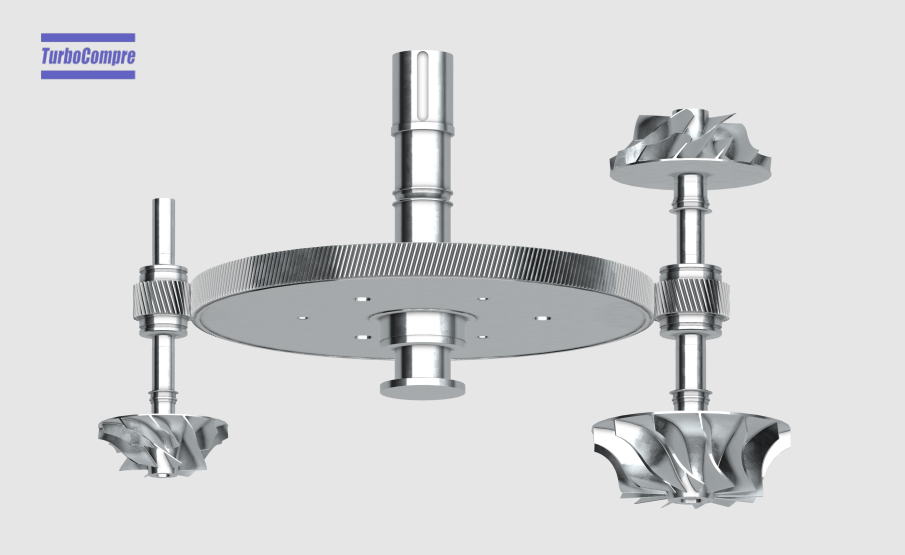
1. Core rotating parts (impeller, main shaft, disk): For medium corrosion working conditions, duplex stainless steel (2205/2507) is preferred for excellent pitting and intergranular corrosion resistance. For high-corrosion and high-purity production scenarios,Hastelloy and Monel alloy are adopted to completely resist hydrochloric acid corrosion and medium oxidation damage.
2. Industrial compressor casing and flow passage: Adopt corrosion-resistant cast steel instead of ordinary cast iron to avoid casing cracking and medium leakage.
3. Fasteners and pipe connectors: All adopt stainless steel to prevent fracture and loosening caused by corrosion.
2.2 Wear-Resistant and Anti-Corrosion Coating Treatment for Flow Components
Single substrate materials cannot completely solve silicon powder erosion problems. The supersonic flame spraying tungsten carbide coating is applied on inner flow passages, non-working impeller surfaces and casing flow areas. The coating features high hardness and strong adhesion, which can significantly improve erosion resistance and isolate acidic media from metal substrates. This dual-protection scheme extends equipment service life by 2–3 times.
2.3 Front-End Process Pre-Treatment Corrosion Prevention (Source Control)
Controlling harmful media from the source is the most effective anti-corrosion measure.
1. High-precision dust filtration: Install multi-stage precision filters at the industrial compressor inlet to intercept silicon powder and impurities, reduce scouring intensity and protect impellers and seal end faces.
2. Deep dehydration and drying: Equip molecular sieve drying and condensation dehydration devices to strictly control process gas moisture, fundamentally prevent chlorosilane hydrolysis and eliminate acidic corrosion. The system maintains slight positive pressure all the time to avoid external air and moisture infiltration.

2.4 Anti-Corrosion Management During Startup, Shutdown and Daily Operation
1. Shutdown protection: Inject high-purity dry nitrogen for replacement and pressure holding after shutdown to discharge residual corrosive media and moisture, forming a nitrogen protection layer to avoid static corrosion.
2. Regular inspection: Use endoscopes to detect impeller and passage corrosion and wear quarterly; test component wall thickness and coating integrity during annual overhaul, and repair or replace damaged parts timely.
3. Working condition monitoring: Real-time monitor process gas moisture and impurity content to avoid long-term operation under harsh working conditions.
3. Special Sealing System Solution for Polysilicon Centrifugal Compressors
Polysilicon process media are flammable, explosive and toxic, and require ultra-high product purity. Oil contamination of process media is strictly prohibited. Traditional mechanical seals and oil film seals are not applicable, because lubricating oil leakage will cause polysilicon product scrapping and serious safety accidents. The series dry gas seal system is the only standard configuration for polysilicon industrial compressor. The fully oil-free design of compressors independently developed by turbo compre perfectly matches the high-purity production requirements, solving the oil pollution defect of traditional centrifugal air compressor and optimizing the safety performance of compressors in corrosive working conditions.
3.1 Structure and Working Principle of Series Dry Gas Seal
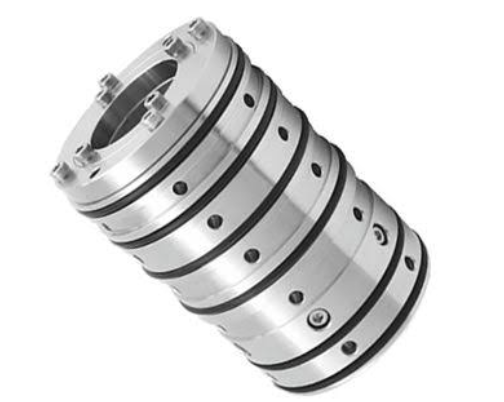
Dry gas seal is a non-contact seal with no friction wear, long service life and zero oil pollution, which fully adapts to high-purity and high-risk polysilicon working conditions. The two-stage series structure provides dual safety protection:
1. Primary main seal: Isolates internal process gas, forms a stable gas film through sealing gas, and prevents outward leakage of corrosive and flammable media.
2. Secondary backup seal: Serves as a safety redundancy barrier. It intervenes immediately if the primary seal fails to completely block medium leakage and avoid safety accidents.
3. Front labyrinth auxiliary seal: Intercepts silicon powder impurities in process gas, reduces particle entry into the seal end face, stabilizes the gas film and prolongs seal service life.
3.2 Core Requirements for Sealing Gas Quality
Dry gas seal stability depends entirely on sealing gas quality. The sealing gas for polysilicon working conditions must be high-purity nitrogen or clean hydrogen, completely dry, dust-free and oil-free. Moisture will cause seal end face corrosion and gas film failure; particles will scratch the seal surface and lead to seal invalidation. Enterprises must equip independent sealing gas purification, drying and pressure stabilizing systems to monitor gas pressure, purity and humidity in real time.
3.3 Seal Monitoring and Safety Protection System
Supporting complete monitoring system to track primary and secondary seal leakage, sealing gas pressure and temperature difference in real time. Equipped with high/low pressure alarm and leakage over-standard interlock shutdown function. The system will automatically alarm and stop the machine abnormally to prevent leakage of hydrogen, hydrogen chloride and toxic media, ensuring workshop production safety.

4. Long-Term Operation and Maintenance Management System
Professional design must be matched with standardized operation and maintenance to realize long-cycle stable operation of industrial compressor equipment. Scientific maintenance management is crucial to extend the service life of centrifugal compressors.
1. Daily inspection: Monitorunit pressure, temperature, vibration, seal leakage and sealing gas parameters every day, record operation data and discover potential faults in advance.
2. Regular maintenance: Check filter pressure difference and purification equipment operation status monthly; conduct internal non-destructive testing quarterly; complete coating inspection, seal replacement and rotor correction during annual overhaul.
3. Working condition management: Strictly control process gas moisture and impurity content to avoid overload operation under harsh conditions.
4. Spare parts reserve: Stock up dry gas seal components, filter elements and sealing gas accessories to shorten shutdown time and ensure continuous production.
Anti-corrosion and sealing design of polysilicon process gas compressor are key projects balancing production efficiency, product purity, safety and cost reduction. As the mainstream equipment for large-scale polysilicon hydrogen circulation and tail gas recovery sections, centrifugal compressors rely on systematic anti-corrosion systems and professional sealing schemes to achieve stable operation.

Turbo compre focuses on R&D, manufacturing and working condition adaptation of centrifugal compressors for harsh chemical and photovoltaic scenarios. We provide customized one-stop industrial compressor solutions including equipment design, material selection, anti-corrosion coating, sealing system matching and full-cycle O&M services. With rich practical experience in polysilicon projects, we target core industry pain points such as chlorosilane corrosion, silicon powder erosion, high-purity oil-free requirements and zero-leakage safety, and provides customized Oil-Free Centrifugal Compressors.