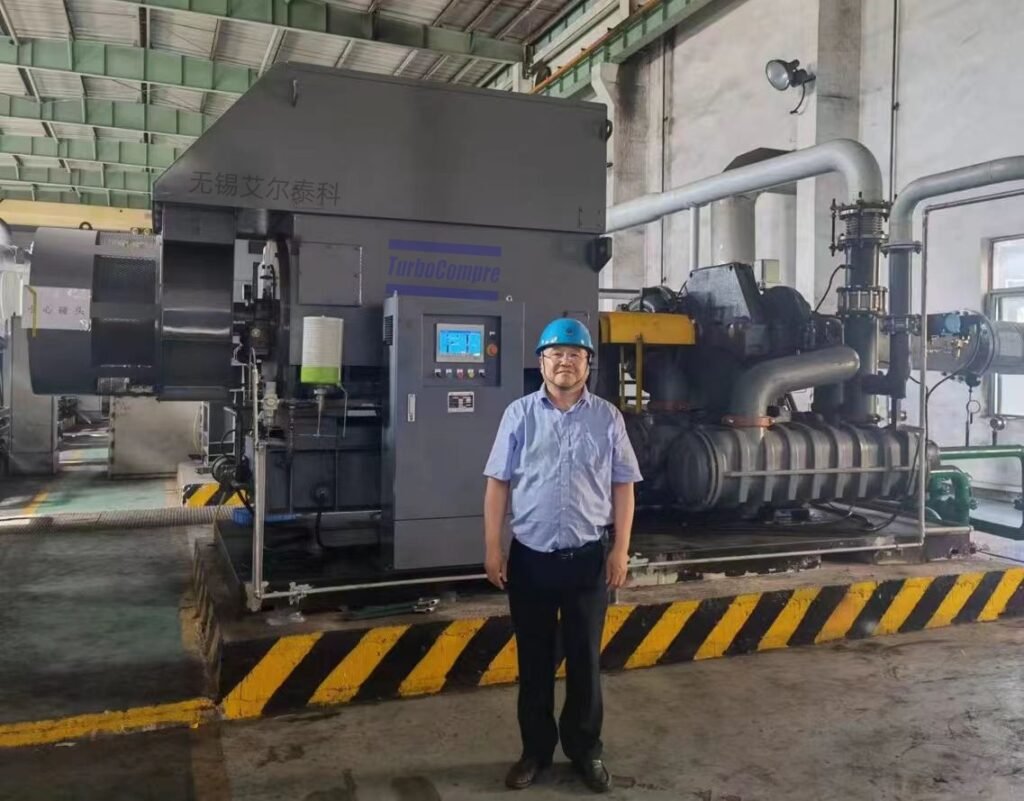
A replacement centrifugal compressor impeller is a critical component used to restore aerodynamic performance, mechanical stability, and operational safety in centrifugal gas compression systems. In oil & gas, LNG, petrochemical, and air separation industries, centrifugal compressors operate under high rotational speeds, high pressure, and continuous thermal stress.
It is one of the most failure-sensitive rotating elements in the compressor train. Long-term exposure to erosion, fatigue loading, surge conditions, and corrosive gas environments leads to performance degradation and structural risk. When operating conditions exceed allowable limits defined in API 617 standards¹, replacement becomes mandatory to ensure system reliability and safety.
What Is a Centrifugal Compressor Impeller?
A centrifugal compressor impeller is a high-speed rotating wheel mounted on the compressor shaft. It is responsible for converting mechanical energy into gas kinetic energy and pressure rise through aerodynamic action.
The working process includes:
- Accelerating gas using centrifugal force
- Converting mechanical energy into velocity energy
- Transforming velocity into pressure via diffuser stages
According to API 617¹, impellers operate under extreme conditions including high rotational speed, high-pressure gas flow, and continuous thermal cycling. Because of this, they are classified as critical lifecycle components requiring periodic inspection and eventual replacement.
When Do You Need a Replacement Centrifugal Compressor Impeller?
Excessive Vibration
Abnormal vibration is often the earliest indicator of impeller degradation.
Common causes include:
- Rotor imbalance due to erosion or material loss
- Blade deformation
- Surface fouling or deposits
If vibration exceeds ISO 10816-3 limits, continued operation may lead to bearing damage, shaft failure, or compressor trip².
Aerodynamic Efficiency Loss
A damaged impeller reduces compression efficiency and gas handling capability.
Symptoms include:
- Lower discharge pressure at constant speed
- Increased power consumption
- Reduced flow stability
When efficiency drops significantly, repair cannot restore the original aerodynamic profile, making replacement necessary.
Erosion and Corrosion Damage
In industrial gas applications, process gases often contain CO₂, H₂S, moisture, and particulates.
These conditions cause:
- Leading-edge erosion
- Surface pitting
- Material thinning
Once material loss exceeds design tolerance defined in API 617, structural integrity cannot be guaranteed¹.
Fatigue Cracking and Structural Failure
High-cycle fatigue leads to micro-cracks at blade roots and stress concentration zones.
Risks include:
- Crack propagation
- Blade fracture
- Complete impeller rupture
This is a critical failure mode that requires immediate replacement due to safety risk.
Surge and Off-Design Operation Damage
Compressor surge conditions generate reverse flow and unstable aerodynamic loading.
Repeated surge events cause:
- Mechanical fatigue accumulation
- Blade instability
- Reduced service life
Cost Analysis: When Replacement Is More Economical Than Repair
Replacement is typically selected when:
- Repair cost approaches replacement cost
- OEM lead time is too long
- Downtime cost exceeds component cost
Repair vs Replacement Decision Criteria
Structural Integrity
Dimensional Tolerance
Performance Recovery
Industries Using Replacement Centrifugal Compressor Impellers
Oil & Gas Industry
- gas gathering systems
- Refinery compressors
- Fuel gas boosting systems
LNG Industry
- Natural gas liquefaction compressors
- Refrigeration cycle systems
Air Separation Units (ASU)
- Oxygen and nitrogen production systems
Petrochemical Industry
- Syngas compression
- Hydrogen compression systems
Manufacturing Requirements for Replacement Impellers
Material Selection
- Alloy steel
- Stainless steel
- Corrosion-resistant special alloys
Precision CNC Machining
- Accurate aerodynamic profile
- Tight dimensional tolerance
- Stable performance reproduction
Dynamic Balancing and Overspeed Testing
- High-speed rotor balancing
- Overspeed testing at 115% MCOS³
Industry Standards Compliance
- API 617 centrifugal compressor standard¹
- ISO rotor balancing standards⁴
Professional Rotor System Engineering Standards
Frequently Asked Questions (FAQ)
Conclusion