Compressor Air Filter Replacement: When and How to Replace Your Air Filter
The air filter is one of the most important components in an industrial compressor system. It protects the compressor from dust, particles, and contaminants while ensuring stable airflow and efficient operation.
However, many compressor users overlook the importance of timely air filter replacement. A clogged or damaged filter can reduce compressor performance, increase energy consumption, and even shorten equipment service life.
This guide explains when and how to replace your compressor air filter and how choosing the right replacement filter can improve compressor reliability.
Why Is Compressor Air Filter Replacement Important?
Industrial compressors require a continuous supply of clean air. The air filter removes contaminants before they enter the compression system.
A dirty air filter can cause:
Increased inlet pressure loss
Reduced airflow capacity
Higher energy consumption
Lower compressor efficiency
Increased wear on internal components
For centrifugal compressors, clean inlet air is especially important because contaminants can affect high-speed rotating components such as impellers, bearings, and seals.
According to Compressed Air Challenge, proper maintenance and system optimization are essential for improving compressed air efficiency and reducing operating costs.
When Should You Replace a Compressor Air Filter?
There is no single replacement interval for every compressor. The correct replacement time depends on operating conditions, environment, and filter quality.
1. Follow the Manufacturer’s Maintenance Schedule
Most compressor manufacturers provide recommended inspection and replacement intervals.
However, actual operating conditions should always be considered. A compressor working in a clean factory environment may require less frequent replacement than one operating in a dusty industrial environment.
2. When Pressure Drop Increases
A common indication of a blocked air filter is increased differential pressure.
As dust accumulates, airflow resistance increases. The compressor must work harder to maintain the required capacity.
Monitoring pressure drop helps operators determine the optimal replacement timing.
3. When Compressor Performance Decreases
A restricted air filter may cause:
Lower air capacity
Unstable operation
Increased power consumption
Higher discharge temperature
If these problems occur, checking the inlet air filter should be one of the first maintenance steps.
4. When the Filter Element Is Visibly Damaged
The air filter should be replaced immediately if there are:
Cracks
Deformation
Damaged sealing areas
Excessive contamination
A damaged filter cannot effectively protect compressor components.
How to Replace a Compressor Air Filter
Replacing a compressor air filter is a simple maintenance task, but correct procedures are important.
Step 1: Shut Down the Compressor
Before replacement:
Stop compressor operation
Disconnect power if required
Follow safety procedures
Safety should always come first during maintenance work.
Step 2: Remove the Old Filter Element
Open the filter housing carefully and remove the used filter element.
Check the condition of the old filter to identify:
Dust accumulation
Oil contamination
Abnormal particles
This information can help evaluate operating conditions.
Step 3: Clean the Filter Housing
Before installing the new filter:
Remove dust inside the housing
Check sealing surfaces
Ensure no foreign materials remain
A clean housing improves sealing performance.
Step 4: Install the New Air Filter
Make sure the replacement filter:
Matches the compressor model
Has the correct dimensions
Provides proper filtration efficiency
Incorrect filter installation may cause air leakage or reduced performance.
Step 5: Check Compressor Operation
After replacement, monitor:
Airflow
Pressure
Temperature
Noise and vibration
Energy consumption
A properly maintained compressor should operate smoothly with stable performance.
How to Choose the Right Compressor Air Filter
Choosing the correct replacement filter is essential for compressor reliability.
Important factors include:
Filtration Efficiency
A good filter should effectively remove contaminants while maintaining low airflow resistance.
Material Quality
High-quality filter materials provide:
Longer service life
Better dust holding capacity
Stable performance
Compatibility
The replacement filter must match:
Compressor brand
Compressor model
Operating conditions
Airflow requirements
Using an unsuitable filter may reduce compressor efficiency or damage equipment.
TurboCompre Compressor Air Filter Replacement Solutions
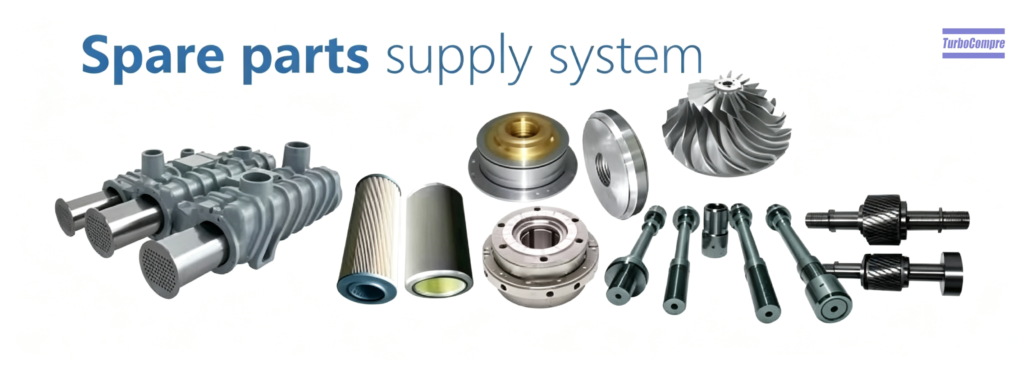
TurboCompre specializes in industrial compressor solutions, including centrifugal compressors, compressor spare parts, and maintenance services.
We provide reliable replacement components including:
Compressor air filter elements
Oil filters
Coolers
Bearings
Seals
Impellers
Gear components
With professional engineering experience and manufacturing capability, TurboCompre helps customers maintain compressor performance while reducing maintenance costs.
Conclusion
Regular compressor air filter replacement is one of the easiest ways to maintain compressor efficiency and reliability.
Replacing the air filter at the right time helps:
✔ Maintain stable airflow ✔ Reduce energy consumption ✔ Protect compressor components ✔ Prevent unexpected downtime ✔ Extend equipment service life
Understanding when and how to replace your compressor air filter allows operators to improve system performance and reduce long-term operating costs.