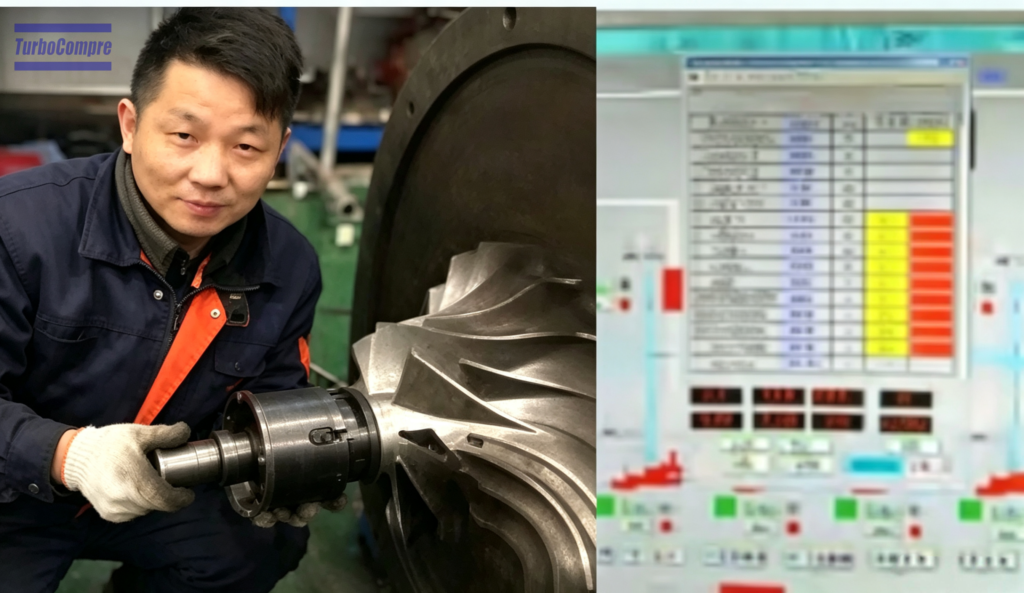
Why Impeller Material Directly Determines the Overall Service Life and Operation Safety of Centrifugal Compressors

impeller material
In core industrial fields such as petrochemicals, natural gas transportation, coal chemical industry, electric power, and metallurgy, centrifugal compressors are known as the “heart equipment” of modern industrial production. Their long-term stable, safe, and efficient operation is the core guarantee for continuous production, cost control, and safety risk prevention. Among hundreds of compressor components, the impeller is the only high-speed rotating part that directly contacts process media and bears composite dynamic loads, serving as the core component that dominates the overall performance of the compressor.
A large number of industrial operation data and equipment failure cases prove that impeller material directly determines the overall service life and operation safety of centrifugal compressors. Auxiliary components such as bearings, seals, and casings can be repaired or replaced regularly to extend equipment operation cycles. However, the inherent material properties of the impeller fundamentally determine the ultimate service life, anti-failure capability, and safety threshold of the entire unit. Most unexpected shutdowns, performance degradation, efficiency attenuation, and even catastrophic rupture accidents of centrifugal compressors are caused by impeller material defects, improper material selection, or material performance attenuation rather than human operation errors.
This article systematically analyzes the internal logic between impeller materials and compressor service life and operational safety, elaborates on the performance requirements of impeller materials under extreme working conditions, compares the advantages, disadvantages, and applicable scenarios of mainstream impeller materials, summarizes common material selection mistakes, and provides scientific operation and maintenance optimization strategies. Supported by authoritative experimental data and academic research, this study provides professional guidance for industrial enterprises to achieve long-cycle, safe, and low-cost operation of centrifugal compressors.

What is an Impeller

A centrifugal compressor impeller, also referred to as a working wheel, is the core rotating component that realizes gas pressurization and energy conversion inside centrifugal compressors. It generally consists of three key parts: a hub disc, aerodynamic blades, and a cover band, driven by the main shaft to rotate at ultra-high speed. During unit operation, the blades drive the process gas to generate centrifugal motion, converting mechanical energy into gas pressure energy and kinetic energy; together with diffusers, the impeller completes gas compression and delivery, acting as the sole energy conversion medium of the whole compressor.
Structurally, impellers fall into three categories: closed impellers, semi-open impellers and open impellers. Closed impellers are equipped with complete cover bands, featuring high structural strength and excellent aerodynamic efficiency, widely adopted for medium and high-pressure clean gas working conditions. Semi-open impellers have no cover band, with outstanding resistance to particle erosion, suitable for process media mixed with dust and solid impurities. Open impellers only consist of independent blades with low structural strength, limited to small low-pressure compression equipment.
Different from static or low-speed accessories including casings and bearings, compressor impellers run continuously at high rotating speeds, directly contacting corrosive media and solid particles, while enduring combined loads of centrifugal tension, alternating impact, high temperature and high pressure. It bears the maximum mechanical loss and chemical erosion in the whole unit. The dimensional accuracy, mechanical strength and corrosion resistance of impellers are completely governed by manufacturing materials, which lays the fundamental basis for material to dominate unit service life and operational safety.
Impeller
1
Impeller

Extreme Operating Conditions of Compressor Impellers: Why Material Is the Decisive Factor

To clarify the core value of impeller materials, it is essential to understand the extreme service environment of centrifugal compressor impellers. During full-load operation, the impeller is always subjected to a combination of high-speed rotation, alternating dynamic loads, medium corrosion, particle erosion, high temperature, and high pressure. It bears far more complex and severe loads than any other static or low-speed components, putting forward extremely strict requirements for material comprehensive performance.
 
In terms of operating principles, centrifugal compressors rely on high-speed impeller rotation to pressurize gas. The rotating speed of conventional industrial compressors ranges from 8,000 rpm to 15,000 rpm, while high-precision high-pressure units can exceed 20,000 rpm. Under high-speed operating conditions, the impeller blades and discs bear huge centrifugal tensile stress. Frequent unit start-stop and load fluctuation further generate periodic alternating loads, causing long-term fatigue stress on the impeller structure. Relevant fatigue characteristic tests show that impellers need to withstand cyclic stress of hundreds of megapascals under continuous operation at 15,000 rpm, requiring excellent fatigue strength, toughness, and structural stability .
 
Meanwhile, the impeller is in direct contact with process gas media throughout the operation. Impurities such as solid particles, water vapor, sulfide, and chloride ions contained in natural gas, chemical tail gas, and flue gas will cause continuous erosion wear and chemical corrosion on the impeller surface. The temperature rise effect under high-pressure working conditions further accelerates the attenuation of material mechanical properties, forming a coupled failure mechanism of mechanics and chemistry.
 
Different from casings and couplings with redundant protection structures, impellers have no buffer space or safety margin. The material’s fatigue resistance, wear resistance, corrosion resistance, and high-temperature stability define the ultimate service capacity of the impeller. Tiny material defects and performance shortcomings will be continuously amplified under long-term high-speed operation, eventually leading to impeller failure, unit shutdown, and even major safety accidents. This is the fundamental reason why impeller materials dominate the overall life and operational safety of centrifugal compressors.

How Impeller Materials Determine the Overall Service Life of Centrifugal Compressors

Fatigue Resistance: Prevent Progressive Failure Caused by Alternating Loads

Fatigue failure is the most common failure form of centrifugal compressor impellers and the primary cause of shortened equipment service life. During long-term operation, gas pulsation, load adjustment, and frequent start-stop generate hundreds of millions of alternating stress cycles on the impeller. Microcracks form inside the material under cyclic loading, and crack expansion will eventually lead to blade cracking and impeller structural damage.
 
Different materials show huge differences in fatigue limits, directly resulting in distinct impeller service life. Ordinary carbon steel has a low fatigue limit and is prone to fatigue cracks, with a design life of only about 30,000 operating hours. As the most widely used compressor-specific material, FV520B martensitic stainless steel has a high-cycle fatigue limit of 320 MPa under 10⁷ cyclic loads. Ultra-high cycle fatigue tests have verified its stable crack expansion resistance, making it suitable for long-term continuous industrial operation . Inconel 718 nickel-based alloy has a fatigue limit of 480 MPa, providing superior anti-fatigue performance for extreme working conditions. TA15 titanium alloy impellers optimized by isothermal forging show no crack growth after 1,500 hours of full-load operation, with a service life of more than 100,000 hours, three times that of carbon steel impellers .
 
If the impeller material has insufficient fatigue resistance, micro fatigue cracks will cause dynamic balance failure, resulting in excessive unit vibration, increased energy consumption, and reduced operating efficiency. The equipment will enter aging and failure states in advance, greatly shortening the overall service life of the compressor.
impeller

Wear and Corrosion Resistance: Resist Medium Loss and Delay Equipment Aging

Industrial process gas is never pure. Solid dust, water vapor, sulfide, and acidic and alkaline impurities will cause continuous scouring wear and electrochemical corrosion on the impeller surface. Wear will reduce blade thickness and destroy aerodynamic profiles, while corrosion will cause pitting corrosion and intergranular corrosion. The dual damage of wear and corrosion continuously destroys the structural integrity of the impeller.
 
The wear and corrosion resistance of materials directly determines the aging rate of impellers and compressors. Ordinary carbon steel has poor corrosion resistance and is prone to rusting and peeling in humid and sulfur-containing media, resulting in rapid impeller loss. 304 and 316L stainless steel have basic corrosion resistance and are suitable for clean air and pure gas working conditions. Precipitation-hardened stainless steel such as FV520B and 17-4PH balances high strength and medium corrosion resistance, covering most conventional chemical and gas transmission working conditions. Duplex stainless steel and nickel-based alloys can resist strong corrosion of acid, alkali, and hydrogen sulfide media, fundamentally reducing impeller loss.
 
A large number of equipment operation cases show that impellers with materials matching working conditions can operate stably for 8 to 10 years without major overhaul. In contrast, impellers with insufficient wear and corrosion resistance will suffer severe damage within 1 to 3 years, leading to premature scrapping of the whole machine .

Structural Stability: Ensure Long-term Dimensional Accuracy and Structural Strength

During long-term continuous operation, the impeller is always in a high-temperature, high-pressure, and high-stress environment. Low-grade materials will undergo metallographic structure transformation, stress relaxation, and micro deformation under long-term loads, resulting in reduced dimensional accuracy and structural strength attenuation.
 
The impeller is a high-precision aerodynamic component. Slight deformation of blade profiles and coaxiality deviation will damage the aerodynamic performance of the compressor, leading to insufficient exhaust pressure, flow attenuation, and soaring energy consumption. High-quality alloy materials undergo strict forging and heat treatment processes, with uniform and stable metallographic structures. No obvious deformation or strength attenuation occurs under long-term extreme working conditions, maintaining the equipment’s original design performance. Inferior materials with poor structural stability suffer continuous performance degradation, leading to premature aging and failure of the compressor unit.

Comparison and Working Condition Adaptation of Mainstream Compressor Impeller Materials

Different impeller materials have huge differences in mechanical properties, corrosion resistance, high-temperature resistance, and service life, with distinct applicable working conditions. Scientific matching of materials and working conditions is the core means to ensure long-life and safe operation of compressors. The performance comparison and selection guidelines of mainstream industrial impeller materials are as follows:
叶轮 1 2

Ordinary Carbon Steel

Carbon steel is a traditional low-cost material for early low-pressure and low-speed compressors, with simple processing technology. However, it has obvious performance shortcomings, including low fatigue strength, poor wear and corrosion resistance, and weak high-temperature resistance. It is only suitable for low-pressure, low-speed, clean air, and intermittent working conditions.
 
The design life of carbon steel impellers is only 20,000 to 30,000 hours, with frequent corrosion and fatigue cracking failures. At present, it has been basically phased out in core continuous production units and only applied to small auxiliary compression equipment.

304/316L Austenitic Stainless Steel

304 and 316L stainless steel have good atmospheric corrosion resistance and weak acid corrosion resistance, with excellent welding performance and moderate cost, suitable for conventional air compression and clean process gas compression working conditions.
 
However, their strength and fatigue resistance are average, making them prone to fatigue failure under high pressure, high speed, and frequent load fluctuation. They are not applicable for working conditions containing chloride ions and sulfide corrosion, and are mostly used for medium and low-pressure, normal-temperature, and stable-operation general centrifugal compressors.

FV520B / 17-4PH Precipitation Hardening Stainless Steel

FV520B and 17-4PH are the most widely used special impeller materials for industrial centrifugal compressors. After professional heat treatment, they integrate high strength, high toughness, excellent fatigue resistance, and moderate corrosion resistance, with extremely high comprehensive cost performance.
 
FV520B has a fatigue limit of 320 MPa, adapting to medium and high-pressure, high-speed, and continuous operation industrial working conditions, and can resist slight medium corrosion. It is widely used in petrochemical, electric power, and general industrial compressors, with a stable service life of 6 to 8 years under standardized operation and maintenance. 17-4PH has excellent hydrogen embrittlement resistance and is more suitable for hydrogen medium compression working conditions.

Duplex Stainless Steel

Duplex stainless steel integrates the advantages of austenitic and ferritic stainless steel, with excellent resistance to pitting corrosion, intergranular corrosion, and stress corrosion. Its structural strength is twice that of ordinary stainless steel, with outstanding fatigue resistance and scouring resistance.
 
It is mainly applicable to complex corrosive working conditions containing chloride ions, weak acid and alkali, and humid media, such as seawater cooling, corrosive chemical gas compression, and sewage treatment tail gas compression. It effectively avoids impeller failure caused by corrosion and greatly extends equipment service life.

Nickel-based Alloys (Inconel 718)

Nickel-based alloys are high-end special impeller materials, with extreme high-temperature resistance, corrosion resistance, fatigue resistance, and creep resistance. Their mechanical properties do not attenuate significantly under high-temperature, high-pressure, and strong corrosion extreme working conditions. The fatigue limit of Inconel 718 is as high as 480 MPa, far exceeding that of conventional stainless steel.
 
Nickel-based alloys are mainly used in high-end extreme working conditions such as high-pressure natural gas transmission, high-temperature coal chemical compression, oxygen compression, and strong corrosive chemical medium compression, with a unit service life of more than 10 years and extremely high safety stability. The only disadvantage is the high material cost, which is mostly used in core key production units.

Titanium Alloy (TA15)

Titanium alloy has low density, high specific strength, excellent corrosion resistance, and no hydrogen embrittlement risk, with outstanding thermal fatigue resistance and scouring resistance. TA15 titanium alloy impellers optimized by isothermal forging have uniform metallographic structures, no crack expansion after long-term full-load operation, and a service life of more than 100,000 hours.
 
It is mostly used in high-precision, high-pressure, strong corrosion, and high-safety requirement centrifugal compressors, such as aviation supporting equipment, high-end chemical industry, and special gas compression equipment, ranking as one of the best comprehensive performance impeller materials at present.

Common Impeller Material Selection Mistakes and Risk Prevention Strategies

Most problems such as premature aging, frequent faults, and potential safety hazards of industrial centrifugal compressors stem from unreasonable material selection and improper operation and maintenance, rather than equipment quality defects. Summarizing and avoiding industry common mistakes is the key to ensuring long-term safe operation of units:
微信图片 20230715160715
Some enterprises blindly select low-cost carbon steel and low-grade stainless steel to reduce initial procurement costs, ignoring the actual working condition requirements of high pressure, high speed, and medium corrosion. Although the initial investment is reduced, the impeller suffers rapid wear, corrosion, and fatigue failure, resulting in frequent shutdown maintenance, increased replacement costs, and sustained high safety risks, which is uneconomical in the long run.

Universal Materials for All Working Conditions

Many enterprises mistakenly believe that ordinary stainless steel is applicable to all working conditions. In fact, 304/316L stainless steel is extremely prone to stress corrosion cracking in sulfur-containing and chlorine-containing media. Mismatched materials and working conditions are the primary inducement of early impeller failure and unit safety faults, and precise selection must be based on medium composition, pressure, and temperature parameters.

Ignoring Material Heat Treatment and Processing Technology

Impellers of the same material model show huge performance differences due to different forging and heat treatment processes. FV520B and 17-4PH materials without standardized heat treatment will have uneven grain structures and residual internal stress, resulting in greatly reduced fatigue and corrosion resistance. Only impellers processed by standardized isothermal forging, solution treatment, and aging heat treatment can give full play to the inherent performance of materials.

Ignoring Material Performance Attenuation of Aging Impellers

Material performance will continuously attenuate with operating time. Long-term running impellers will accumulate fatigue damage, damage surface passivation layers, and expand microcracks. Many enterprises only focus on surface equipment faults and ignore material aging performance degradation. Over-aged impellers are prone to sudden fracture failure and safety accidents, requiring regular material performance detection and timely replacement.

Operation and Maintenance Strategies to Extend Compressor Life and Ensure Safety

To maximize material performance, extend the overall service life of the compressor, and eliminate potential safety hazards, in addition to accurate material selection, a scientific operation and maintenance management system must be matched, covering the whole process of selection, detection, maintenance, and transformation:

 
  • Accurate selection based on working conditions: Select matching impeller materials according to medium corrosiveness, operating pressure, rotating speed, temperature, and load fluctuation frequency. Choose FV520B stainless steel for conventional clean working conditions, duplex stainless steel for weak corrosion working conditions, and nickel-based alloys or titanium alloys for high-temperature and strong corrosion extreme working conditions, laying a foundation for long-life and safe operation.
  • Strictly control processing and heat treatment technology: Prioritize impellers processed by standardized forging, solution aging heat treatment, and non-destructive testing to eliminate material defects such as slag inclusion, pores, and excessive internal stress, ensuring stable material performance.
  • Establish regular non-destructive testing mechanisms: Regularly detect impellers through ultrasonic testing, penetration testing, and magnetic particle testing to investigate microcracks and corrosion defects, predict material performance attenuation risks in advance, and avoid sudden failure accidents.
  • Optimize unit operation conditions: Reduce frequent start-stop, overload operation, and violent load fluctuation of the unit, slow down material fatigue accumulation; filter, desulfurize, and dry process media to reduce particle scouring and medium corrosion damage to impeller materials.
  • Timely upgrade backward materials: Upgrade low-grade impellers to high-grade alloy materials according to actual working conditions, eliminate performance shortcomings of backward materials such as carbon steel and ordinary stainless steel, and fundamentally solve life and safety risks caused by material defects.
三星
1

Conclusion

In summary, impeller material is the core decisive factor for the overall service life and operational safety of centrifugal compressors. As the only high-speed power component directly contacting process media and bearing composite loads, the fatigue resistance, corrosion resistance, structural strength, and metallurgical stability of impeller materials lock the service life, operating accuracy, and safety threshold of the entire compressor unit.
 
Reasonable and working condition-adapted impeller materials enable centrifugal compressors to operate stably and efficiently for a long time, reduce shutdown failure rates and operation and maintenance costs, and avoid major safety accidents such as explosion, leakage, and unit damage. In contrast, improper material selection and unqualified material performance will lead to early impeller failure, premature unit aging, and frequent potential safety hazards, no matter how excellent the assembly process and daily maintenance are.
 
For industrial enterprises, the long-term safe and stable operation of centrifugal compressors depends on accurate impeller material selection and standardized material condition operation and maintenance, rather than passive post-fault maintenance. Adhering to working condition demand-oriented material selection, strictly controlling process quality, and implementing full-cycle detection and maintenance can extend the service life of compressors from the source, build a solid industrial safety defense line, and realize long-term efficient and low-cost operation of core equipment.

References

Ultra-high Cycle Fatigue Behavior of FV520B-Ⅰ Steel for Compressor Impeller[EB/OL]. Hebei University of Engineering, 


Failure Analysis of a Centrifugal Compressor Impeller Made of 17-4PH Steel in the Moist Hydrogen Sulfide Environment[EB/OL]. Energies, MDPI, 
 
Fatigue Safety Factor of a Transonic Centrifugal Compressor Impeller[EB/OL]. PMC, 
 
High-Speed Impeller Design for the First Stage of a Hydrogen Compressor System[EB/OL]. PMC, 

发表评论

您的邮箱地址不会被公开。 必填项已用 * 标注