Hidden Troubles and Limitations of Maglev Centrifugal Compressor: Core Advantages of Geared Type

In modern industrial compressed air supply systems, air separation units, coal chemical plants, LNG liquefaction processes and large-scale manufacturing gas supply projects, centrifugal compressors act as core high-end industrial gas supply equipment. At present, two mainstream technical routes dominate the market: maglev centrifugal compressor and integrally geared centrifugal compressors. In recent years, maglev units have gained wide market promotion with the selling points of oil-free operation, low noise and energy-saving performance. Many factory purchasers and design institutes blindly select maglev compressors in equipment bidding without full assessment of long-term operating risks.
 
However, in practical engineering commissioning, long-cycle maintenance, harsh working conditions and high-power continuous production scenarios, maglev centrifugal compressors carry numerous easily ignored hidden faults, technical defects and operating limitations. Supported by authoritative industrial documents including API Standard 617 (9th edition), ISO 15663 life-cycle costing specification and CAGI centrifugal compressor selection whitepaper, integrally geared centrifugal compressors have undergone decades of industrial iteration, featuring mature mechanical structure, wide working condition tolerance, low failure rate and complete global maintenance system, delivering stronger comprehensive performance in most heavy industrial continuous production sites. This paper comprehensively dissects the inherent limitations of maglev centrifugal compressors from capital investment, load adaptability, environmental resistance, failure risks, maintenance expense and high-power performance dimensions, and systematically sorts out the differentiated strengths of geared compressor units, providing data-supported technical reference for industrial equipment procurement decision-making.
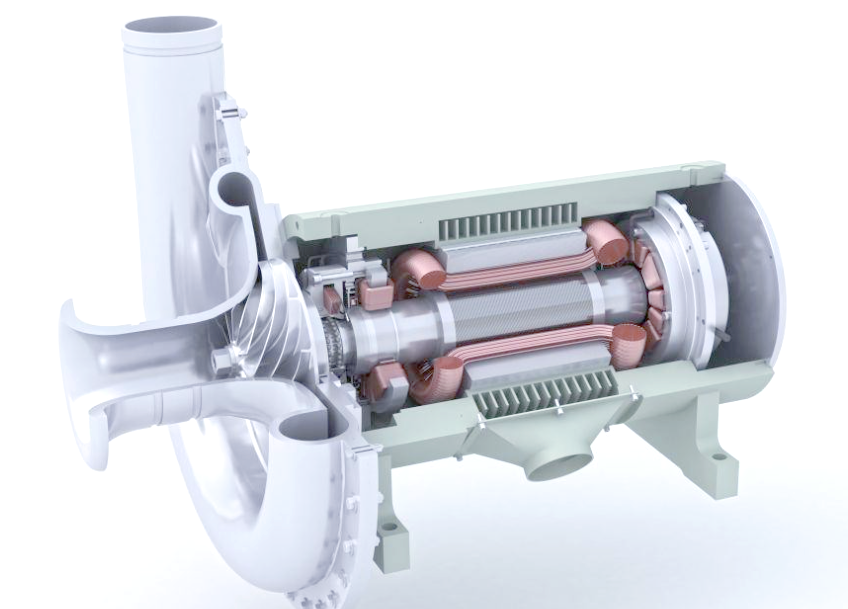
Maglev Centrifugal Compressor
centrifugal flow compressor

Hidden Troubles & Inherent Technical Limitations of Maglev Centrifugal Compressors

Ultra-high Initial Capital Investment & Overweight Total Project Cost

A maglev centrifugal compressor is a highly integrated mechatronic precision device assembled with electromagnetic levitation bearings, high-speed permanent magnet rotors, micron-level displacement sensors, dedicated variable frequency control systems, UPS backup power modules and intelligent interlock protection assemblies. Under identical gas flow and discharge pressure parameters, the upfront purchase cost of maglev compressors is 40% to 90% higher than integrally geared centrifugal compressors, with exact comparative data recorded in CAGI’s full life-cycle cost research report.
 
Apart from the premium host price, maglev units impose strict requirements on power supply stability, workshop cleanliness, constant temperature and humidity environment. Renovation of old factories often requires extra investment in dust removal equipment, voltage stabilizer systems and independent clean machine rooms, which further inflates overall project expenditure. For small & medium manufacturing enterprises and industrial parks with multi-unit parallel operation, the investment payback period of maglev equipment commonly extends to 4–6 years with poor economic return. ISO 15663 international standard clearly states that industrial equipment selection must evaluate 10+ year full-life total cost of ownership (TCO) rather than only one-time procurement price, and maglev compressors’ excessive initial investment will significantly lift long-term project comprehensive cost.

Strict Load Threshold Restriction, Sharp Efficiency Decline Under Partial & Fluctuating Loads

The energy-saving performance of maglev centrifugal compressors can only be realized under stable load ranging from 60% to 100%, verified via load performance tests published in China Refrigeration Industry Association Maglev Compressor Whitepaper and IEEE rotor dynamic academic papers. Once factory gas consumption fluctuates, such as low-load operation at night, seasonal production reduction or intermittent batch manufacturing, maglev units suffer dramatic efficiency drop. To maintain electromagnetic bearing levitation balance, the compressor has to continuously vent and bypass pressure relief, generating massive invalid power consumption. Under partial load working conditions, maglev compressors even consume more electricity than traditional geared centrifugal models.
 
Moreover, maglev units are extremely sensitive to frequent start-stop cycles. Technical specifications released by China Machinery Industry Foundation mark the upper service limit of backup mechanical bearings at 120,000 start-stop times. Daily repeated startup and shutdown accelerate structural abrasion of auxiliary bearings, raising vibration deviation and unplanned shutdown risk over threefold for factories with frequent production shifts. For metallurgy, textile and chemical plants with discontinuous production schedules, this inherent working condition limitation severely restricts maglev compressor practical application value.

Complex Electronic Control Architecture, Weak Anti-interference Performance & High Shutdown Risk
Maglev centrifugal compressors rely entirely on hundreds of precision sensors, electromagnetic control coils and closed-loop feedback modules to sustain normal operation, making electronic system reliability the core bottleneck of the whole unit. Dust, moisture, over-temperature, grid voltage fluctuation and harmonic interference inside workshops directly trigger levitation imbalance, rotor offset, vibration overload and interlock shutdown, with complete failure mechanism simulation data published in Rotor Dynamic Analysis on the Bearing-rotor System of Magnetic Centrifugal Compressor academic paper.
 
API 617 standard mandates process compressors to possess wide-range environmental adaptability, while maglev units fail to meet operating standards in dusty, voltage-unstable heavy industrial workshops. Once sensor or control module faults occur, on-site maintenance technicians cannot complete self-repair, and core spare parts are monopolized by original manufacturers with extremely high replacement cost. A single major overhaul may cost 20%~30% of the whole machine price, severely interrupting 24-hour continuous industrial production.
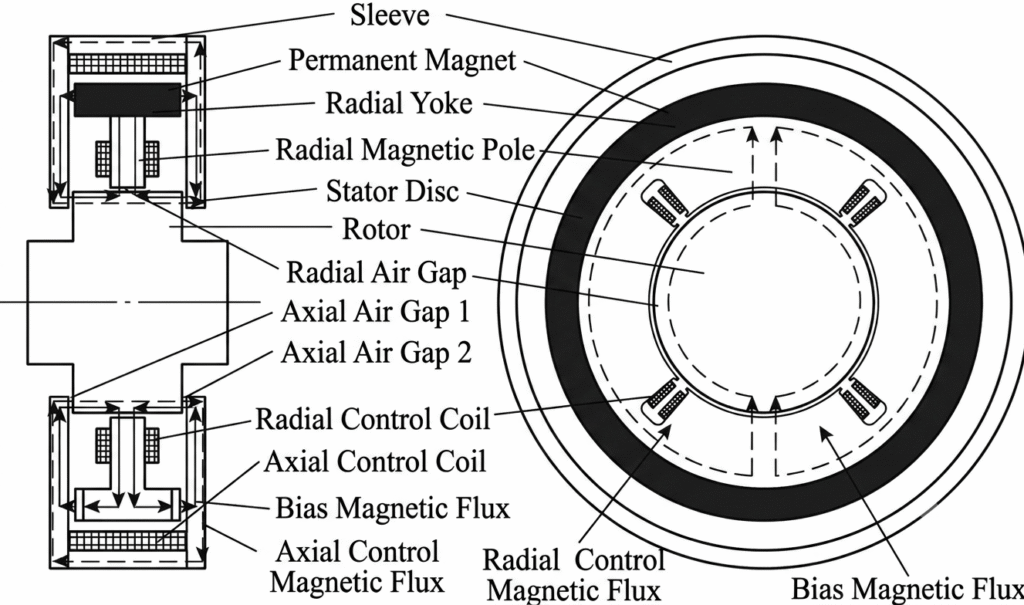
Cross-section schematic diagram of maglev centrifugal compressor active magnetic bearing, marked with radial & axial control coil, permanent magnet and air gap structure
Cross-section schematic diagram of maglev centrifugal compressor active magnetic bearing

Obvious Technical Bottlenecks in High-Power & Multi-Stage High-Pressure Process Compression

Mass-produced commercial maglev centrifugal compressors are mostly limited within power range below 2000kW, mainly applied for clean general air supply in ordinary air compression stations. In large air separation, LNG liquefaction, coal-to-hydrogen and high-pressure process gas compression projects demanding high power, multi-stage compression and non-stop continuous operation, maglev direct-drive single-shaft design encounters irreparable physical limitations. The unified rotor speed structure cannot realize independent speed regulation for each compression stage, leading to unbalanced inter-stage pressure, surge risk and reduced aerodynamic efficiency, proven by performance comparison experiments in ASME Tribology journal research papers.
 
For unit power above 6000kW, ultra-high pressure process gas and cryogenic medium compression scenarios, maglev technology cannot fully replace traditional integrally geared centrifugal compressors, which explains why nearly all global large-scale energy, petrochemical and air separation projects adopt API-standard geared compression solutions.

Exorbitant Long-Term Maintenance Cost, Monopolized Spare Parts & Elevated Full-Life Expense

Maglev centrifugal compressors adopt closed proprietary technical architecture, with core control hardware, bearing assemblies and operating algorithm parameters fully monopolized by original equipment manufacturers, no universal alternative spare parts available in the open market. CAGI industrial survey statistics show that annual maintenance, calibration and component replacement expenditure of out-of-warranty maglev units is 2.7~3.5 times higher than same-power geared centrifugal compressors. Many factories select maglev compressors to cut initial procurement budget, yet face continuous high after-sales charges in subsequent operation years, resulting in total 10-year life-cycle cost far exceeding geared models, violating ISO 15663 economic equipment selection principles.

Core Competitive Advantages of Geared Centrifugal Compressors Against Maglev Units

Century-Mature Technology Validated by International API Industrial Standards
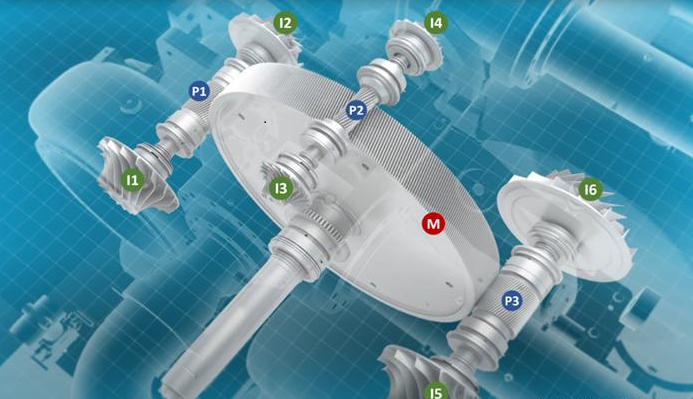
Integrally geared centrifugal compressors fully comply with globally recognized API 617 centrifugal compressor standard and API 613 gearbox specification, featuring mature mechanical principle, high fault tolerance and ultra-low long-cycle failure rate. ASME journal research on multi-stage geared compressors confirms that independent pinion gear structure supports unit power up to tens of thousands of kilowatts, with numerous domestic air separation and petrochemical units achieving 18,000 consecutive operation hours without major overhaul.
 
The pure mechanical transmission system is immune to minor electrical fluctuation, workshop dust and temperature variation, delivering superior adaptability for non-stop heavy industrial production lines. In high-risk continuous manufacturing projects such as LNG and coal chemical industry, geared centrifugal compressors are the first-choice standardized equipment by design institutes, with far lower economic loss risk caused by unexpected equipment shutdown compared with maglev alternatives.
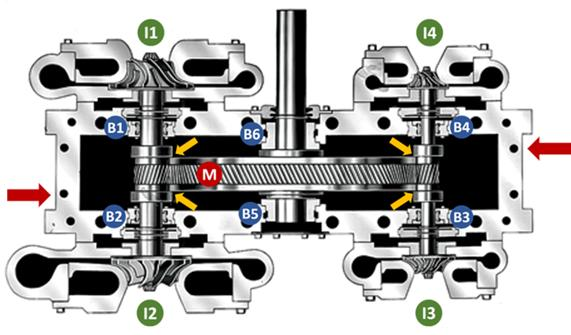
Cross-section drawing of multi-stage gearbox for API617 integrally geared centrifugal compressor, main gear and independent staged impeller structure
Full cross-section diagram of 4-stage integrally geared centrifugal compressor, showing bearing layout and gas compression flow path

Ultra-wide Working Condition Compatibility, Fit for Fluctuating Load & Frequent Start-Stop Cycles

Equipped with mature oil-lubricated sliding bearings and multi-stage gear speed-increasing structure, geared centrifugal compressors carry no restrictions on start-stop frequency or load variation range. The unit can perform stepless stable adjustment under full load, partial load and intermittent batch production modes without invalid venting pressure relief and energy waste.
 
Contrary to maglev compressors that only maintain high efficiency between 60%~100% load, geared units sustain stable compression efficiency within 20%~100% full load range, matching intermittent gas consumption characteristics of 90% domestic manufacturing, metallurgy and chemical factories. It eliminates massive electricity loss brought by partial-load venting of maglev compressors, presenting more consistent comprehensive energy consumption performance matching actual factory production demand.

Full Coverage Adaptability for High-Power, High-Pressure & Multi-Stage Process Compression

The most prominent technical advantage of integrally geared centrifugal compressors lies in independent speed matching design for every compression stage. Each impeller can operate under its exclusive optimal rotating speed, with precise controllable inter-stage cooling and inter-stage pressure, perfectly meeting heavy industrial demands of large air separation, LNG liquefaction, coal-to-hydrogen and high-pressure process gas boosting. Single unit power can reach over 8000kW, completely breaking the 2000kW power ceiling limitation of maglev centrifugal compressors.
 
Part 3 of API 617 standard specially formulates design specifications for integrally geared multi-stage centrifugal compressors, verifying this equipment type’s compatibility with flammable, explosive, cryogenic and high-pressure special process media, serving as standardized core compression equipment for energy and chemical industries with tens of thousands of global engineering application cases as performance proof.

Strong Environmental Interference Resistance, Stable Operation in Dusty, High-Temp & Voltage-Fluctuating Workshops

Geared centrifugal compressors possess high tolerance to workshop dust, high ambient temperature, humidity and unstable grid voltage. No extra clean machine room, dedicated voltage stabilizer or constant-temperature dust removal renovation is required, enabling long-term stable operation inside standard ordinary industrial workshops. The mechanical structure contains no large quantity of precision displacement sensors and electromagnetic control modules, free from interlock shutdown triggered by dust adhesion or temperature & humidity fluctuation.
 
Compared with maglev compressors requiring extra supporting infrastructure investment for clean environment, geared units drastically cut additional civil engineering transformation cost, directly deployable in mining, powder processing, metallurgy and high-temperature chemical workshops with extremely low maintenance environment threshold.

Low Procurement Cost, Universal Spare Parts & Controllable Full-Life Cycle Expense

Under identical working gas parameters, the procurement cost of integrally geared centrifugal compressors is 30%~60% lower than maglev units. Wearing components including bearings, gear pairs, dry gas seals and lubrication oil filters are fully standardized, localized and universally interchangeable with transparent market pricing. Independent third-party maintenance service providers cover all industrial cities nationwide, without monopolized original manufacturer charges or mandatory annual maintenance fees.
 
Calculated via CAGI full life-cycle cost evaluation model, the 10-year comprehensive investment (procurement + energy consumption + maintenance) of geared centrifugal compressors is 25%~40% lower than maglev equipment, fully complying with ISO 15663 economic selection standards for petroleum and chemical industrial facilities, ideal for factories pursuing long-term stable operation and comprehensive operating cost control.

Applicable Scenario Classification for Two Compressor Types

Suitable Application Scenarios for Maglev Centrifugal Compressor

Small clean workshops, pharmaceutical & food processing, semiconductor dust-free workshops, stable 24h full-load non-stop production, single unit power below 2000kW, constant-temperature dust-free workshop environment, sufficient project budget, only pursuing oil-free and low-noise energy-saving performance under steady full load.


Reference documents: China Refrigeration Industry Association 2024 Maglev Compressor Technical Whitepaper, Energy-saving Technical Specification of Maglev Variable Frequency Centrifugal Compressor (China Machinery Industry Foundation).

Suitable Application Scenarios for Geared Centrifugal Compressor

Large air separation plants, LNG liquefaction & coal-to-hydrogen energy factories, high-power high-pressure process working conditions, factories with severe day-night gas load fluctuation, daily frequent start-stop cycles, dusty/high-temperature/voltage-unstable harsh workshops, controllable total project budget, projects requiring long-term stable low failure rate and reduced 10-year full-life maintenance cost for continuous production.


Reference documents: API Standard 617 9th Edition Integrally Geared Compressor Specification, CAGI Centrifugal Compressor Life-Cycle Cost Analysis Report, ISO 15663 Industrial Equipment Life Cycle Costing Standard.

Comparison DimensionMaglev Centrifugal CompressorGeared Centrifugal Compressor
Drive StructureHigh-speed motor direct drive, gearless designMain gear + multi-stage pinion gear speed increase
Applicable Power Range≤ 2000kW200kW ~ 10,000kW full coverage
Load AdaptabilityEnergy-saving only under 60%-100% stable full load; high invalid energy consumption via venting under low loadStable compression efficiency across 20%-100% full load range
Workshop Environment RequirementConstant temperature & dust-free clean environment; dust easily damages magnetic bearing sensorsSuitable for harsh working conditions: dusty workshops, high-temperature environment, grid voltage fluctuation
Maintenance & Spare PartsExclusive OEM proprietary spare parts; high price & long delivery cycleStandardized universal spare parts; maintainable by third-party industrial service providers
10-Year Total Cost of Ownership (TCO)High (double high cost on procurement & annual maintenance)25%-40% lower (fully compliant with ISO 15663 standard)

Conclusion

Maglev centrifugal compressors deliver partial advantages of oil-free and low-noise operation under clean, steady, low-power working conditions below 2000kW, yet they carry multiple undeniable hidden troubles and limitations including excessive upfront capital investment, rigid load operation restrictions, sensitive environmental adaptability, high electrical failure rate, expensive long-term maintenance and high-power technical bottlenecks.
 
For most domestic heavy industrial and continuous production enterprises with complex variable gas consumption conditions, integrally geared centrifugal compressors stand as more reliable, long-lasting and cost-effective selection solution, benefiting from mature API-standard verified technology, stable efficiency across full load range, strong harsh environment adaptability, controllable full-life cost and complete coverage of high-power multi-stage process demands.
 
Enterprise equipment procurement teams should avoid blind marketing concept speculation, and make comprehensive selection judgment based on authoritative industry literature such as API, ISO and CAGI standards, combined with actual production load, workshop environment, process pressure demand and long-term maintenance budget. Blindly following maglev compressor marketing hype will easily lead to irreversible economic losses including over-limit power consumption, frequent unplanned shutdown and continuously rising after-sales maintenance expenditure.

Reference

[1] API Standard 617 Ninth Edition, Axial and Centrifugal Compressors and Expander-compressors, 2022


[2] ISO 15663:2021 Petroleum, petrochemical and natural gas industries — Life cycle costing


[3] CAGI. Elements of Mechanical Equipment Life-Cycle Cost Analysis – Centrifugal Air Compressors


[4] Machinery Industry Development Foundation of China. Energy-saving Technical Specification of Maglev Variable Frequency Centrifugal Compressor


[5] ASME Journal of Tribology. Design Concept and Performance of Multistage Integrally Geared Centrifugal Compressor


[6] ICCS 2023 Academic Paper. Active Magnetic Bearings, Variable-Speed Centrifugal Air Compressors Suitable to Reduce Carbon Footprint, is it Really the Case?


[7] IEEE/ASME Transactions on Mechatronics. Design and Analysis of Hybrid Magnetic Bearing for Maglev Centrifugal Compressor


发表评论

您的邮箱地址不会被公开。 必填项已用 * 标注