Centrifugal vs Screw Compressor: Full Comparison for Industrial Plant Selection

Contents Show
图片13
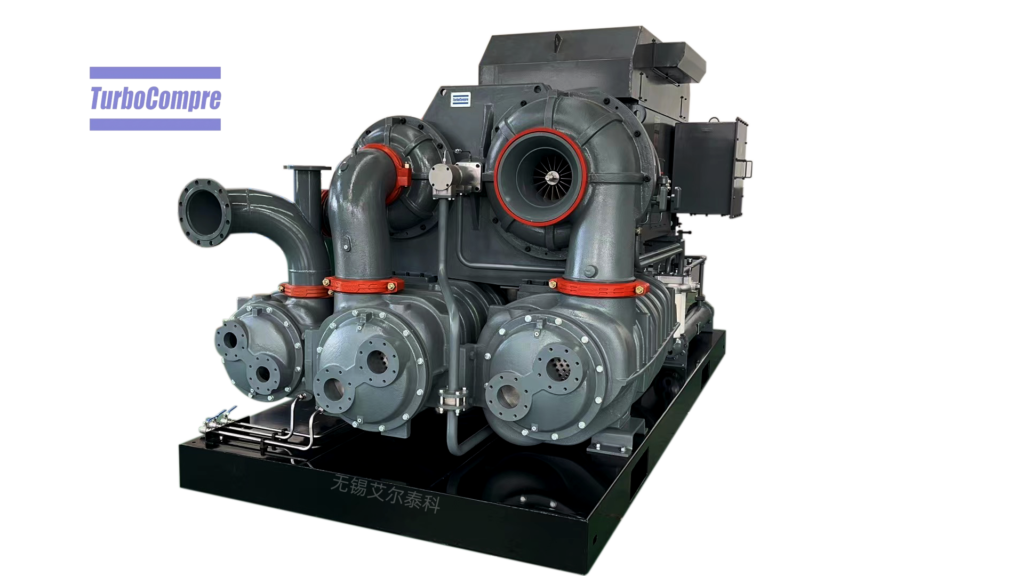
centrifugal compressor
Centrifugal gas compressorvs rotary screw type compressor is the core comparison topic for all plant air system procurement. As two dominant industrial compressed air equipment, centrifugal gas compressor units and rotary screw type compressor serve distinct production scenarios: one targets large-scale 24/7 steady high-purity gas supply, and the other fits small-medium factories with fluctuating intermittent air demand.
 
This comprehensive comparison article systematically sorts all core disparities supported by 2024–2026 third-party test data and European PNEUROP industry standards, delivering clear decision-making references for global industrial buyers. You may expand your multi-model comparison knowledge via our previously published blog: The Difference Between Centrifugal and Reciprocating Compressor.
 

Fundamental Working Principle Differences

Integrally Geared Centrifugal Compressor

Centrifugal machines belong to turbo dynamic compression equipment. High-speed impellers driven by multi-stage gear assemblies convert centrifugal kinetic energy into static gas pressure. Each impeller mounts on an independent pinion shaft to rotate at its own optimal speed; interstage coolers reduce compressed gas temperature to raise overall isentropic efficiency. The entire lubricating oil circuit stays fully separated from airflow channels to achieve oil-free gas delivery, defined under ISO 5389 turbo machinery performance testing codes.
 
centrifugal compressor efficiency

What is a rotary screw air compressor

Rotary screw type compressor fall into positive-displacement compression categories. Two meshing male and female rotors rotate synchronously to trap, shrink and discharge gas within rotor cavities. Most standard industrial screw units adopt oil injection into compression chambers to cool gas, seal rotor clearances and absorb mechanical vibration. Variable frequency drive (VFD) adjusts rotor rotation speed to control output flow without aerodynamic stall or surge risks. Performance verification follows simplified test codes jointly released by CAGI and PNEUROP in 2026.
screw compressor comparison

Side-by-Side Technical & Economic Comparison Table

Comparison Dimension
Integrally Geared  Compressor
rotary screw type compressor
Usable Stable Flow Turndown Range
60%–100% rated flow
30%–100% stepless adjustable flow
Compressed Air Cleanliness
ISO 8573-1 Class 0 zero oil residue
Contains trace oil mist (needs multi-stage post-filtration)
Maximum Single-Unit Flow Capacity
Up to 120,000 Nm³/h
Maximum 15,000 Nm³/h per unit
10-Year Lifecycle Cost Performance
Low for continuous 8,000+ h annual full-load operation
Balanced cost for intermittent, variable-load workshops
Vibration & Operating Noise Level
Ultra-low vibration, 75–85 dB(A)
Medium vibration, 82–92 dB(A)
Core Consumable Replacement Cycle
Major overhaul every 3–5 years
Filter & oil replacement every 2,000 running hours
Required Site Environment Standard
Strict clean, constant-temperature workshop
Tolerant of mild dust & temperature fluctuation
Typical Applicable Factory Scale
Large air separation, petrochemical, 24/7 mass production
Small-medium general manufacturing, instrument air supply

Core Strengths of Integrally Geared Compressors

Zero-Contamination Gas Output Meets ISO 8573-1 Class 0 Standard

Rotary screw type compressors inject lubricant directly into compression cavities, generating unavoidable oil mist mixed into compressed gas that requires multi-stage precision filters to reduce residual oil content. By contrast, integrally geared centrifugal units isolate lubrication circuits fully from airflow passages, delivering gas fully compliant with ISO 8573-1 Class 0 zero-oil purity standards.
 
This feature becomes irreplaceable for production lines requiring high-purity process media: cryogenic oxygen/nitrogen separation, pharmaceutical raw material synthesis, lithium battery electrode manufacturing and food additive production. Even trace oil pollution will trigger batch product scrap and hidden safety hazards, making centrifugal compressors the mandatory selection for these precision industries.

Unmatched Large Continuous Flow Capacity for Mass Production

Integrally geared compressors support stable gas delivery ranging from 20,000 Nm³/h to over 120,000 Nm³/h, far exceeding the flow ceiling of twin-screw equipment. Without periodic cavity filling and discharging cycles, centrifugal airflow maintains fully continuous delivery with zero pressure pulsation, protecting downstream cryogenic towers, precision valves and long-distance transmission pipelines from fatigue impact damage.
 
All large-scale air separation plants with daily oxygen output above 1,000 tons adopt centrifugal main air compressors as standard configuration, where steady airflow guarantees stable cryogenic distillation efficiency and eliminates frequent unplanned shutdowns caused by flow fluctuation.

Superior Long-Term Lifecycle Cost Under Stable Full-Load Running

Centrifugal machines contain far fewer reciprocating friction components than rotary screw type compressor. Primary wearing parts only include tilting pad bearings, dry gas seals and intercooler core tubes. Under clean, stable workshop operating conditions, the mean time between failures (MTBF) reaches 8,000–18,000 running hours, with major overhauls only required every 3–5 years.
 
Per independent 10-year lifecycle cost research published by MATTEI industrial fluid research institute in 2025, integrally geared centrifugal compressors cut 25%–40% of total operation expenditure compared with equivalent large-flow rotary screw type compressor under full continuous load, primarily from reduced consumable replacement and maintenance labor costs. Our interchangeable compatible impeller and gearbox spare parts further lower aftermarket procurement expenses for global plant owners, linked via our compressor spare parts product page.
Compatible spare parts of centrifugal compressor: CNC impeller and alloy gearbox
Impeller

Low Vibration & Quiet Operation Compliant With Factory Emission Rules

Balanced multi-impeller rotation and shock-absorbing bearing designs restrict unit vibration below 2.5 mm/s, satisfying international rotating equipment vibration inspection benchmarks. Normal operating noise stays within 75–85 dB(A), significantly quieter than screw compressors with continuous rotor meshing friction noise. This characteristic meets strict environmental assessment limits for industrial parks across the Middle East, Bangladesh and Southeast Asia.

Characteristic Boundaries & Application Adaptation of Centrifugal Gas Compressors

Optimized for Steady Load Operation with Stable Efficiency Range

Integrally geared compressor are professionally engineered forlarge-flow, continuous industrial production. Their optimal high-efficiency operating window covers 60% to 100% of the rated flow, delivering the most stable airflow, highest thermodynamic efficiency, and longest service life under constant load conditions. This design perfectly matches 24/7 continuous process scenarios, including air separation, petrochemical refining, and coal chemical plants, where steady operation is prioritized.
 
For factories with frequently fluctuating air demand or intermittent production schedules, centrifugal compressors adopt an automatic anti-surge recycle protection strategy to ensure operational safety and stability at partial loads. Unlike screw compressors designed for flexible variable-load working conditions, centrifugal units are positioned as high-end steady-process core equipment focused on long-term continuous production reliability.

Higher Initial Investment with Superior Long-Term Full-Cycle Value

Integrally geared compressor adopt high-precision five-axis CNC impeller machining, high-strength alloy gear forging, and strict factory acceptance testing standards for industrial turbo machinery. Equipped with professional anti-vibration foundation configuration, independent circulating cooling system, and intelligent PLC control system, the overall initial project investment is higher than conventional screw compressors.
 
This premium configuration is a core guarantee of ultra-low failure rate, ultra-long maintenance cycle, and outstanding energy-saving performance. Although the one-time capital cost is higher, integrally geared centrifugal compressors effectively reduce long-term power consumption, consumable replacement, and downtime losses. For large-scale industrial projects, they deliver lower 10-year lifecycle cost and higher comprehensive return on investment, making them a long-term cost-effective asset for continuous production lines.

Standardized Environment Requirements for High-Precision & Long-Term Stable Operation

The core components of centrifugal compressors, including high-speed impellers, dry gas seals, and precision rotor assemblies, are manufactured with ultra-high precision to support Class 0 oil-free air output and long-term high-speed stable operation. To maintain consistent equipment accuracy and operational stability, the units require standardized inlet air cleanliness, stable ambient temperature and humidity, and reliable grid voltage.
 
For harsh working sites with heavy dust, high coastal humidity, or voltage fluctuation, supporting auxiliary configurations such as multi-stage air pretreatment systems and voltage stabilization devices can fully optimize the operating environment. These standardized operating requirements are exactly the key reasons why centrifugal compressors maintain zero-pollution gas quality, minimal wear, and ultra-stable performance throughout decades of industrial operation, far exceeding the operational standards of ordinary industrial compressors.Carbon footprint comparison research at ICCS 2023 also proves centrifugal units have better environmental performance under full-load continuous operation.

Key Advantages of rotary screw type compressor

Wide 30%–100% Stepless Load Regulation For Fluctuating Air Demand

Rotary screw type compressor rely on positive-displacement rotor compression without aerodynamic stall or surge boundaries. Equipped with variable frequency drive motors, screw units adjust output airflow linearly from 30% to 100% rated capacity without efficiency collapse. This flexible regulation perfectly matches small-medium factories with intermittent production lines, variable shift schedules and unstable gas consumption throughout each workday.

Low Initial Purchase Cost Fits Small & Medium Manufacturing Workshops

The simple rotor layout and mature mass production supply chain greatly reduce screw compressors’ manufacturing cost. For factories requiring airflow below 15,000 Nm³/h, the upfront investment of screw equipment is 40%–60% lower than equivalent-flow centrifugal units, eliminating heavy civil construction and complex auxiliary system matching expenses.

Simple Mechanical Layout With Low Daily Maintenance Technical Barrier

Rotary screw type compressor feature fewer precision high-speed components and standardized modular structures. Daily maintenance tasks only include filter and synthetic oil replacement, which regular factory maintenance staff can complete without professional turbo machinery training or special dynamic balancing testing equipment. Local third-party maintenance teams can provide routine overhaul services in all regional industrial zones worldwide.

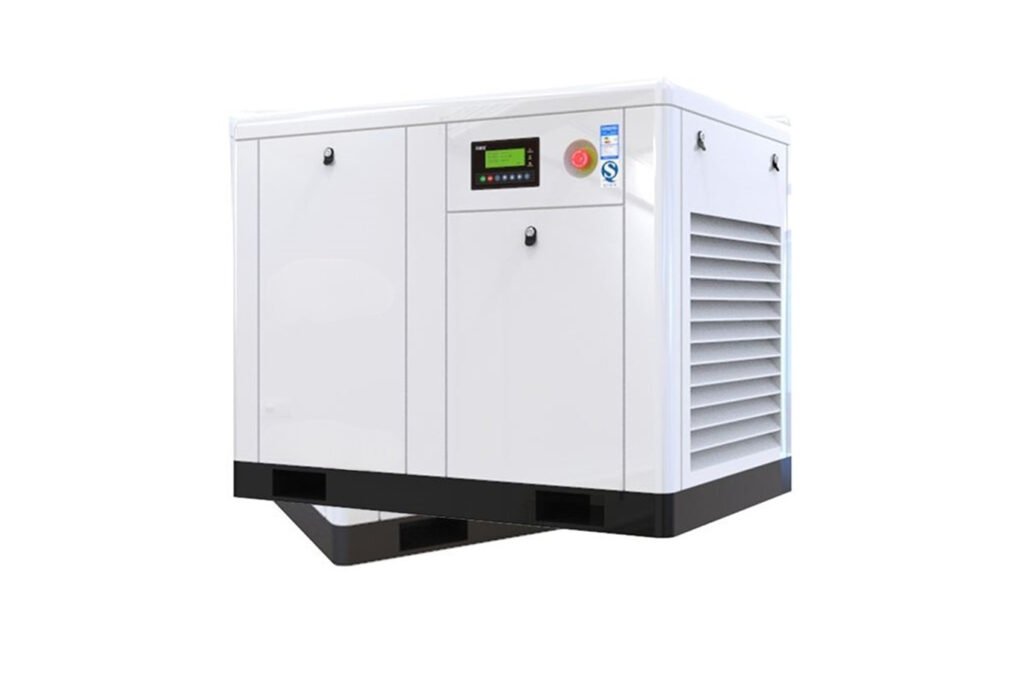
Compact Skid Design For Limited-Space Instrument Air Rooms

Integrated all-in-one skid-mounted screw units integrate main compression host, cooling dryer, gas storage tank and control cabinet into a single compact assembly, occupying minimal workshop floor space. They become the exclusive feasible compressed air solution for small instrument air rooms of pharmaceutical workshops, electronic component factories and warehouse processing zones.

Main Limitations of Industrial rotary screw type compressor

Oil-Injected Models Cannot Deliver Ultra-Clean Process Gas

Conventional industrial screw compressors inject large volumes of synthetic lubricant into compression cavities to cool gas and seal rotor clearances. Even after three-stage precision oil separation filters, residual oil mist still exists in output compressed air, failing to satisfy ISO 8573-1 Class 0 zero-oil standards required by oxygen production, lithium battery and pharmaceutical manufacturing industries. Oil-free dry screw models carry purchase costs close to small centrifugal units while still lacking ultra-large flow capacity.

Hard Ceiling On Maximum Single-Unit Air Flow Volume

The structural design of meshing twin rotors creates a strict upper limit on single-unit airflow capacity, capped at approximately 15,000 Nm³/h. For large air separation, petrochemical and steel plants requiring above 30,000 Nm³/h continuous gas supply, factory operators must arrange multiple screw units to operate in parallel, increasing equipment room area, auxiliary pipeline layout and synchronous control complexity.

Higher Consumable Replacement Frequency Over A 10-Year Lifespan

Rotary screw type compressors’ oil injection design generates regular consumable replacement cycles: air filter, oil filter and oil separator core need replacement every 2,000 running hours, plus full synthetic oil renewal every 4,000 hours. Over a full 10-year operation cycle, cumulative filter and lubricant replacement expenditure reaches 30%–50% of total maintenance cost, much higher than integrally geared centrifugal compressors running under stable full-load conditions.

Matching Application Scenarios For Each Compressor Type

Optimal Working Scenarios For Integrally Geared Centrifugal Compressors

1. Large cryogenic air separation units (50,000–120,000 Nm³/h main air, nitrogen & oxygen booster systems)
 2. Petrochemical refineries, LNG liquefaction plants and coal-to-hydrogen high-pressure process gas compression 
3. 24/7 continuous steel smelting and float glass factory central gas supply systems 
4. Lithium battery, pharmaceutical raw material and electronic chip production requiring Class 0 oil-free gas 
5. Centralized gas supply bases with stable 80%–100% full-load operation all year round
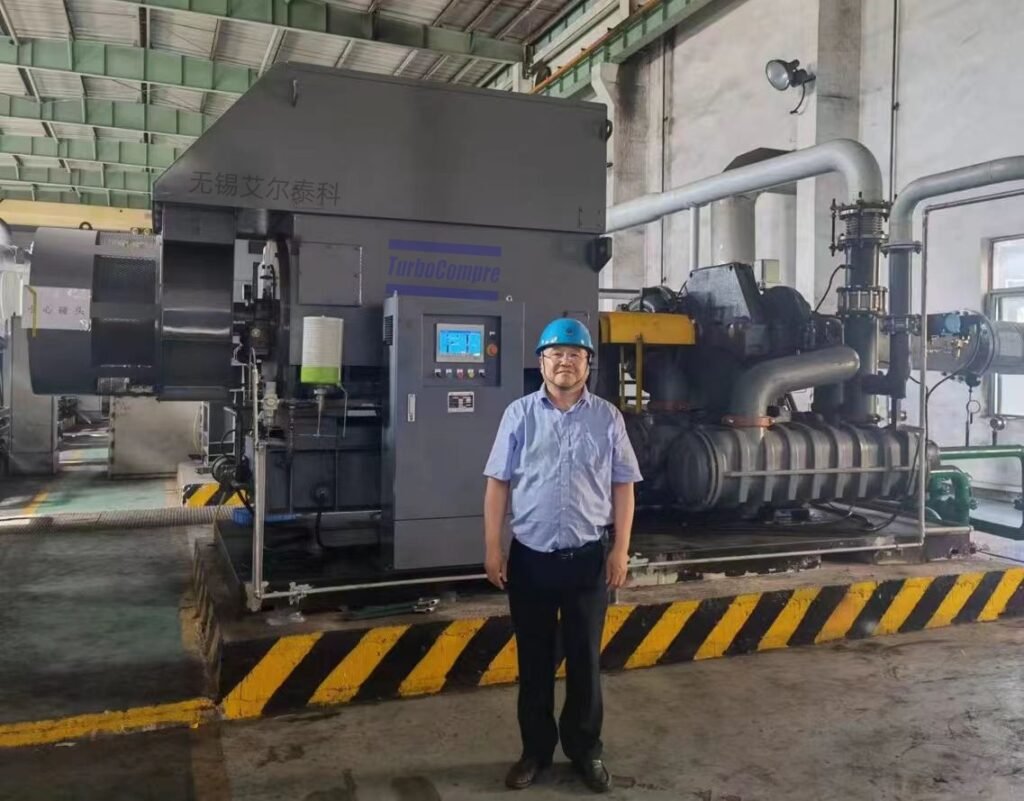
On-site application scenarios of centrifugal and screw compressors in air separation, petrochemical and general manufacturing plants

Optimal Working Scenarios For rotary screw type compressor

1. Small-medium machinery processing factories with intermittent shift production and fluctuating air demand 2. Instrument air supply for warehouse, packaging workshop and auxiliary factory equipment 
3. Small food processing, plastic injection and metal stamping production lines with low to medium airflow demand 
4. Remote small mining sites and temporary construction sites requiring low upfront investment compressed air systems
5. Medium-sized workshops with limited air room space and no ultra-high gas purity requirements
On-site application scenarios of centrifugal and screw compressors in air separation, petrochemical and general manufacturing plants

Step-by-Step Selection Framework For Factory Procurement Teams

1. Confirm annual total operating hours and daily load fluctuation amplitude: Select centrifugal units if running over 8,000 hours yearly with stable full load; choose screw compressors if operating less than 6,000 hours with frequent load swing. 
 
2. Verify compressed gas purity standard: Pick centrifugal machines if production requires ISO 8573-1 Class 0 zero-oil air; oil-injected screw units suffice for general instrument air demand. 
 
3. Calculate maximum required single-unit airflow: Centrifugal compressors for flow above 15,000 Nm³/h; rotary screw type compressors for flow below 15,000 Nm³/h. 
 
4. Evaluate factory workshop environment: Select centrifugal units only if constant-temperature, dust-free air pretreatment systems can be installed; rotary screw type compressors tolerate mild dust and temperature fluctuation without extra auxiliary investment. 
 
5. Conduct full 10-year lifecycle cost calculation (initial investment + energy consumption + maintenance) instead of only comparing one-time purchase prices.

Frequently Asked Industry Questions

Q1: Can variable-frequency rotary screw type compressors replace centrifugal units for large air separation main air supply?
A: No. The maximum single-unit flow capacity of twin-screw compressors cannot meet the massive continuous airflow demand of 50,000+ Nm³/h large air separation plants, and oil mist residue fails to satisfy cryogenic separation process purity standards. Multiple parallel screw units will raise total system energy consumption and control complexity significantly.
 
Q2: Do centrifugal compressors always deliver lower lifecycle cost than screw models?
A: Only under stable 60%–100% full-load continuous operation. If the factory runs below 50% rated load for more than half of annual working hours, low-load efficiency loss of centrifugal units will erase long-term maintenance cost advantages, making VFD screw compressors more economical.
 
Q3: Is the anti-surge control system mandatory for all centrifugal compressor installations?
A: Yes. Yes. Without automatic anti-surge recycle valves and real-time flow monitoring PLC, periodic airflow backflow caused by surge will lead to irreversible damage to high-speed rotor assemblies within short running time, as recorded in Whittle Laboratory test dataset.

Final Selection Suggestions For Plant Operators & EPC Contractors

Integrally geared centrifugal compressors maintain irreplaceable core competitive advantages in ultra-large continuous gas supply and zero-oil high-purity process media delivery, making them the standard configuration for global heavy chemical and air separation projects. Nevertheless, narrow turndown operating range, inherent surge risk, high upfront capital cost and strict workshop environment limits restrict their application within small, intermittent production factories.
 
Rotary screw type compressors occupy dominant market share for small-medium general industrial gas supply due to flexible load regulation, low initial purchase cost and simple maintenance requirements, but they cannot meet large-flow or ultra-clean gas production demands of heavy process industries.
 
When selecting compression equipment, procurement engineers must comprehensively evaluate four core indicators: annual running hours, airflow fluctuation range, gas purity standard and overall project budget. For large air separation and petrochemical heavy industry projects with stable full-load operation, integrally geared centrifugal compressors deliver the optimal long-term economic value. If you need customized model selection, formal quotation or interchangeable compatible spare parts supply for centrifugal or screw compressors, contact our professional technical team for one-stop industrial compressed air system solutions.

References

[1] PNEUROP & CAGI Joint Simplified Acceptance Test Code for Rotary Displacement Compressors, 2026 Updated Industry Standard 
[2] ISO 5389:2005 Turbo Compressors — Performance Test Code for Turbomachinery Equipment 
[3] ISO 8573-1:2010 Compressed Air — Part 1: Contaminants and Purity Classification Benchmark 
[4] MATTEI Industrial Fluid Research Institute. AIR COMPRESSORS: Real Economic & Environmental Impact of Lifecycle Cost Calculation, Independent Whitepaper 2025 
[5] Sage Journals. Lifecycle Cost Analysis and Performance Evaluation of Multi-Stage Screw Compressors, Applied Thermal Engineering, 2025 Volume 261 
 [6] Carrier UTC R&D Laboratory. Comparison of Part-Load Efficiency Characteristics of Screw and Centrifugal Compressors, Turbomachinery Test Report, 2024 
[7] CAGI Global Performance Verification Database. Industrial Air Compressor Energy Consumption Tracking Report 2026, Compressed Air and Gas Institute Official Publication 
[8] Springer Energy Proceedings. 13th International Conference on Compressors and Their Systems: Magnetic Bearing Centrifugal vs Oil-Free Screw Lifecycle Carbon Footprint Comparison, ICCS 2023 
[9] ASME Digital Collection. Transonic Centrifugal Compressor Flow Instability & Surge Boundary Test Dataset, Whittle Laboratory Cambridge University, 2025 
[10] AirCompressorZone Industry Research. Air Compressor Lifecycle Cost: 10-Year TCO Breakdown By Equipment Type & Power Rating, 2026 Market Analysis Report

发表评论

您的邮箱地址不会被公开。 必填项已用 * 标注