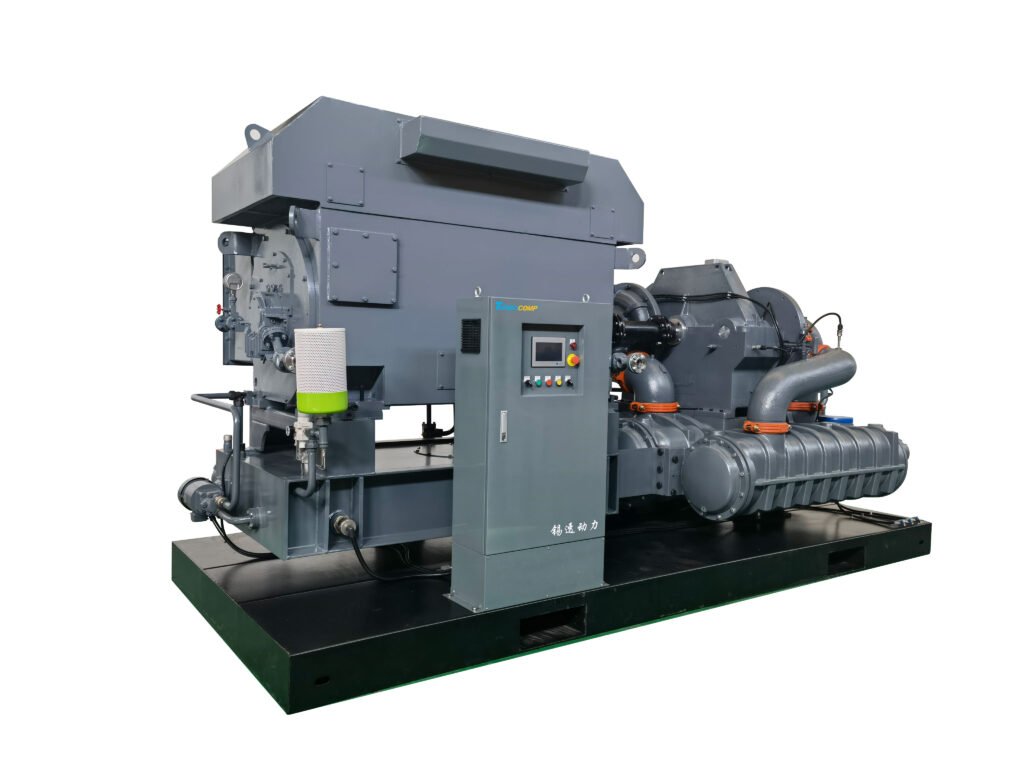
Axial compressors and centrifugal compressors are two core types of dynamic turbomachinery widely used in large-scale industrial gas compression projects. Industrial purchasers and mechanical engineers in chemical, air separation, petrochemical, and power plants often wonder about the differences between axial vs centrifugal compressor and which model is more stable, energy-saving, and suitable for long-term factory operation.
Although both are oil-free dynamic compressors that rely on high-speed impellers to pressurize gas, they have essential differences in working principles, pressure ratio, flow characteristics, load adaptability, and operation costs. This article comprehensively compares the two models, focusing on analyzing the core industrial advantages of centrifugal compressors to help global industrial clients make cost-effective and reliable equipment selection decisions.
Core Working Principle Differences
Working Principle of Axial Compressor
In an axial compressor, air flows parallel to the rotor shaft, passing through multi-stage rotating blades and stationary vanes in sequence. The rotating blades accelerate the airflow, while the stationary vanes decelerate and diffuse the air, gradually increasing gas pressure.
Featuring a slender structure and unobstructed flow channels, axial compressors deliver extremely large airflow. However, they own a low single-stage pressure ratio and require dozens of cascaded stages to achieve medium and high pressure. This determines that axial compressors are only applicable to scenarios with constant full-load operation without load fluctuations.
Working Principle of Centrifugal Compressor
A centrifugal compressor adopts a radial compression structure. Gas enters the center of the high-speed rotating impeller and is thrown outward by centrifugal force. The high-speed gas is decelerated and pressurized in the diffuser, realizing efficient gas compression.
Centrifugal compressors are equipped with high single-stage pressure ratio, flexible load adaptability, and wide stable operation range. They can meet medium and high-pressure gas supply demands without excessive compression stages, becoming the mainstream and preferred equipment for modern air separation, chemical, pharmaceutical, and petrochemical industries.
Full Parameter Comparison: Axial vs Centrifugal Compressor
Comparison Dimension | Axial Compressor | |
|---|---|---|
Airflow Mode | Axial parallel flow | Radial centrifugal diffusion flow |
Flow Capacity | Ultra-large flow for extreme special units | Large flow, compatible with most industrial working conditions |
Single-stage Pressure Ratio | Low, requiring multi-stage superposition | High, excellent single-stage pressurization performance |
Load Adaptability | Poor, prone to surge under load fluctuation | Strong, wide adjustable flow range and stable operation |
Operating Efficiency | High efficiency only under full fixed load | Stable full-condition efficiency with lower comprehensive energy consumption |
Maintenance Difficulty | High, precise blade structure with complex overhaul | Low, simple structure, low failure rate and easy maintenance |
Applicable Pressure | Low and medium pressure, special large-flow scenarios | Medium and high pressure, professional process gas compression |
Core Performance Characteristics :Centrifugal VS Axial compressor
Axial Compressor: Characteristics for Niche Special Scenarios
Unique Advantages in Extreme Fixed Working Conditions
- Ultra-large air delivery capacity, suitable for extreme high-flow fixed scenarios
- Ultra-high energy efficiency under 24-hour continuous full-load operation
- Smooth flow channel with low resistance loss, matching large power supporting equipment
Application Limitations of Axial Compressors
- Extremely narrow stable operation range; slight load fluctuation will cause surge failure
- Low single-stage pressure ratio, requiring dozens of blade stages, resulting in high manufacturing cost
- Precise blades are prone to dust accumulation and wear, leading to high annual operation and maintenance costs
- Not applicable to intermittent production and variable-load industrial scenarios
Centrifugal Compressor: Core Advantages for Universal Industrial Applications
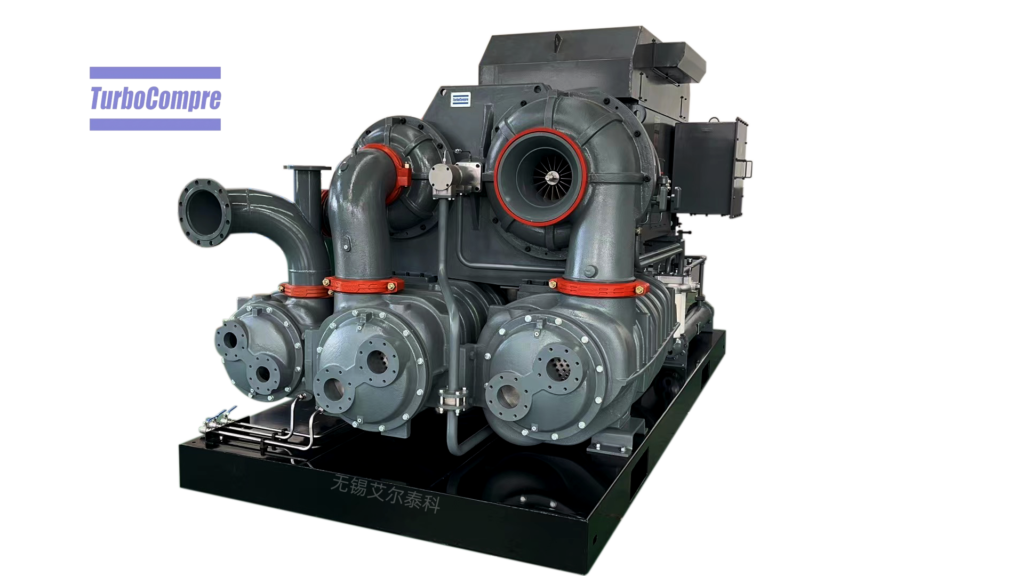
Comprehensive Strengths of Industrial-Grade Centrifugal Compressors
- High pressure ratio and fast pressurization speed, perfectly adapting to high-pressure process requirements of chemical and air separation industries
- Ultra-wide adjustable operation range, stably coping with fluctuating production loads and variable working conditions
- Pure oil-free compression process, fully meeting ISO 8573 Class 0 clean air standards for pharmaceutical and food industries
- Simplified and reliable mechanical structure, low failure rate, and ultra-long service life
- Support variable-frequency energy saving and intelligent anti-surge control, effectively reducing long-term comprehensive energy consumption
Scenario Complementarity Explanation
In a very small number of extreme ultra-large fixed-flow scenarios such as power generation and aviation testing, axial compressors show slight full-load efficiency advantages. However, these niche scenarios are completely isolated from conventional industrial production. For most industrial projects, centrifugal compressors adopt a comprehensive and optimized structural design, with far stronger practicability, compatibility, and operational stability than axial models.
Application Scenario Classification: Centrifugal Compressor as Industrial Priority
Axial Compressor: Only for Special Niche Industrial Fields
Axial compressors are only applicable to ultra-large, fixed, non-fluctuating power energy scenarios, with extremely limited industrial adaptability:
- Supporting air supply system for large gas turbine power generation units
- Aero-engine professional test equipment
- Flue gas desulfurization and denitrification system for super-large thermal power plants
- Blast air system for metallurgical blast furnaces
Centrifugal Compressor: Mainstream Universal Solution for Modern Industry
Centrifugal compressors are the preferred choice for global industrial manufacturing, covering almost all mainstream industrial production scenarios with excellent comprehensive performance:
- Air separation industry: Large-scale oxygen, nitrogen, and argon production units
- Petrochemical and coal chemical industry: Process gas compression and transmission
- Precision manufacturing, pharmaceutical, and food industry: Oil-free clean compressed air supply
- Centralized air supply and skid-mounted modular gas supply for large factories
- Overseas EPC turnkey projects and continuous variable-load production lines
Industrial Selection Guide: Why Centrifugal Compressors Are Preferred for Most Projects
For professional industrial equipment procurement, scenario matching is the core of selection:
If your project belongs to extreme fixed full-load power generation or aviation supporting scenarios with zero load fluctuation, axial compressors can be adopted.
For 90% of industrial scenarios including air separation, chemical engineering, pharmaceutical manufacturing, petrochemical refining, and factory centralized air supply with fluctuating loads and stable high-pressure demands, centrifugal compressors are the most reliable and cost-effective choice.
With the iterative upgrading of industrial technology, optimized multi-stage centrifugal compressors have covered most medium and large-flow industrial scenarios. They perfectly solve the inherent pain points of axial compressors such as single working condition, easy surge failure, and high maintenance costs. Relying on wide working condition adaptability, stable high-pressure output, low operation cost, and high energy-saving efficiency, centrifugal compressors have become the mainstream preferred equipment for modern global industrial projects.
Conclusion
The core difference between axial vs centrifugal compressor lies in performance positioning: axial compressors focus on extreme efficiency under ultra-large fixed flow and single working condition, while centrifugal compressors focus on high pressure ratio, wide working condition adaptability, stable operation, and low maintenance cost.
There is no absolute good or bad between the two models, only scenario adaptation differences. For most global industrial production, air separation and chemical EPC projects, centrifugal compressors have absolute advantages in comprehensive adaptability, operational stability, and energy-saving economy, making them the most ideal equipment for industrial process gas compression and factory air supply.
References
[1] API 617, Axial and Centrifugal Compressors and Expander-compressors for Petroleum, Petrochemical and Natural Gas Industries
[2] ISO 10439-1:2015, Petroleum, petrochemical and natural gas industries — Axial and centrifugal compressors and expander-compressors,
[3] Industrial Fluid Machinery Design Manual: Performance and Selection Specifications of Turbocompressors