

Centrifugal Compressor Surge.If your centrifugal compressor is surging, you need to act immediately. The fastest fix is to increase flow through the machine — typically by opening the anti-surge recycle or blow-off valve. This instantly moves the operating point away from the surge line and restores stable flow. Every second spent in surge risks bearing damage, seal failure, and impeller destruction.
But stopping the surge is only the first step. To prevent it from happening again, you need to understand the root causes, recognize the warning signs, and ensure your centrifugal compressor anti-surge control system is correctly configured.
What Is Centrifugal Compressor Surge?
Centrifugal compressor surge is a violent flow reversal that occurs when the compressor operates at too low a flow rate. At the surge limit, the impeller can no longer sustain the required discharge pressure. Gas momentarily flows backward through the machine, pressure collapses, flow resumes, and the cycle repeats — often several times per second.
Unlike stonewall (choke) at t he opposite end of the centrifugal compressor performance curve, surge is destructive. It sounds like loud banging or booming and can destroy bearings, thrust collars, and labyrinth seals within minutes.
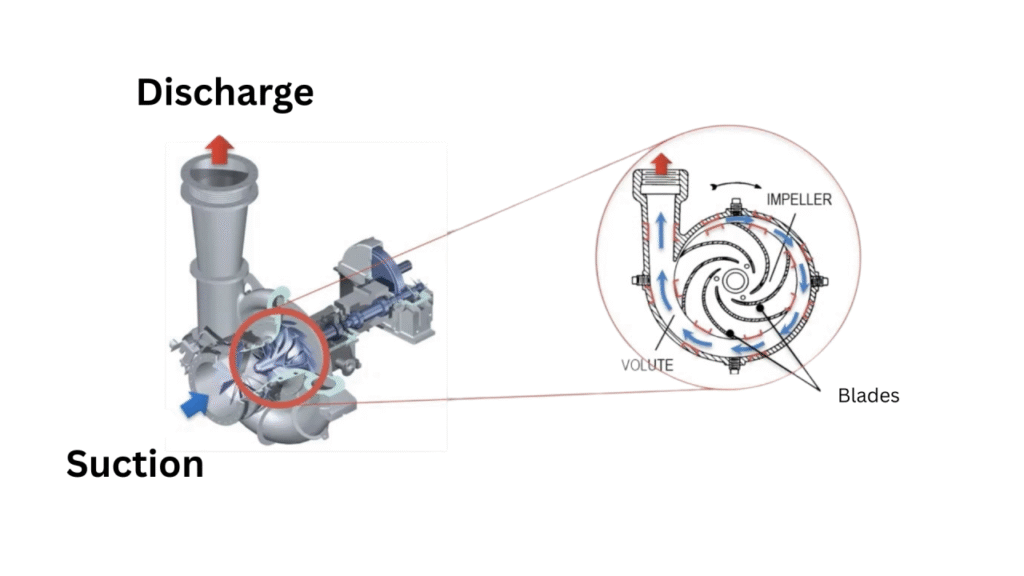
Immediate Fix: How to Stop a Surging Compressor
When compressor surge occurs, follow these steps immediately:
Open the anti-surge valve (recycle or blow-off). This is the single most effective action. It increases the apparent flow through the compressor, pushing the operating point to the right of the surge line on the compressor map.
Reduce discharge backpressure if possible, by opening a downstream vent or adjusting process valves.
Increase suction flow by adjusting inlet guide vanes or suction throttle valves, if available.
Reduce rotational speed if the compressor has a variable-speed drive. Lower speed shifts the entire performance curve downward, giving you a larger safe operating margin.
Critical note: Do not throttle the suction to try to fix surge — this reduces inlet flow and makes the problem worse.
Root Causes of Centrifugal Compressor Surge
To truly solve the problem, you must identify why the flow dropped too low. Common causes of centrifugal compressor surge include:
Cause | What Happens |
Low downstream demand | Process needs less gas than the compressor’s minimum stable flow |
Suction pressure drop | Inlet filter blockage, upstream trip, or supply disruption reduces mass flow |
High discharge pressure | Downstream blockage or valve closure increases back-pressure |
Gas composition change | Lighter molecular weight gas produces lower pressure ratio for the same head, shifting the operating point |
Speed reduction without anti-surge override | Slowing the machine shifts the surge line closer to the operating point |
Inlet guide vane misoperation | Excessive pre-swirl can choke the flow into the impeller eye |
The Anti-Surge Control System: Your Primary Defense
A properly designed centrifugal compressor anti-surge system is your best protection –Its design typically follows the API 617 standard.It consists of:
Surge detection instrumentation: Fast-response flow transmitters, pressure transmitters, and temperature sensors on the suction and discharge.
Anti-surge controller: A dedicated PLC or DCS loop that continuously calculates the operating point’s distance from the surge line.
Anti-surge valve (ASV): A high-stroke-speed valve capable of opening fully within 1-2 seconds. This valve recycles discharge gas back to the suction (or vents to atmosphere for air compressors).
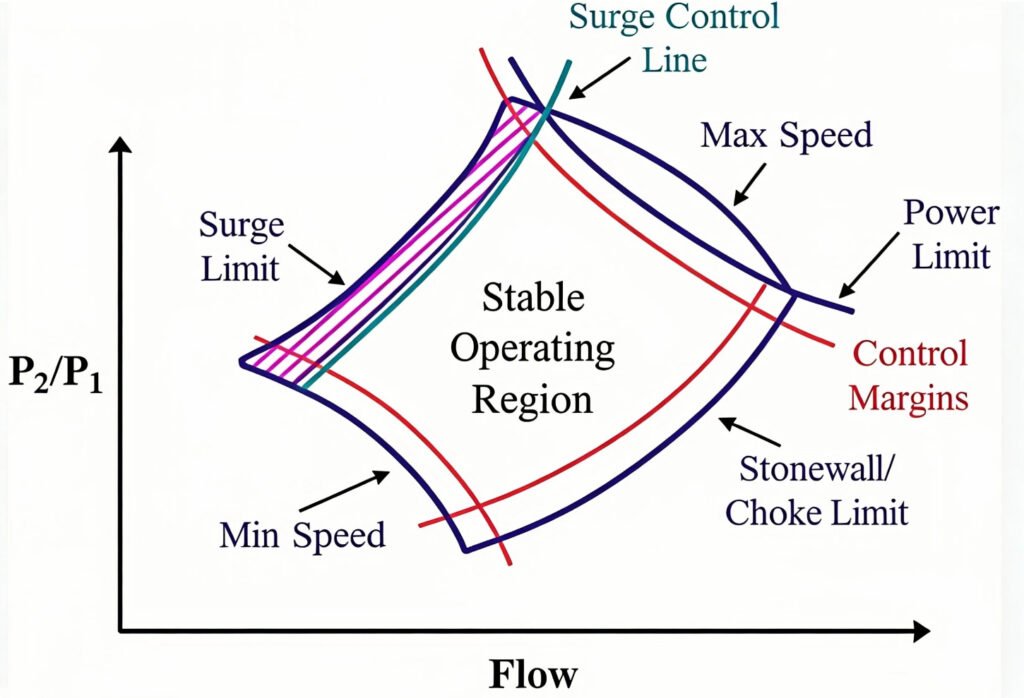
A well-tuned surge control algorithm uses a surge margin — typically 10-15% to the right of the actual surge line. When the operating point crosses this control line, the valve begins to open proportionally. If the point approaches the actual surge limit, the valve snaps fully open.
Surge Prevention: Long-Term Solutions
Beyond the immediate fix, consider these strategies for long-term centrifugal compressor surge prevention:
Re-evaluate your minimum flow requirement. Process conditions change over time. A performance audit can verify that the surge line is still accurately mapped.
Install or upgrade a hot-gas bypass. For low-demand scenarios, recirculating gas keeps the compressor stable without shutting it down.
Consider variable-speed drive retrofits. Speed control provides a more energy-efficient operating range than throttling or recirculation alone.
Perform regular performance testing. Periodically compare operating data against the original compressor performance map to detect degradation that might shift the surge line.
Key Terms at a Glance
| Term | Definition |
|---|---|
| Centrifugal compressor surge | Violent flow reversal at low flow conditions, destructive to the machine |
| Surge line | The left boundary on the compressor map defining minimum stable flow |
| Anti-surge valve (ASV) | Fast-acting recycle or blow-off valve that protects against surge |
| Surge margin | Safety zone between the operating point and the actual surge line |
| Stonewall / Choke | The opposite flow limit — maximum flow where sonic velocity restricts throughput |
Conclusion
Centrifugal compressor surge is preventable, but it demands respect. The immediate fix is always to increase flow — open the recycle valve, lower backpressure, or reduce speed. Long-term protection comes from a well-maintained anti-surge control system, regular performance monitoring, and a thorough understanding of the operating point on the compressor map. Master these, and surge becomes a manageable parameter, not a crisis.
Need help diagnosing surge in your centrifugal compressor? Contact our engineering team for a performance audit and anti-surge system review.
Pingback: Replacement Compressor Impeller: Failure Signs and Criteria
Pingback: The Difference Between Centrifugal and Reciprocating Compressor: A Practical Guide to Choosing the Right Machine - Turbo Compre‘’锡透动力‘’无锡艾尔泰科压缩机
Pingback: Maglev Centrifugal Compressor: Hidden Troubles, Limitations