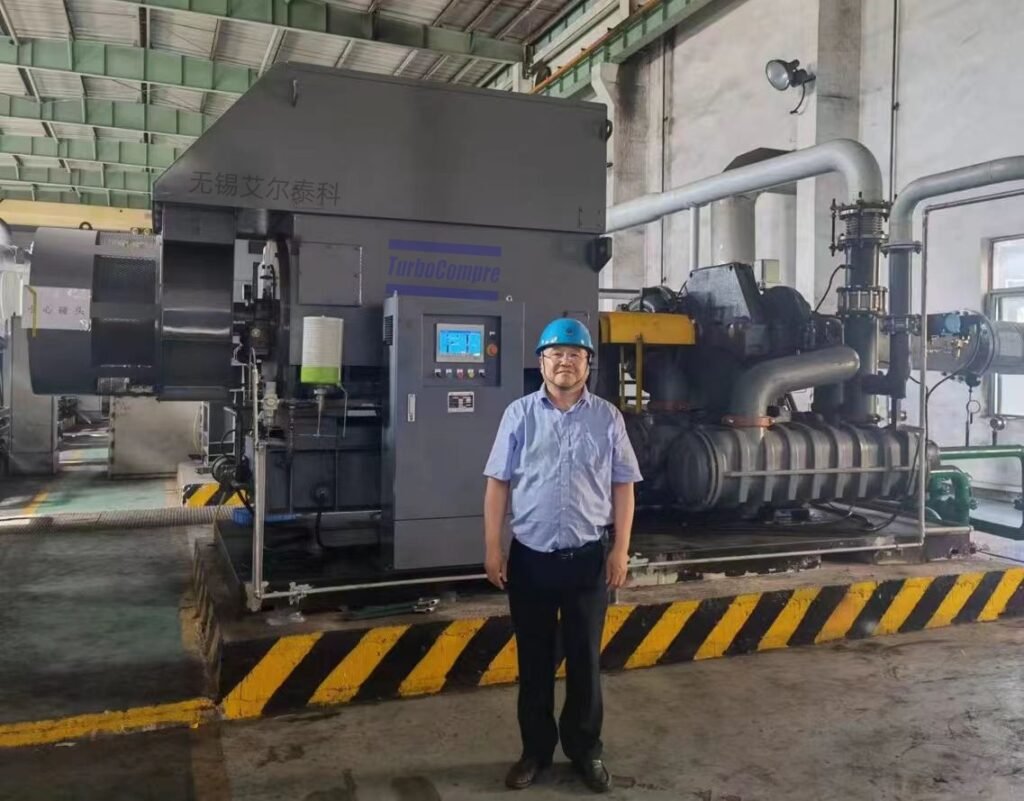
Centrifugal Compressor vs Reciprocating Compressor
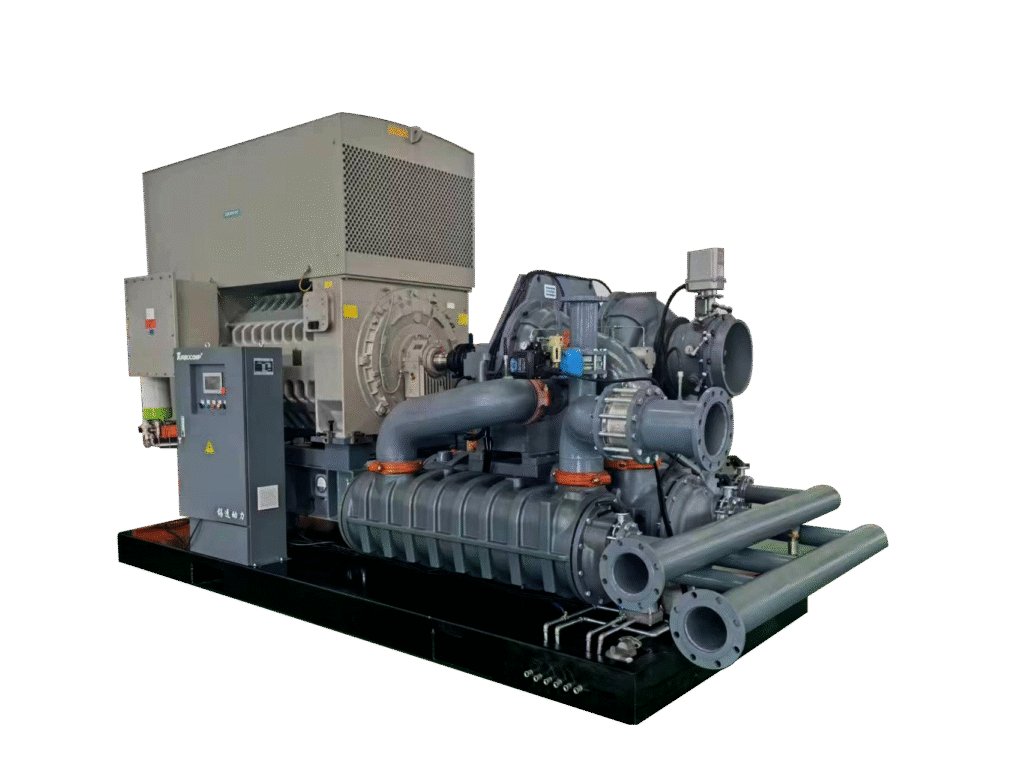
centrifugal compressors
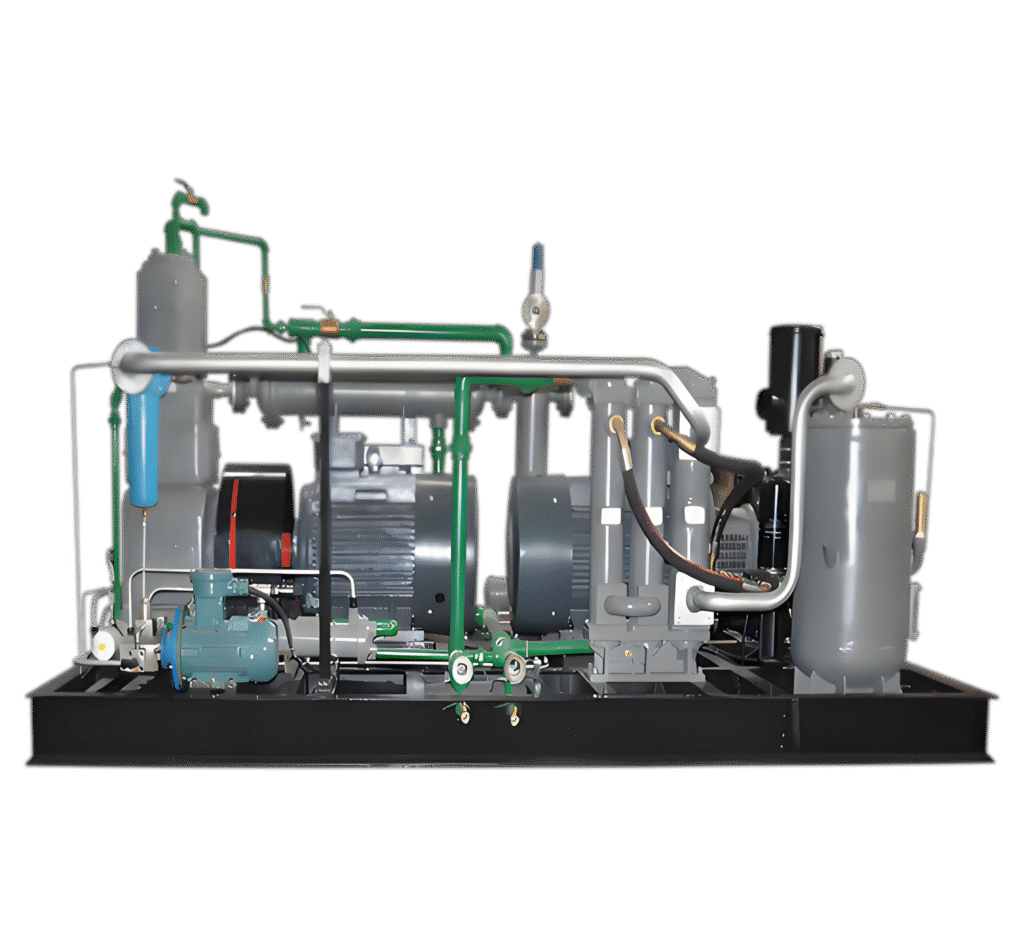
reciprocating compressor
Choosing the right industrial compressor is a critical decision that directly affects energy efficiency, production reliability, and long-term operating costs.
Among the most widely used technologies, centrifugal compressors and reciprocating compressors are two major solutions for industrial applications. But which one is better for your project?
The answer depends on factors such as flow rate, pressure requirements, operating conditions, maintenance strategy, and total cost of ownership.
This guide explains the key differences between centrifugal and reciprocating compressors to help engineers make the right choice.
Centrifugal Compressor vs Reciprocating: How They Work
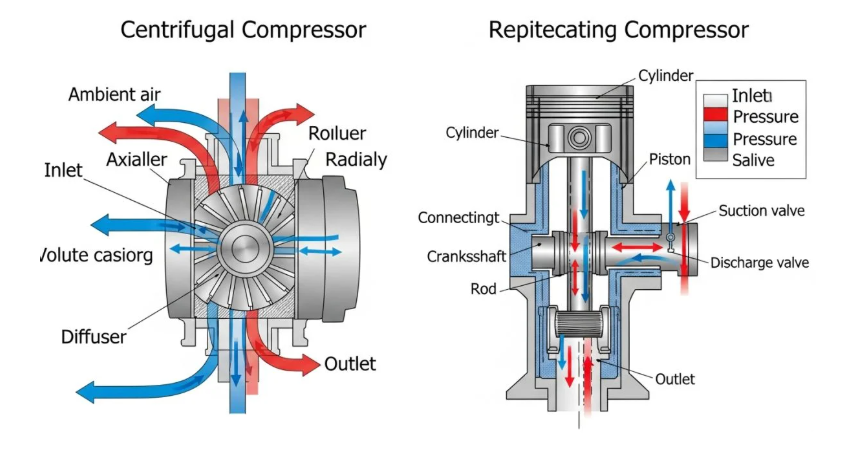
A reciprocating compressor is a positive displacement machine. It works like a car engine cylinder: a piston moves back and forth inside a cylinder, trapping a fixed volume of gas and physically reducing that volume to increase pressure . This method allows it to achieve very high compression ratios in a single stage .
A centrifugal compressoris a dynamic machine. It uses a high-speed rotating impeller to transfer kinetic energy to the gas. The gas is flung outward at high velocity, and then this velocity is converted into pressure as the gas slows down in a diffuser . This works best for moving large volumes of gas continuously .
Centrifugal Compressor vs Reciprocating Compressor: Key Differences
Feature
Centrifugal Compressor
Reciprocating Compressor
Compression Type
Dynamic
Positive displacement
Flow Capacity
High flow
Low to medium flow
Pressure Range
Medium pressure
Very high pressure
Operation
Continuous
Intermittent/pulsating
Efficiency
Higher at large flow
Higher at small flow
Maintenance
Lower
Higher
Oil-Free Operation
Excellent
Requires special design
Footprint
Compact for large capacity
Larger for equivalent flow
Which Compressor Is More Energy Efficient?
Energy consumption is one of the most important factors in compressor selection.
For large-volume air compression, centrifugal compressors generally provide better energy efficiency because they operate continuously with fewer mechanical losses.
For example:
A plant requiring tens of thousands of Nm³/h of compressed air will usually benefit from a centrifugal compressor.
A system requiring high-pressure gas at a lower flow rate may achieve better performance with a reciprocating compressor.
The correct choice is not simply about compressor type — it is about matching the compressor performance curve with the actual operating requirements.
Maintenance and Reliability Comparison
Centrifugal Compressor Maintenance
Centrifugal compressors have fewer contact components, reducing mechanical wear.
Typical maintenance focuses on:
Bearings
Seals
Cooling systems
Lubrication systems
Control systems
With proper operation, centrifugal compressors can provide decades of reliable service.
Reciprocating Compressor Maintenance
Because reciprocating compressors contain pistons, rings, valves, and crank mechanisms, regular inspection is required.
Common maintenance items include:
Piston rings replacement
Valve maintenance
Cylinder inspection
Lubrication system checks
For industries where continuous operation is critical, maintenance frequency becomes an important consideration.
How to Choose Between Centrifugal and Reciprocating Compressors?
Before selecting a compressor, consider these questions:
1. What Is Your Required Flow Rate?
Large flow → Centrifugal compressor
Small or medium flow → Reciprocating compressor
2. What Pressure Do You Need?
Medium pressure applications → Centrifugal compressor
Extremely high pressure → Reciprocating compressor
3. What Is Your Operating Profile?
If your compressor runs continuously for thousands of hours per year, a centrifugal compressor may provide better lifecycle value.
4. What Is Your Maintenance Strategy?
Plants looking for lower maintenance workload often prefer centrifugal technology.
Why Choose TurboCompre Centrifugal Compressors?
TurboCompre specializes in the design, manufacturing, and service of high-efficiency centrifugal compressors for global industrial applications.
With advanced engineering capabilities and OEM manufacturing experience, TurboCompre provides:
High-efficiency centrifugal compressor solutions
Customized compressor design
OEM replacement parts
Compressor retrofit and upgrade services
Professional technical support
For companies seeking a reliable alternative to traditional compressor brands, TurboCompre delivers competitive performance, shorter delivery times, and flexible engineering support.
Final Thoughts
There is no universal winner between centrifugal and reciprocating compressors.
The best choice depends on your:
Required capacity
Pressure conditions
Operating hours
Energy consumption targets
Maintenance expectations
For large-flow, continuous industrial applications, centrifugal compressors are often the most efficient and economical solution.
For high-pressure, low-flow applications, reciprocating compressors remain an excellent choice.
Understanding these differences helps engineers select the compressor that delivers the best performance and lowest total cost throughout its operating life.