
Functions and Process of Nitrogen Booster Compressor in Air Separation Units
Core Functions of Nitrogen Booster Compressor
Low-pressure nitrogen discharged from cryogenic air separation rectifier cannot directly meet the high-pressure demands of downstream production processes. As the core supporting equipment of air separation plants, the booster compressor undertakes the key tasks of pressurizing, stabilizing pressure and transporting low-pressure nitrogen. Its core values are listed below:
1. Precise pressure boosting to match high-pressure working conditions
Raw nitrogen from air separation equipment only has a pressure of 0.8–1.2 bar. The air booster compressor can raise nitrogen pressure to 10–30 bar or higher via multi-stage compression. It is widely used in coal chemical reactions, pipeline purging, high-pressure nitrogen storage, instrument gas pressure stabilization, high-purity gas filling and other scenarios, solving the industry pain point that low-pressure nitrogen cannot be applied for deep processing.
2. Stabilize system pressure to guarantee uninterrupted production
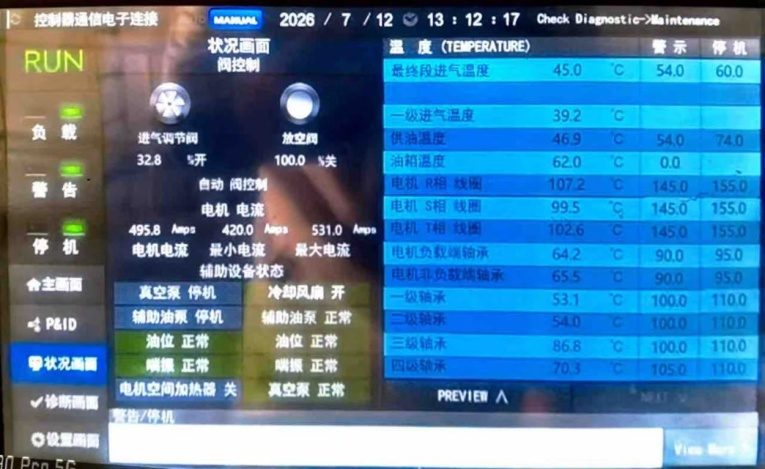
The gas output of air separation units fluctuates with operating load and ambient temperature, which will cause deviation of downstream process parameters. Equipped with a full-automatic control system, the air compressor booster monitors inlet and outlet pressure in real time, links and adjusts the inlet regulating valve and vent valve to output constant-pressure nitrogen, eliminate gas source fluctuation, and realize 24-hour stable continuous production.
3. Realize nitrogen recycling & drastically cut operation costs
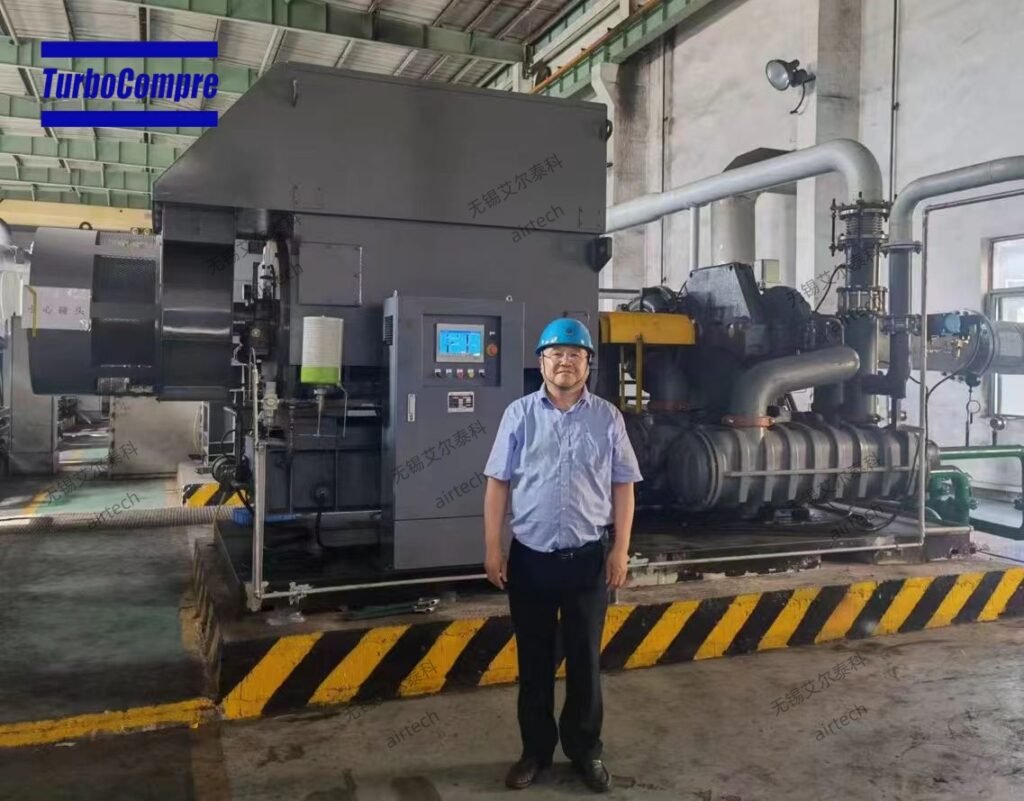
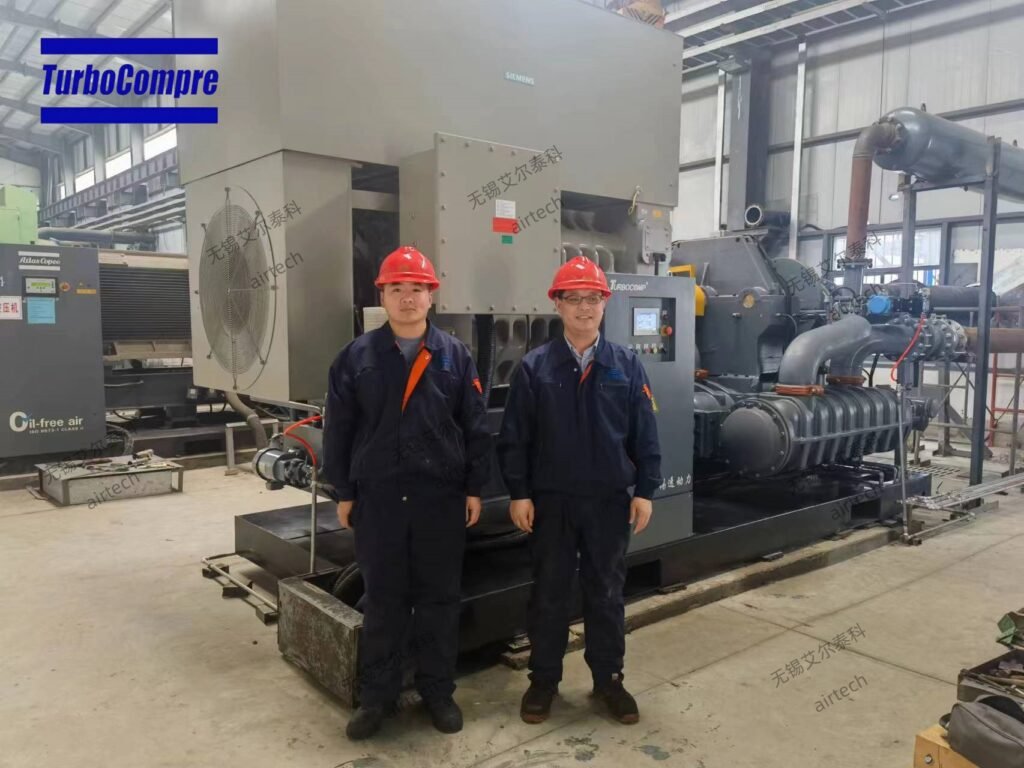
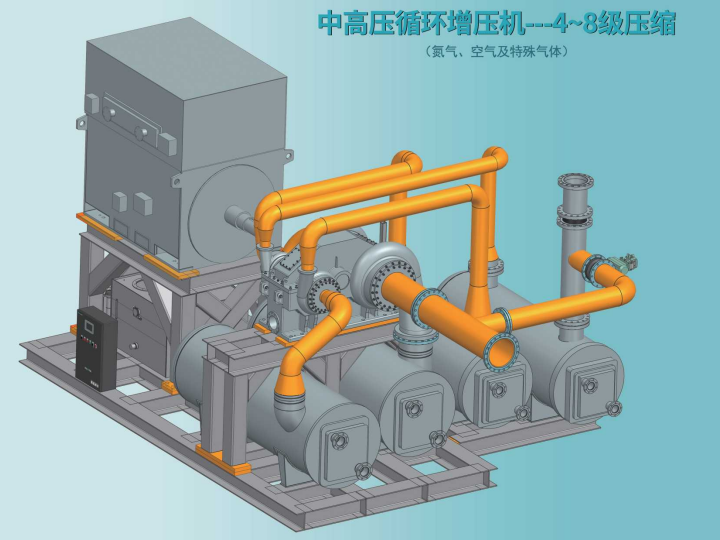
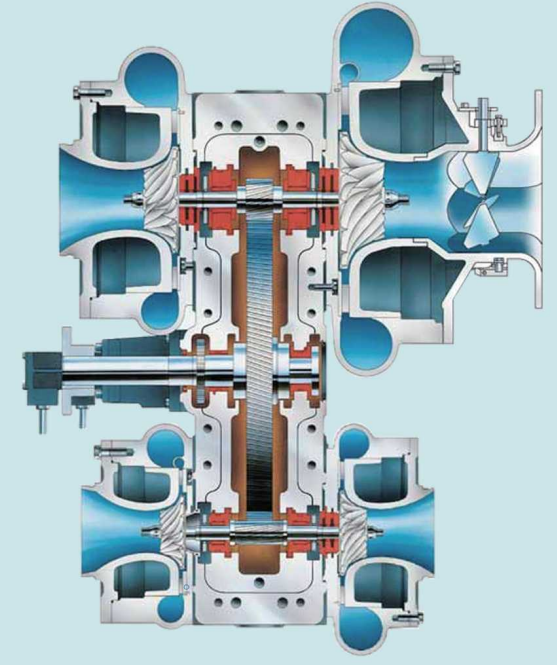
Adopting 4-stage closed impeller design, Turbo compre booster compressors own an outstanding gas-electric ratio; their energy consumption is far lower than reproducing nitrogen, which greatly reduces the overall operation cost of air separation units.
4. Purify gas medium & upgrade nitrogen supply quality
The integrated complete filtration and inter-stage cooling system of the booster compressor can remove dust, liquid droplets and oil mist mixed in nitrogen, and accurately control gas temperature during compression. It keeps the output nitrogen’s pressure, temperature and cleanliness stable, fully meeting strict industrial production standards of high-purity gas, fine chemical and electronic manufacturing industries.
Complete Technological Process of Nitrogen Booster Compressor for Air Separation
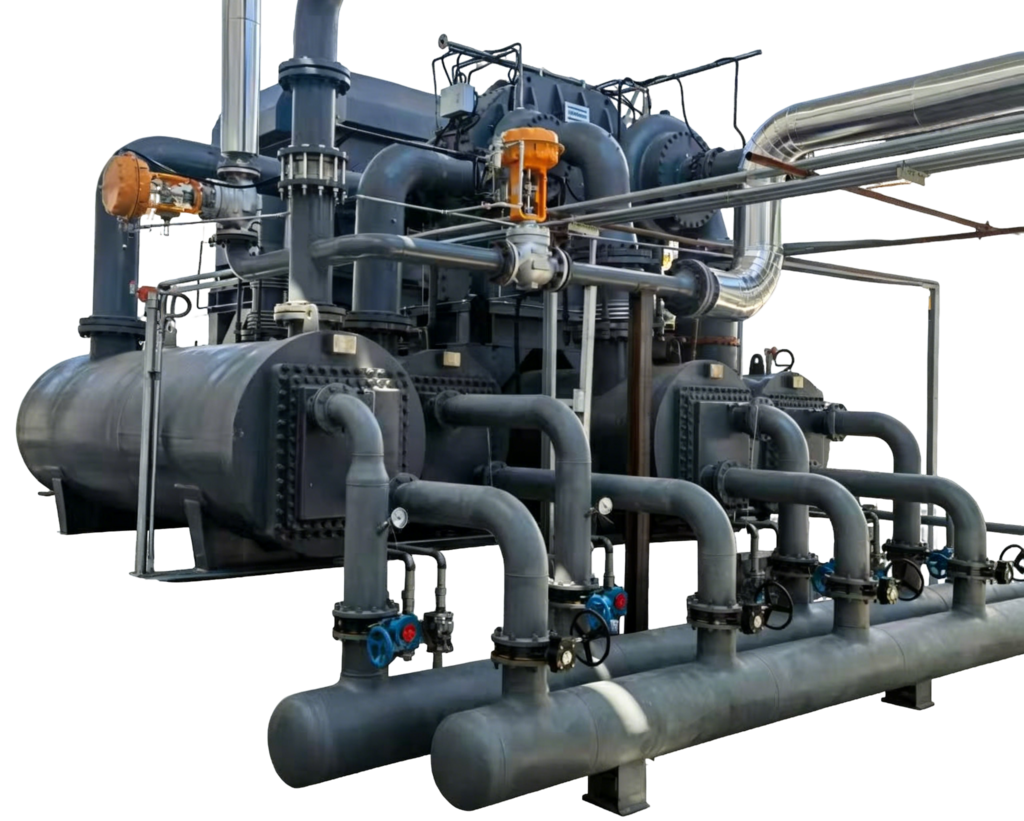
Air separation matched booster compressor adopts the mature integrated process: multi-stage compression + inter-stage cooling + automatic pressure regulation. Taking our mainstream 4-stage closed impeller circulation booster compressor as an example, the full closed, controllable technological flow is sorted as follows:
1. Low-pressure nitrogen intake pretreatment
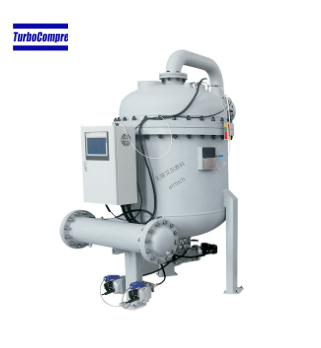
Low-temperature nitrogen from cold boxes and rectifying towers first passes through an intake filter to block solid impurities and liquid droplets, protecting core components such as impellers and bearings from abrasion. Afterwards, the gas flows into a buffer tank to balance flow volume and eliminate air pulse, laying a foundation for stable compression.
2. Step-by-step multi-stage compression
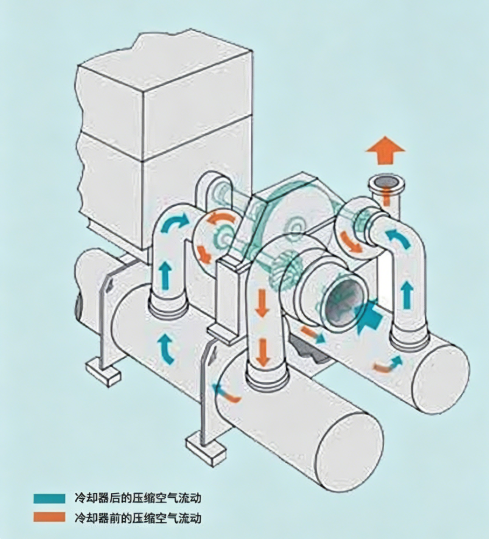
Clean nitrogen enters the compression chambers of Stage 1 to Stage 4 in sequence. Driven by high-speed closed impellers, gas pressure rises gradually. Uniform pressure ratio distribution avoids excessive temperature rise and equipment overload caused by single-stage large pressure difference, and finally boosts nitrogen to the rated working pressure of 28–30 bar.
3. Inter-stage cooling to control gas temperature
Mass heat will be generated during gas compression. After each compression stage, nitrogen enters an inter-stage cooler for rapid heat exchange via air cooling or water cooling, maintaining gas temperature within a safe range before entering the next compression process. Inter-stage cooling effectively cuts compression energy consumption, improves the overall gas-electric ratio, and prevents overheating failures under long-term continuous operation.
4. Precision filtration & automatic pressure regulation
High-pressure nitrogen after multi-stage compression flows through a post-position precision filter to remove residual oil mist and moisture. Meanwhile, the intelligent control system collects exhaust pressure data in real time, automatically adjusting valve opening to stabilize outlet pressure and avoid risks of overpressure or insufficient pressure.
5. High-pressure nitrogen delivery & cyclic reuse
Qualified constant-pressure nitrogen is delivered to downstream processes for chemical reaction, pipeline purging, equipment pressure maintaining and gas filling. Surplus nitrogen from post-process working conditions can flow back to the intake end of the compressor booster for cyclic re-pressurization, forming an energy-saving closed-loop production system.
6. Full-process interlock protection & emergency safety shutdown
The whole technological flow is equipped with an intelligent monitoring module, which tracks pressure, temperature, vibration, motor current, oil pressure difference and other core operating parameters all the time. Once any parameter exceeds the alarm threshold, the system will automatically trigger early warning, pressure relief or emergency shutdown to prevent multiple safety hazards such as over-temperature, overload and overpressure.
Outstanding Process Advantages of Turbo compre Booster Compressor for Air Separation
Compared with traditional single-stage compressor booster, our 4-stage closed impeller booster compressor customized for continuous air separation production has remarkable comprehensive advantages:
About Turbo compre
Turbo compre is a professional high-end manufacturer focused on R&D, design, production and complete one-stop after-sales service of large-flow high-pressure nitrogen booster compressor. We have deep layout in air separation, coal chemical industry, new energy and industrial gas sectors, specializing in the R&D and manufacturing of 4-stage closed impeller high-efficiency air booster compressor and compressor booster units.
Supported by optimized fluid mechanics design, precision processing technology and strict factory delivery inspection standards, our full series of booster compressors feature high gas-electric ratio, stable long-term operation, low failure rate and easy maintenance. We can customize integrated gas boosting overall solutions according to customers’ actual gas flow and pressure requirements, helping enterprises achieve stable gas supply, energy conservation and sustainable production efficiency improvement.
References
[1] ISO 5389:2005, Turbomachinery – Performance Test Code for Compressors and Expanders[S]. Geneva: International Organization for Standardization, 2005.
[2] ISO 8573‑1:2010, Compressed air – Part 1: Contaminants and purity classes[S]. Geneva: International Organization for Standardization, 2010
[3] Schultz J M. The Polytropic Analysis of Centrifugal Compressors[J]. Journal of Engineering for Power, 1962, 84(1):69‑82.