
Compressor Adiabatic Efficiency vs Polytropic Efficiency: Which One to Prioritize in Procurement?
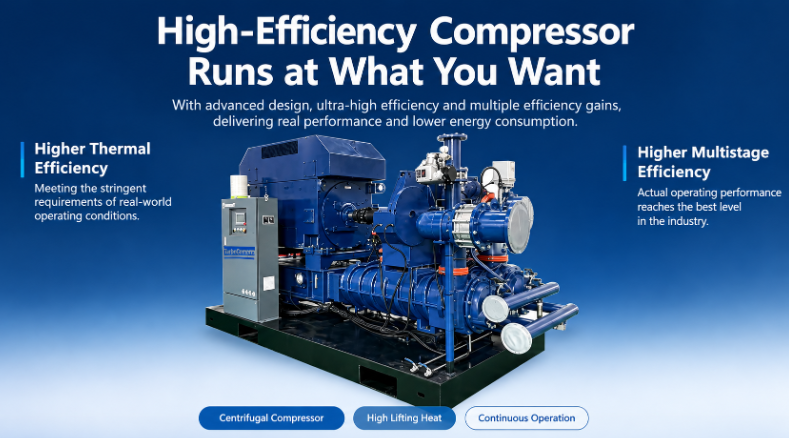
Compressor buyers often confuse adiabatic efficiency and polytropic efficiency. Though both reflect energy performance, they differ greatly in practical procurement value. Knowing which indicator to prioritize helps you select energy-saving, stable, and condition-matching compressor equipment.
Most purchasers only focus on price, power and displacement, ignoring efficiency indicators, which leads to high power consumption, overheating and unstable operation. This article simplifies the differences between two key efficiency parameters and provides professional procurement guidelines to help users avoid pitfalls and cut operating costs.
1. What Is Compressor Adiabatic Efficiency (Isentropic Efficiency)?
Adiabatic efficiency, also called isentropic efficiency, is a basic theoretical indicator. It refers to the ratio of theoretical power consumption to actual power consumption under ideal adiabatic conditions without any heat exchange with the outside environment.
Simply put, it calculates compressor energy consumption in an ideal heat-free compression state, representing the theoretical energy-saving limit of compressor design rather thanreal operating performance.
Core Characteristics of Adiabatic Efficiency
- Idealized indicator: Calculated based on heat-loss-free theoretical models, reflecting equipment design limits.
- Theoretical performance reference: Used to evaluate the design level of impellers, rotors and sealing structures.
- Limited applicability: Only fits short-term rapid compression, not suitable for long-term industrial operation.
- Low numerical value: Shows lower data than polytropic efficiency under the same equipment conditions.
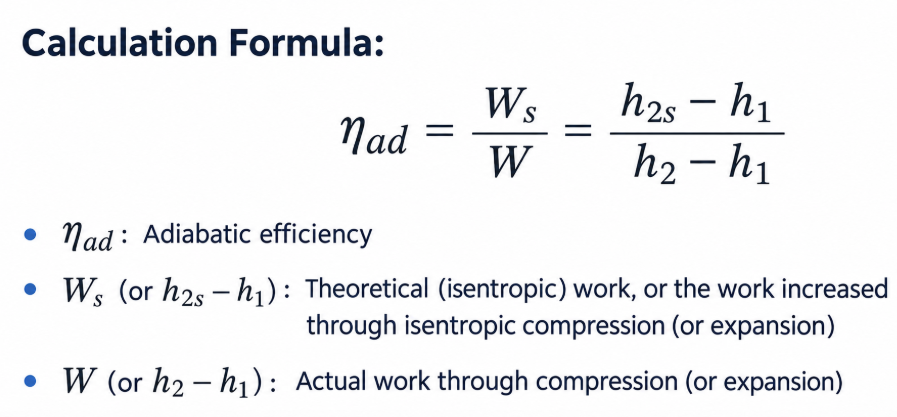
2. What Is Compressor Polytropic Efficiency (Actual Working Condition Efficiency)?
Polytropic efficiency is a practical core indicator for industrial compressors. It refers to the ratio of theoretical effective power to actual shaft power under real industrial working conditions.
In actual industrial operation, compressors generate and dissipate heat continuously. This real compression process with temperature and pressure changes is defined as the polytropic process, corresponding to practical polytropic efficiency.
Core Characteristics of Polytropic Efficiency
- Real working condition adaptation: Matches continuous industrial operation with heat dissipation and temperature rise.
- Genuine energy-saving reflection: Accurately reflects actual energy utilization and loss of equipment.
- Full-condition compatibility: Applies to rated, partial-load and intermittent operation scenarios.
- Direct procurement guide: Closely related to actual power cost and equipment service life.
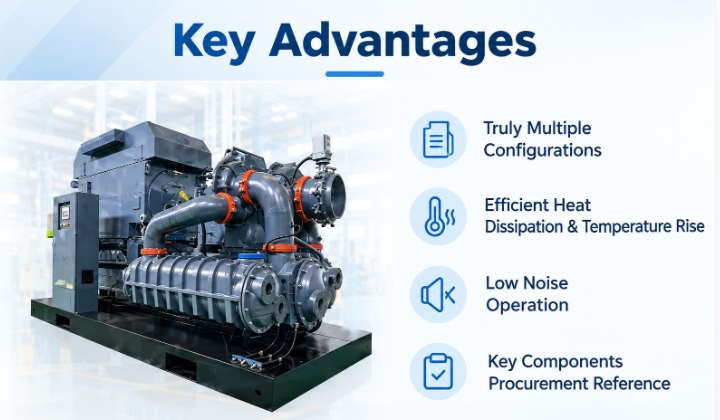
3. Adiabatic Efficiency vs Polytropic Efficiency: Core Difference Comparison
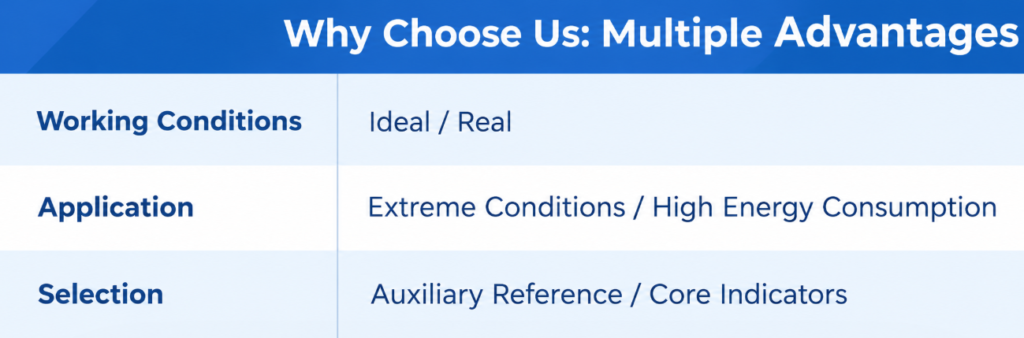
Comparison Dimension | Adiabatic Efficiency (Isentropic Efficiency) | Polytropic Efficiency |
Calculation Condition | Ideal adiabatic state, no heat exchange | Real industrial polytropic state, with heat dissipation and temperature rise |
Core Function | Calibrates equipment design limit and theoretical performance | Measures practical energy-saving performance and operating efficiency |
Working Condition Adaptability | Poor, only for ideal short-term working conditions | Excellent, suitable for long-term continuous production |
Numerical Value | Lower for the same equipment | Higher and more authentic for the same equipment |
Procurement Reference Value | Very low, only for auxiliary reference | Extremely high, core selection indicator |
4. Procurement Pitfall Guide: Avoid Parameter Misleading
- Avoid theoretical data misleading: Manufacturer-provided adiabatic efficiency is laboratory ideal data and cannot be achieved in actual operation.
- Verify actual measured data: Require suppliers to provide authentic polytropic efficiency data under rated and conventional working conditions.
- Focus on full life-cycle cost: Compressor procurement cost accounts for only 10% of total cost, while power consumption accounts for over 75%. High-efficiency equipment can recover price differences via power savings in 1-2 years.
Check full-load efficiency stability: Some equipment performs well at rated load but decays severely at partial load. Always verify efficiency under daily operating conditions.
5. Turbo Compre
In summary: Adiabatic efficiency indicates design limit, while polytropic efficiency reflects real energy efficiency. For compressor procurement and energy efficiency evaluation, polytropic efficiency is the decisive indicator for energy-saving performance and operational stability, while adiabatic efficiency is only for theoretical R&D reference.
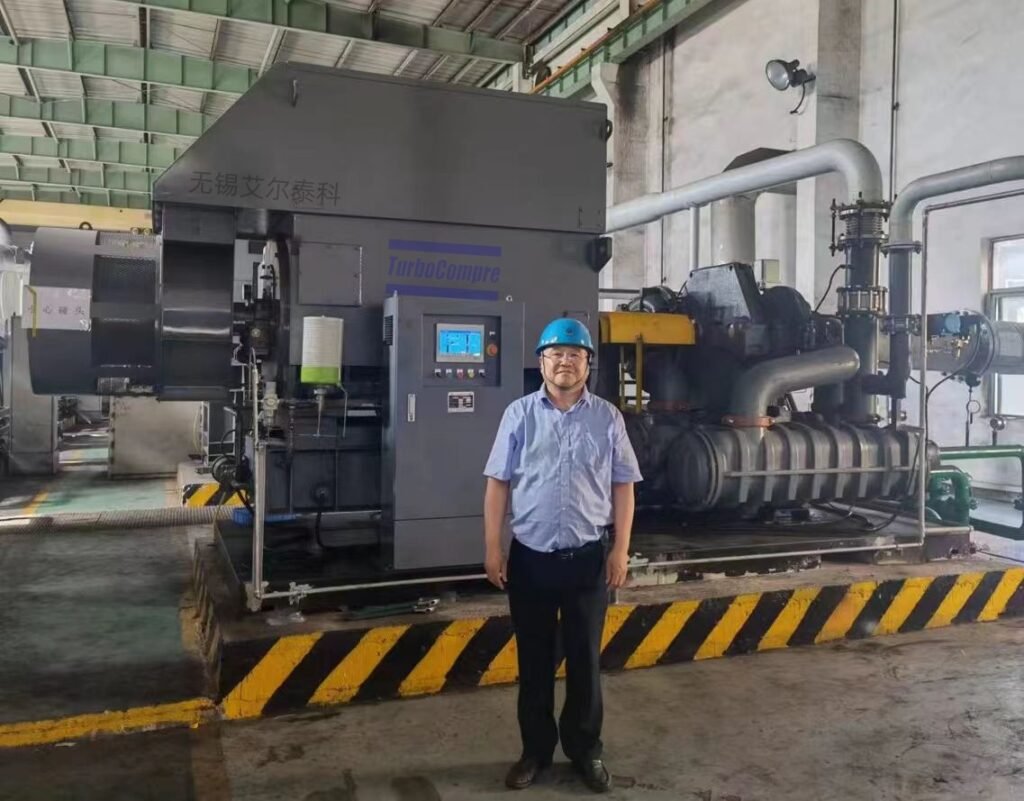
As a professional compressor manufacturer, Turbo Compre rejects false theoretical parameter hype. We strictly take measured polytropic efficiency as the core production and inspection standard. Equipped with self-developed 3D impeller design and aerodynamic optimization technology, our centrifugal compressors maintain high stable polytropic efficiency under actual working conditions. Our equipment adapts to various industrial long-term operation scenarios, reducing energy consumption and failure rates to help enterprises achieve stable operation and cost reduction.