
Centrifugal Fan vs Centrifugal Compressor: Core Differences, Principles, Parameters and Applications

Centrifugal fans and centrifugal compressors are core industrial fluid equipment with similar working principles and appearances. Both use high-speed impeller rotation and centrifugal force for gas transmission and pressurization. Often confused in industrial procurement and engineering design, misselecting the two devices easily causes poor equipment performance, high energy consumption, frequent failures and substandard operating conditions.
Despite identical working principles, they differ fundamentally in positioning, parameters, structure and application scenarios. Simply put, centrifugal fans deliver large-flow, low-pressure gas for ventilation; centrifugal compressors provide high-pressure, stable gas for compression and energy storage. This article compares the two devices in principles, parameters, structures and applications to deliver professional industrial selection guidance.
1. Same Basic Principle, Different Core Working Logic
Both devices belong to centrifugal fluid machinery. The motor drives the impeller to rotate at high speed, sucking gas axially, accelerating it via centrifugal force, and converting velocity energy into pressure energy through diffusers and volutes to realize gas pressurization and transmission.
However, their core working objectives vary greatly, leading to distinct performance and structural differences:
- Centrifugal Fan: A low-pressure, high-flow ventilation device focused on gas delivery. It barely compresses gas or changes gas density with an extremely low compression ratio.
- Centrifugal Compressor: A high-precision, high-pressure device focused on gas compression. Multi-stage impellers achieve gradual pressurization, reducing gas volume, increasing density and realizing high-pressure energy storage.
2. Centrifugal Fan vs Centrifugal Compressor: Core Parameter Differences
Industry standards distinguish the two devices clearly by outlet pressure, pressure ratio and flow range, which serve as the core basis for industrial equipment selection.
2.1 Pressure and Pressure Rise Range
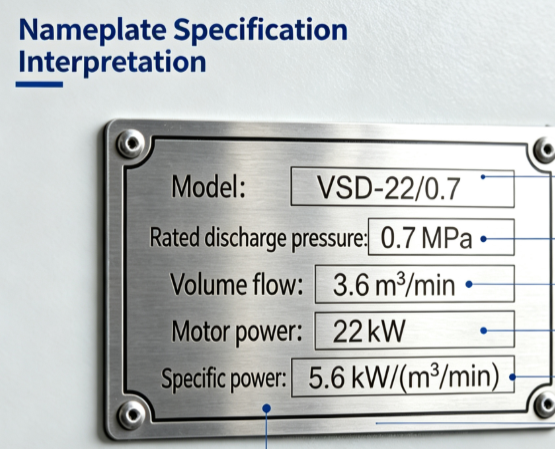
- Centrifugal Fan: Outlet gauge pressure <30kPa, pressure ratio 1.05–1.2. It only overcomes pipeline and equipment resistance without substantial gas compression, covering common ventilation, induced draft and low-pressure blower equipment.
- Centrifugal Compressor: Outlet gauge pressure>0.2MPa (up to dozens of MPa for premium models), pressure ratio >1.2. It achieves deep gas compression to meet high-pressure process gas supply demands.
2.2 Flow Rate and Operating Speed
- Centrifugal Fan: Low-speed, large-flow design with wide working condition adaptability, enabling stable large-volume gas transmission.
- Centrifugal Compressor: High-speed variable-frequency design for precise medium/high-pressure flow control. It only maintains high efficiency under rated working conditions.
2.3 Temperature Rise and Energy Consumption Characteristics
- Centrifugal Fan: Slight gas compression produces negligible heat. No cooling system is required, featuring low energy consumption and stable long-term operation.
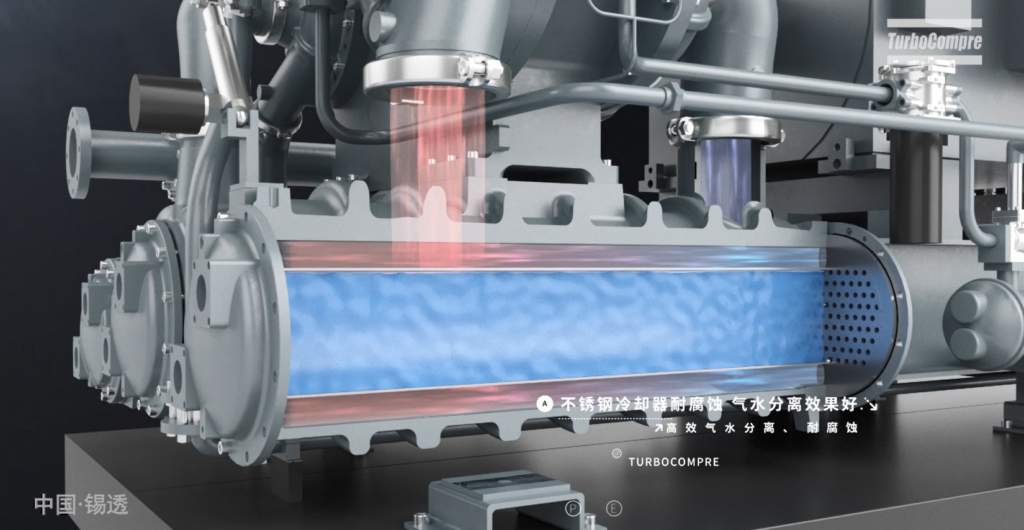
- Centrifugal Compressor: Multi-stage compression generates massive heat, requiring matched cooling systems. It has higher energy consumption and stricter heat dissipation requirements.
3. Core Structural Design Differences
Centrifugal fans and compressors adopt differentiated internal structures, accessories and fuselage designs to adapt to different pressure conditions, forming the most intuitive identification and maintenance differences.
3.1 Impeller and Stage Design
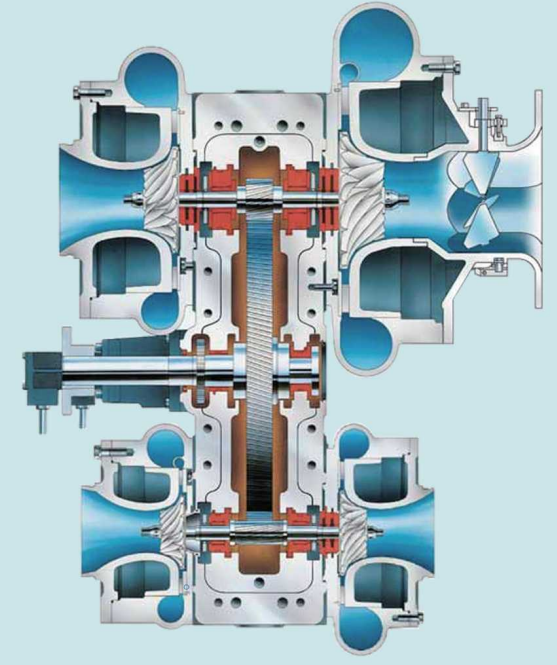
- Centrifugal Fan: Single-stage impeller with wide blades and large flow channels, reducing airflow resistance, boosting ventilation and featuring a simple, cost-effective structure.
- Centrifugal Compressor: 2–10 series impellers paired with precision guide vanes and diffusers. Compact flow channels realize gradual high-pressure pressurization with ultra-high manufacturing and assembly precision requirements.
3.2 Sealing and Pressure-Bearing Design
- Centrifugal Fan: Low working pressure lowers sealing requirements. Simple labyrinth seals and open thin-shell structures enable easy daily maintenance.
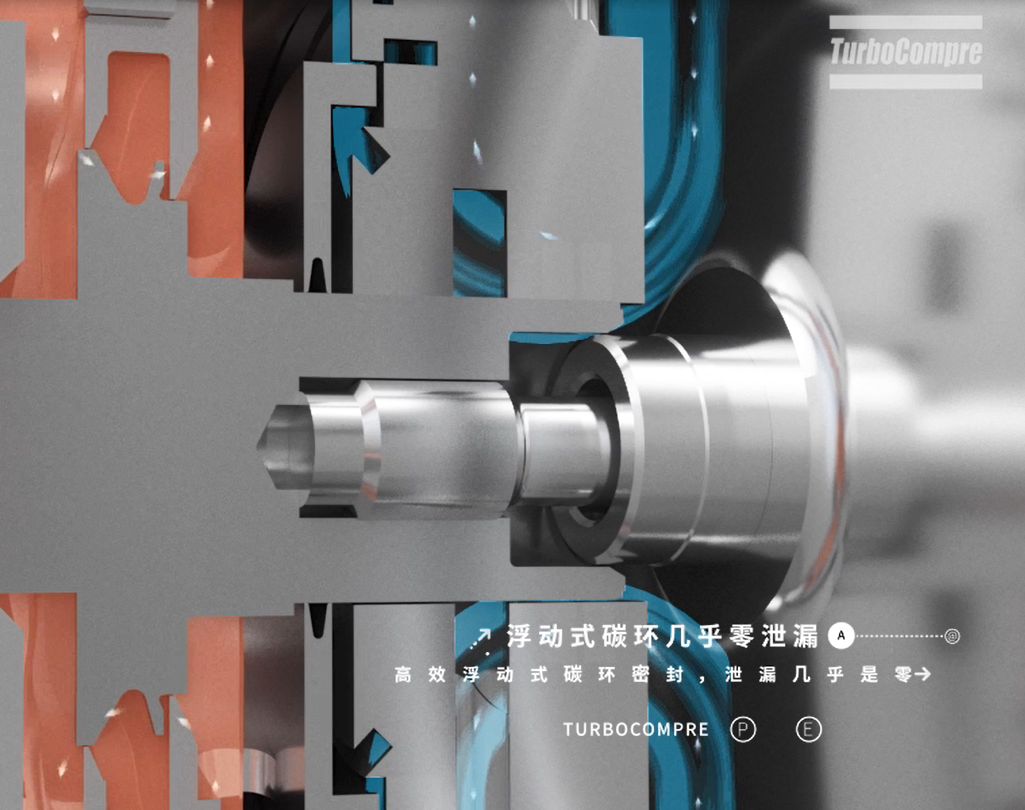
- Centrifugal Compressor: Equipped with high-precision mechanical or dry gas seals and thick pressure-bearing shells to prevent high-pressure leakage, ensuring stable operation for closed high-pressure processes.
3.3 Auxiliary System Configuration
- Centrifugal Fan: Only equipped with basic motors, bases and ducts, with no complex auxiliary devices such as cooling or anti-surge systems.
- Centrifugal Compressor: Integrated with complete supporting systems including cooling, lubrication, anti-surge, pressure stabilization and intelligent control systems for high-precision automated operation.

4. Detailed Application Scenario Analysis
4.1 Main Application Scenarios of Centrifugal Fans
Centrifugal fans apply to low-pressure, large-flow scenarios including ventilation, dust removal and heat dissipation, widely used in general industry, construction, environmental protection and HVAC:
- HVAC System: Air supply, return air and exhaust systems for shopping malls, office buildings and industrial plants;
- Industrial Ventilation: Workshop air exchange, equipment heat dissipation, tunnel and mine ventilation;
- Environmental Protection & Dust Removal: Waste gas transmission, bag dust removal, flue gas induced draft for desulfurization and denitrification;
- Thermal Equipment: Boiler air supply and induced draft, kiln combustion-supporting ventilation;
- Material Conveying: Low-pressure pneumatic conveying of light powder and granular materials.
4.2 Main Application Scenarios of Centrifugal Compressors
Centrifugal compressors serve high-pressure, stable-pressure gas compression and energy storage processes, mainly applied in high-end precision industrial fields:
- Petrochemical Industry: Process gas compression, oil and gas transmission, pressure-stabilized gas supply for chemical reactions;
- Air Separation Industry: High-pressure air energy storage for oxygen and nitrogen production;
- Gas Industry: Natural gas pressurization, gas transmission, gas turbine supporting gas supply;
- Refrigeration Industry: Refrigerant compression for large industrial refrigeration and central air conditioning centrifugal units;
- High-End Manufacturing: High-precision equipment high-pressure air source and automatic production line pressure-stabilized gas supply.
5. Industrial Equipment Selection Summary
Most selection confusion stems from failing to distinguish gas transmission (fan) and gas compression (compressor) working conditions. The core selection principle is clear:
Choose centrifugal fans for low-pressure ventilation, dust removal, air exchange and large-flow gas delivery; choose centrifugal compressors for high-pressure stabilization, process compression and gas energy storage.
In summary, the two devices share identical principles but differ greatly in positioning. Centrifugal fans are low-cost, easy-maintenance equipment for low-pressure large-flow ventilation; centrifugal compressors are high-precision, fully equipped devices for high-pressure industrial compression processes.

Turbo Compre is a high-tech enterprise specialized in R&D, manufacturing, sales and after-sales service of centrifugal fluid equipment. With rich industry experience, we provide customized solutions for full-series high-precision centrifugal compressors and energy-saving centrifugal fans. Adopting international advanced manufacturing and optimized structural design, our products comply with global industrial standards. Widely used in HVAC, environmental protection, petrochemical, air separation, gas and high-end manufacturing industries, our equipment features stable performance, low energy consumption and long service life.