
When Should You Replace a Centrifugal Compressor Instead of Repairing It?
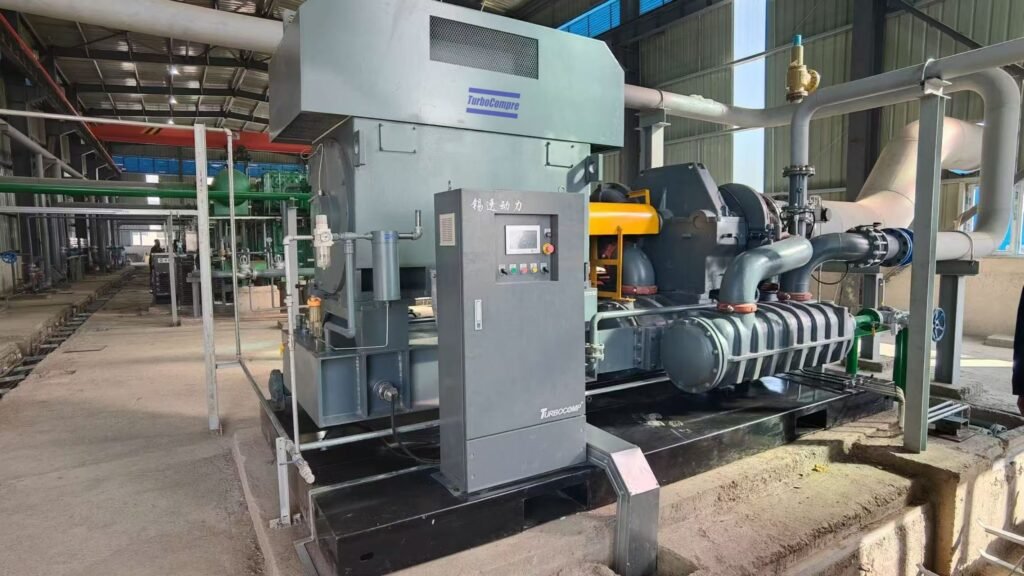
A centrifugal compressor in a steel mill, chemical plant, air separation unit, or other continuous-production facility may operate for thousands of hours each year. When capacity starts to decline, vibration increases, power consumption rises, or major failures become more frequent, the question is not simply whether the compressor is old.
The more important question is whether continued repair can still deliver reliable performance at a reasonable lifecycle cost. A new compressor requires capital investment and installation time, while repeated repairs can create hidden costs through downtime, spare parts, and lost production.
1. Start with Performance, Not Equipment Age
Operating hours and equipment age are useful reference points, but they should not be the primary reason for replacement. A better assessment starts with actual operating data.
Compare the compressor’s flow, suction and discharge pressure, temperature, power consumption, vibration, bearing condition, and efficiency with historical or design data. If the machine still meets the required operating point and the degradation is caused by serviceable components, repair may be sufficient.
The U.S. Department of Energy also recommends analyzing compressed-air system performance, pressure, controls, maintenance, and equipment efficiency rather than looking at the compressor as an isolated purchase.
2. When Repair Is the More Practical Solution
Repair is often suitable when the compressor’s main casing, rotor, gearbox, and other critical structures remain in good condition, while individual components show wear or damage.
Typical work includes impeller replacement, bearing and seal replacement, cooler cleaning or replacement, rotor balancing, shaft repair, gear inspection, and performance restoration. For older imported compressors, localized manufacturing and qualified replacement parts can also address discontinued components or long OEM lead times.
The key question is simple: Can the compressor meet the required flow, pressure, vibration, and reliability targets after repair? If the answer is yes, replacing the complete machine may not be necessary.

3. When an Upgrade Is Better Than a Basic Repair
A compressor may have good mechanical integrity but still operate inefficiently because its original design no longer matches the plant’s current requirements.
For example, changes in production load may cause the compressor to operate far from its original design point. An outdated control system, undersized cooler, inefficient impeller, excessive pressure drop, or poor inlet conditions can also increase power consumption.
In these situations, a targeted upgrade can provide more value than simply replacing worn parts. Possible solutions include impeller redesign or replacement, cooler upgrading, control-system optimization, inlet filtration improvement, rotor balancing, and operating-point adjustment.
DOE resources also identify system controls, pressure management, maintenance, and equipment upgrades as important opportunities for improving compressed-air system performance.

4. When Should Compressor Replacement Be Considered?
Replacement becomes more relevant when several major problems exist at the same time:
- Repeated major failures or frequent overhauls
- Continuous and significant performance degradation
- High power consumption despite maintenance
- Critical spare parts are discontinued or difficult to source
- Repair costs continue to increase
- The compressor cannot meet current flow or pressure requirements
- The remaining service life is limited
- The original machine cannot economically support new production requirements

For example, replacing a bearing may solve a vibration problem temporarily, but if the rotor, impellers, gearbox, cooler, and control system also require major work, the total repair scope can become substantial.
This is why equipment age alone should never determine a centrifugal compressor replacement. The decision should come from the combination of technical condition, performance, cost, and future operating requirements.
5. Compare Lifecycle Cost Instead of One Repair Quote
The biggest mistake is to compare only today’s repair quotation with the purchase price of a new compressor.
A more useful calculation is: Repair Cost + Spare Parts + Energy Cost + Downtime Risk + Future Maintenance + Remaining Service Life
Consider two scenarios. In the first, an older compressor requires a relatively inexpensive overhaul but continues to consume excessive power and needs frequent replacement of critical components. In the second, a higher initial investment in an upgrade or replacement significantly reduces energy consumption and maintenance requirements.
For a large compressor running continuously, even a relatively small efficiency loss can accumulate into a substantial operating expense over years. Therefore, the repair-versus-replacement decision should be based on total lifecycle cost and required production performance, not the lowest immediate price.
6. Repair, Upgrade, or Replace with Turbocompre
Turbocompre provides solutions for large centrifugal and booster compressors, covering complete compressor units, spare parts, component manufacturing, repair, overhaul, performance restoration, and equipment upgrades.
For aging imported compressors, our team can assess critical components such as impellers, coolers, bearings, seals, shafts, gears, and rotors, then determine whether the equipment is better suited for repair, localized replacement, performance upgrading, or complete replacement.

If your centrifugal compressor is experiencing rising maintenance costs, declining capacity, high vibration, increasing power consumption, or difficult spare-parts sourcing, contact Turbocompre for a technical evaluation and discuss the most practical path for your equipment.