
How to Estimate Annual Electricity Cost Loss from Impeller Fouling
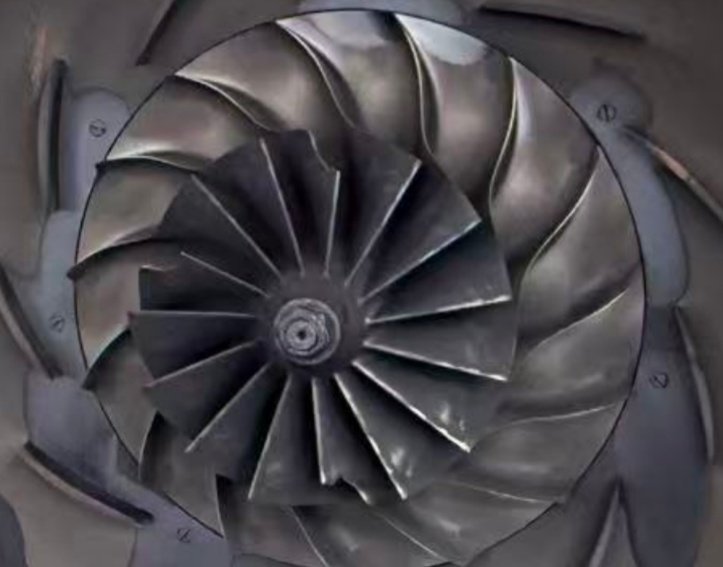
Impeller fouling is a hidden energy-cost problem common across chemical, steel and air-separation plants—and one of the easiest cost drivers for maintenance teams to overlook. Over time, dust, salt mist, oil vapor and process media carried by the intake settle on the blade surface and form a fouling layer. This deposit roughens the blade and distorts the flow path, increasing flow resistance and boundary-layer separation and visibly cutting polytropic efficiency.
With the required flow and discharge pressure held constant, the compressor must draw more power to sustain the same operating point. Motor shaft power keeps rising, unit power consumption grows, and annual electricity spend climbs year after year. Most plants notice higher vibration, abnormal bearing temperature or surge risk, yet ignore the steadily rising electricity bill behind the meter.
This article explains how impeller fouling drives efficiency loss, gives the estimation formulas and a worked example, and highlights common mistakes and treatment directions—helping plants quickly quantify the annual electricity cost caused by fouling and build a credible ROI case for online cleaning, off-line overhaul and impeller repair.
The centrifugal compressor impeller converts mechanical energy into gas pressure and kinetic energy through precisely designed curved blades; its surface finish directly governs flow loss and polytropic efficiency. In practice the inlet filter is never 100% effective, and the gas often carries fine dust, salt mist, oil vapor and corrosive media. These particles and droplets impact and stick to the blades, gradually building into a fouling layer that pushes blade performance away from design values:
- Altered blade aerodynamics: the fouled surface roughens, the flow passage becomes uneven, boundary-layer separation starts earlier, and wake and friction losses both rise, cutting polytropic efficiency significantly.
- Higher shaft power at the same duty: with flow and discharge pressure unchanged, the compressor must consume more power to overcome the extra losses, shown as rising motor current and shaft power.
- Secondary risks: uneven fouling unbalances the rotor, increasing vibration and bearing and seal wear; if left untreated it can trigger surge and unplanned shutdown.

Under dusty, humid or chemical-fume conditions, fouling accelerates and can cause 3%–8% annual efficiency loss; the harsher the duty and the longer the run, the faster the decline. This decay is gradual and hard to detect in a single measurement, so it is often mistaken for normal aging—leaving plants quietly absorbing the cost until efficiency drops enough to hurt output.
2. Estimating the Annual Electricity Cost Loss
Applies to centrifugal process compressors and centrifugal blowers operating at a fixed flow and discharge pressure, where efficiency loss shows up as higher power consumption. For variable-load units, convert to an average load factor first.
Basic Formulas
Annual extra energy (kWh) = Rated shaft power (kW) × Annual operating hours (h) × Efficiency loss rate ÷ (1 − Original polytropic efficiency)
Annual electricity cost loss (currency) = Annual extra energy (kWh) × Industrial electricity price (currency/kWh)
Variable Definitions
- Rated shaft power: input power at full load, from the nameplate or DCS history; the baseline for estimation.
- Annual operating hours: typically 8,000 h for continuous duty; use actual accumulated runtime for intermittent production, never calendar time.
- Efficiency loss rate: polytropic efficiency drop versus a new or cleaned unit; the core variable.
- Original polytropic efficiency: design efficiency of the new compressor, from the manufacturer or performance curve.
- Industrial electricity price: actual settled price including demand and time-of-use weighted tariffs; use a full-year weighted average.
Quick field estimate:
Extra power ≈ Current running power × Efficiency loss percentage. Simple and fast for gauging the magnitude of fouling impact on site.
Note: this covers direct electricity loss only. It excludes lost output from shutdowns, bearing and impeller repair, spare-part replacement and shorter machine life from higher vibration—factor these in for a full economic assessment.
3. Worked Example
Case Conditions
- Rated shaft power: 1,200 kW (typical for a mid-to-large process compressor)
- Annual running: 8,000 hours
- Original polytropic efficiency: 82%; fouling cuts efficiency by 5%
- Industrial electricity price: USD 0.09/kWh (weighted annual average)

Calculation
- Annual extra energy = 1200 × 8000 × 5% ÷ (1 − 0.82) = 2,666,667 kWh
- Annual cost loss = 2,666,667 × 0.09 ≈ USD 240,000/year
The result is striking: a mere 5% efficiency loss makes one compressor consume about 2.67 million kWh and cost roughly USD 240,000 extra each year. At 8% loss, the annual cost exceeds USD 384,000. For plants running multiple large units, this multiplies into millions of dollars per year—clear evidence of the economic value of timely cleaning.
4. Four Common Mistakes to Avoid
Mistake 1: Using Motor Rated Power Directly
Motor rated power is not compressor shaft power. Motor efficiency and transmission losses (coupling, gearbox) are included in the motor rating, so using it overstates the fouling loss and misleads decisions. Use the compressor input shaft power or DCS actual power instead.
Mistake 2: Ignoring Load Variation
For variable-load units, do not use full-load parameters directly. Track runtime per load segment and use a weighted average load factor so the estimate reflects the true annual average.
Mistake 3: Counting Electricity Only, Ignoring Hidden Costs
Fouling costs far more than the power bill. It causes rotor imbalance, higher vibration, faster bearing and seal wear, unplanned maintenance and short production losses—often several times the direct electricity cost. Evaluate these separately.
Mistake 4: Confusing Efficiency Loss with Flow Loss
When flow and pressure must be held constant, efficiency loss shows up as higher power draw; without more power, fouling shows up as lower flow and pressure. The two scenarios are calculated differently—estimate the former by extra power and the latter by output loss or standby capacity cost.
Impeller fouling is one of the most overlooked energy leaks in a plant. It raises electricity and operating costs quietly, day by day. The good news: with the simple formulas above and DCS data, any plant can quickly estimate the annual cost and back its maintenance decisions with clear numbers.

Chemical, air-separation and steel plants should run a compressor performance test every year to quantify fouling-related energy loss and include cleaning and maintenance in a preventive plan. Acting early means recovering the electricity cost that fouling quietly eats away, keeping equipment in its efficient range.If impeller fouling and rising power bills are a concern, turn to a professional compressor manufacturer. Turbo Compre specializes in centrifugal compressor R&D and manufacturing, offering impeller fouling inspection, efficiency assessment and cleaning solutions to help you restore design efficiency and win back the electricity cost lost to fouling—from single-unit maintenance to plant-wide energy optimization.