
Labyrinth Seals vs Carbon Ring Seals: Differences & Compressor Selection Guide

Shaft end seals are critical core components for centrifugal compressors, screw compressors and process gas compressors, directly determining equipment tightness, stability and energy consumption. Improper seal selection easily causes gas leakage, efficiency loss, medium pollution and frequent downtime. As two mainstream industrial sealing solutions, labyrinth seals and carbon ring seals have major differences in structure, sealing performance and service conditions. Many factories face low efficiency and high operating costs due to incorrect application of carbon seal ring and labyrinth seal products.
This article clearly compares the working principles, pros and cons of labyrinth seals and carbon ring seals. It also provides targeted compressor selection guidelines to help users avoid selection errors and achieve stable, cost-efficient operation.
1. Core Working Principle Differences Between Labyrinth Seals and Carbon Ring Seals
Correct seal selection depends on a clear understanding of working principles. The structural differences fundamentally define the performance limits and applicable scenarios of labyrinth seals and carbon ring seals.
1.1 Labyrinth Seals: Throttling and Deceleration Passive Sealing
Labyrinth seals are non-contact, passive seals with multi-stage tooth-groove structures. They rely on throttling, pressure reduction and eddy current energy dissipation to reduce gas leakage. High-pressure gas loses velocity and pressure step by step when passing through seal gaps, which effectively blocks leakage channels.

Labyrinth seals operate without shaft contact and friction. The all-mechanical structure has no wearable moving parts. It requires no auxiliary medium or control system, delivering long-term stable performance for general industrial applications.
Carbon ring seals are high-precision dynamic seals, adopting radially floating carbon seal ring units. They form stable gas films throughself-adaptive floating adjustment with the shaft sleeve, which thoroughly cuts off gas leakage paths.
With graphite’s self-lubricating property and flexible floating structure, carbon ring seals adapt well to high-speed operation and slight shaft vibration. Their sealing accuracy is far higher than labyrinth seals, making them ideal for harsh compressor working conditions.

The following table makes a clear comparison between labyrinth seals and carbon seal ring products in sealing precision, service life, condition adaptability and operating cost.
Comparison Dimension | Labyrinth Seals | Carbon Ring Seals |
Sealing Precision / Leakage Rate | Moderate precision, 3%-5% leakage under high pressure, for basic sealing needs | High precision, leakage as low as 0.5%, minimizes gas loss |
Structural Features | Simple rigid structure, no moving parts, easy installation | Precise floating structure with carbon seal ring and springs, high machining requirements |
Service Life | Ultra-long lifespan (up to 20 years), maintenance-free | 2-3 year service cycle, wearable parts requiring regular replacement |
Speed & Pressure Adaptability | Only for medium-low pressure & low-speed working conditions | High pressure & high speed resistant (up to 10MPa, 60000r/min) |
Medium Compatibility | Only for clean and dry conventional gas | Compatible with corrosive, high-purity and special process gas |
O&M Cost | Almost zero maintenance cost | Moderate cost, periodic replacement required |
Manufacturing Cost | Low cost, high cost performance | Higher cost due to precision processing |
3. Compressor Seal Selection Guidelines for Different Working Conditions
No seal type is universally superior. Rational selection must match actual working conditions. Combined with industrial application experience, we sort out standardized selection rules for labyrinth seals and carbon ring seals for common compressor scenarios.
3.1 Preferred Scenarios for Labyrinth Seals
Labyrinth seals are the best choice for medium-low pressure, low-maintenance conventional scenarios:
- Ordinary screw air compressors and low-pressure centrifugal air compressors with operating pressure ≤ 1.0MPa
- General ventilators, blowers and low-pressure process compressors with clean air or ordinary nitrogen medium
- Production lines allowing slight gas leakage and pursuing long-term maintenance-free operation
- Standby and low-frequency operating equipment with no strict requirements on sealing precision

Selection Reason: Labyrinth seals fully meet conventional sealing needs under stable low-pressure and low-speed conditions. Their maintenance-free and long-life features minimize overall operating costs with excellent cost performance.
3.2 Preferred Scenarios for Carbon Seal Ring & Carbon Ring Seals
Carbon ring seals and carbon seal ring assemblies apply to high-pressure, high-speed, high-purity and low-leakage harsh working conditions:
- High-pressure centrifugal compressors, BOG compressors and gas process compressors with pressure >1.0MPa and speed >10000r/min
- Petrochemical, LNG and fine chemical industries with high-purity gas, corrosive gas and flammable flare gas media to avoid medium pollution
- Continuous production lines with strict gas loss control and high energy efficiency requirements
- Equipment with slight shaft eccentricity and vibration where labyrinth seals fail to achieve ideal sealing effect
Selection Reason: Carbon ring seals feature ultra-low leakage, high speed resistance and wide medium compatibility. They solve core problems of excessive leakage and medium pollution in harsh environments, with long-term energy-saving benefits offsetting procurement costs.

3.3 Combined Sealing Solution
High-end compressors widely adopt combined sealing solutions: carbon ring seals serve as the main precision seal for process ends, while labyrinth seals act as isolation seals on the bearing side. This collocation ensureszero pollution, low leakage and low maintenance, balancing performance and economy.
Turbo Compre focuses on R&D and manufacturing of industrial compressor seals. We provide standardized and customized labyrinth seals, carbon seal ring and integrated sealing solutions for air compression, chemical, gas and new energy industries. To sum up: labyrinth seals offer high cost performance and maintenance-free operation for conventional low-load scenarios; carbon ring seals deliver high precision and stability for harsh high-pressure and high-speed working conditions.
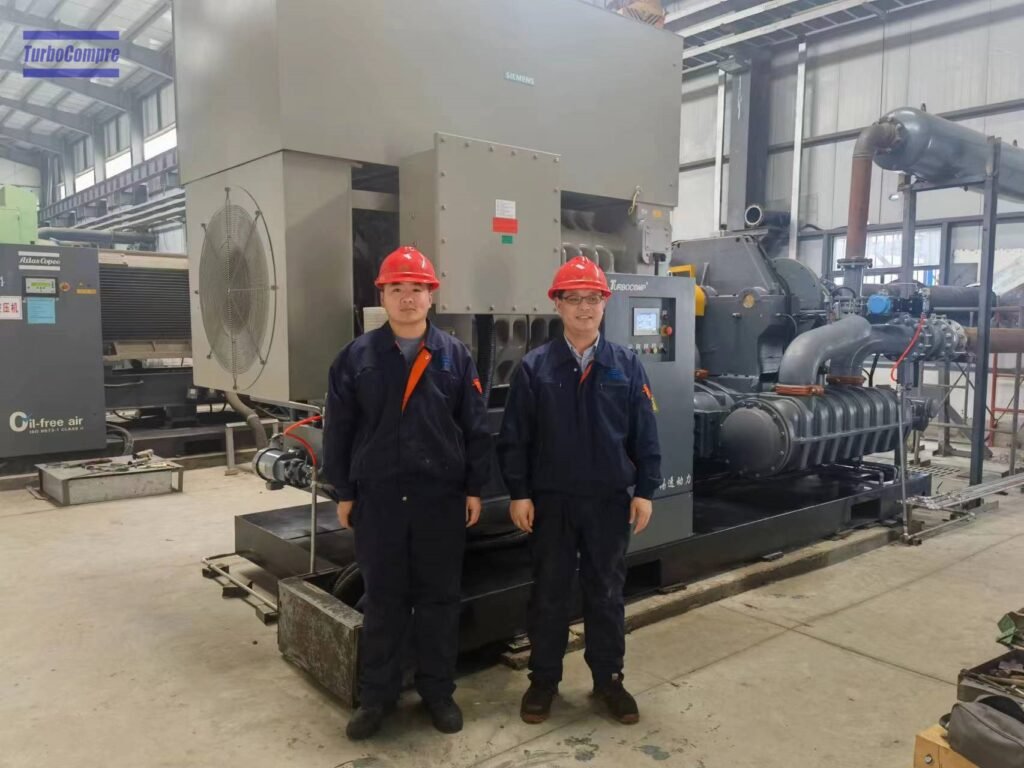
Based on rich on-site experience, we customize matched sealing solutions according to actual pressure, speed, medium characteristics and process requirements. We help enterprises avoid selection mistakes, stabilize compressor operation, control procurement and maintenance costs, and achieve long-term energy-saving production.