
Principles and Advantages of Floating Carbon Ring Seals for Centrifugal Compressors

I. Core Working Principles of Carbon Ring Seals for Centrifugal Compressors
The core operating logic of carbon ring seals is gas film suspension + throttling pressure reduction + automatic centering + elastic compensation, featuring no solid friction and zero wear during full-operation operation. With stable operation, the complete working process includes four core links, which are well-founded and fully adaptable to the harsh working conditions of compressors:
1. Gas Film Formation and Suspension Separation

When the main shaft of a centrifugal compressor rotates at high speed, the buffer sealing gas and process gas in the gap between the shaft sleeve and the carbon ring seal form a uniform and ultra-thin rigid gas film. The fluid dynamic pressure generated by the gas film lifts the entire carbon ring, completely separating the seal ring from the shaft sleeve. This thoroughly eliminates solid friction loss and constitutes the core foundation for the ultra-long service life of the carbon ring seal.
2. Throttling Pressure Reduction and Leakage Blocking
The inner side of the carbon ring seal is designed with annular throttling grooves and micro sealing gaps. When high-pressure process gas flows through the gaps, a significantthrottling effect occurs to rapidly reduce the medium pressure and form a stable pressure gradient. This structure efficiently blocks the leakage of high-pressure process gas, prevents external air and impurities from entering the compressor cavity, and completely avoids process gas pollution and internal dust and scale accumulation of the unit.
3. Floating Alignment and Self-Adaptive Centering
Adopting a non-rigid fixed constraint design, the carbon ring has free radial floating capability. When the compressor operates with slight shaft eccentricity, shaft vibration, or equipment thermal deformation, the carbon ring seal can realize real-time self-adaptive centering, always maintaining concentricity with the main shaft and uniform sealing gaps. It avoids seal failure and local wear caused by equipment vibration, delivering strong working condition fault tolerance.

4. Elastic Compensation and Long-Term Sealing

The sealing structure is equipped with axial wave spring elastic compensation components. Under non-pressure shutdown conditions, the spring stably fixes the position of the carbon ring to prevent offset and swing. During operation, it can automatically compensate for slight wear, axial displacement, and thermal expansion and contraction deformation of the carbon ring. The sealing structure remains closely fitted throughout the operation, eliminating leakage problems caused by enlarged gaps and realizing full-working-condition long-term sealing.
II. Core Advantages of Carbon Ring Seals for Centrifugal Compressors
Compared with traditional mechanical seals, labyrinth seals and ordinary floating ring oil film seals, carbon ring seals are optimized exclusively for centrifugal compressor working conditions. They possess all-round advantages in stability, durability, energy saving, and low operation and maintenance costs, and have become the preferred sealing solution for high-end industrial centrifugal compressors. Compared with high-precision dry gas seals, carbon ring seal products also show unique advantages in cost control and low-maintenance operation.
1. Non-Contact Operation and Greatly Extended Service Life
Adopting a full-process gas film isolation and non-contact operation mode, it fundamentally eliminates wear, burnout and jamming of sealing rings. The service life of traditional contact seals is only 3-6 months, while carbon ring seals can achieve a continuous operating life of 2-5 years. It greatly reduces the frequency of seal replacement, perfectly adapting to the 24-hour uninterrupted continuous production demand of compressors. Meanwhile, it avoids friction damage to the main shaft and frequent shaft sleeve repairs, effectively protecting core equipment components.
2. Strong High-Speed Adaptability and High Working Condition Fault Tolerance
With excellent high-speed performance, the sealing structure can stably adapt to high-speed compressor equipment within 60000r/min, with a maximum linear speed resistance of 250m/s, far exceeding the performance of ordinary sealing structures. It can adapt to slight shaft vibration, shaft eccentricity and thermal deformation during compressor operation, maintaining stable sealing performance under full working conditions including startup, shutdown and load variation without instantaneous leakage or seal failure, ensuring extremely high operational stability.

3. Excellent Sealing Performance and Extremely Low Leakage
Relying on the dual sealing mechanism of precise throttling pressure reduction and gas film isolation, carbon ring seals effectively control process gas leakage, withfar lower leakage than labyrinth seals and ordinary oil film floating ring seals. It eliminates potential safety hazards caused by leakage of flammable, explosive and toxic process gases, reduces process gas loss and production costs, and prevents external air infiltration, avoiding substandard gas purity and unit oxidation corrosion.
4. Dry Oil-Free Operation, Energy Saving and Wide Applicability
Different from the complex oil supply system of traditional oil film floating ring seals, carbon ring seals adopt a dry oil-free operation mode without lubricating oil assistance. It omits supporting equipment such as oil pumps, oil circuits and oil cooling systems, reducing equipment energy consumption and fault points. The carbon graphite material has excellent self-lubricity, corrosion resistance and temperature resistance, adapting to complex working conditions such as high temperature, low temperature, strong corrosion and high-purity gas, covering most medium scenarios of centrifugal compressors and making up for the high-cost defects of partial dry gas seals in conventional scenarios.
5. Simple Structure and Low Operation and Maintenance Costs

Adopting a mainstream split structure design, carbon ring seals can be quickly disassembled and replaced on site without dismantling core components such as compressor main shafts and impellers, greatly shortening equipment shutdown and maintenance time. The overall structure has few parts and extremely low failure rate, avoiding common faults such as oil circuit blockage, oil deterioration and oil film failure. The later maintenance is simple, greatly reducing labor and accessory operation and maintenance costs for enterprises.
6. High Temperature Resistance and Anti-Aging with Strong Working Condition Stability
Made of impregnated modified carbon graphite seal rings, the product has super high temperature resistance, anti-aging and anti-deformation performance. It can withstand alternating high and low temperature working conditions of compressors without deformation, hardening or failure after long-term operation. It shows prominent advantages in high-temperature compressor units and perfectly adapts to various harsh industrial production environments, ensuring long-term stable operation of the carbon ring seal system.
III. Turbo Compre
Carbon ring seals effectively overcome the common shortcomings of traditional compressor seals such aseasy wear, large leakage and complicated maintenance. Featuring gas film suspension, throttling sealing and elastic compensation structure, they realize stable non-contact operation under high-speed and variable working conditions. With long service life, oil-free operation and low maintenance, carbon ring seals provide reliable sealing for centrifugal compressors. They are cost-effective and widely adaptable, serving as an ideal alternative to traditional sealing structures and partial dry gas seals for general industrial scenarios.
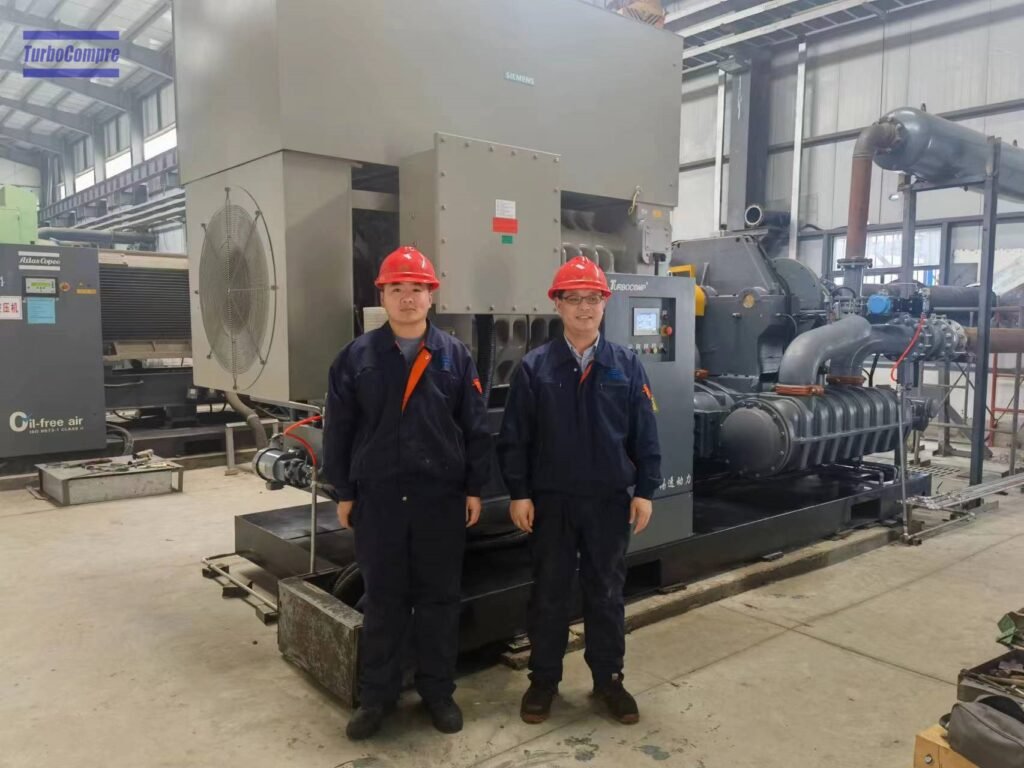
Turbo Compre focuses on the R&D and production of high-quality carbon ring seals for centrifugal compressors. Adopting mature material processing and precision manufacturing technology, our products adapt to high-speed, high-pressure and alternating temperature working conditions in petrochemical, air separation, coal chemical and power industries. We supply durable, cost-effective sealing products and professional supporting services to guarantee stable unit operation and reduce overall maintenance costs.