
What Is a Centrifugal Compressor?
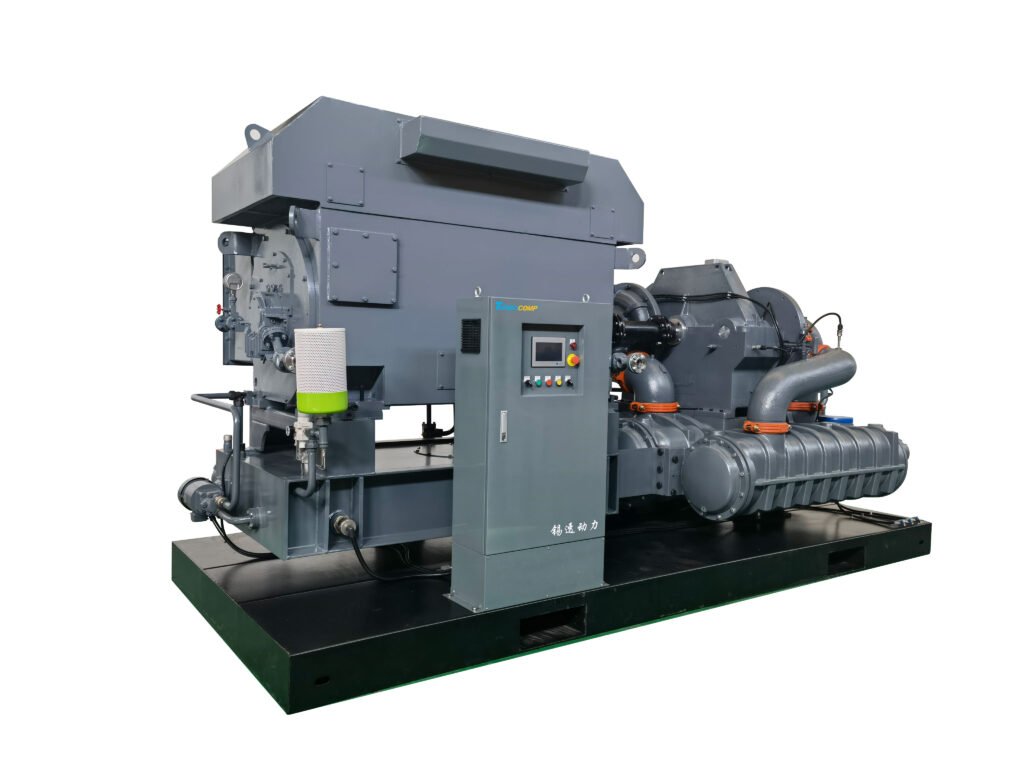
A centrifugal compressor is a type of dynamic compressor that uses a rotating impeller to increase the pressure of gas through centrifugal force. Unlike positive displacement compressors, centrifugal compressors continuously compress gas by converting high-speed rotational energy into pressure energy.
Due to their high efficiency, large flow capacity, and stable operation, centrifugal compressors are widely used in industries such as:
- Air separation plants
- Chemical and petrochemical industries
- Natural gas processing
- Power generation
- Hydrogen and clean energy projects
- Large-scale industrial manufacturing
For large gas flow applications, centrifugal compressors are often considered one of the most efficient compression solutions.
How Does a Centrifugal Compressor Work?
he working principle of a centrifugal compressor is based on energy conversion.
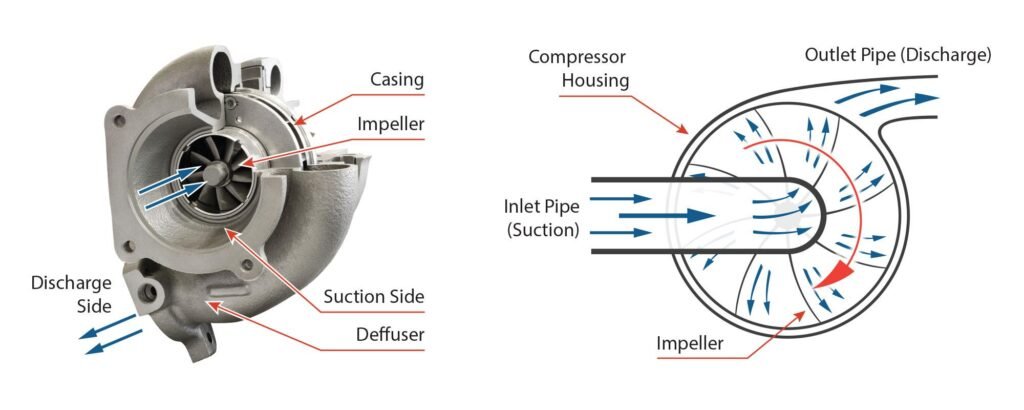
The main compression process includes:
1. Gas Enters the Impeller
Gas enters the compressor through the inlet and is accelerated by a high-speed rotating impeller.
2. Energy Conversion
The impeller increases the velocity of the gas by transferring mechanical energy from the rotating shaft.
3. Pressure Increase
The diffuser converts velocity energy into pressure energy, increasing the gas pressure before discharge.
This continuous compression process allows centrifugal compressors to achieve high flow rates with fewer moving components.
Main Components of a Centrifugal Compressor
A typical centrifugal compressor consists of several critical components:
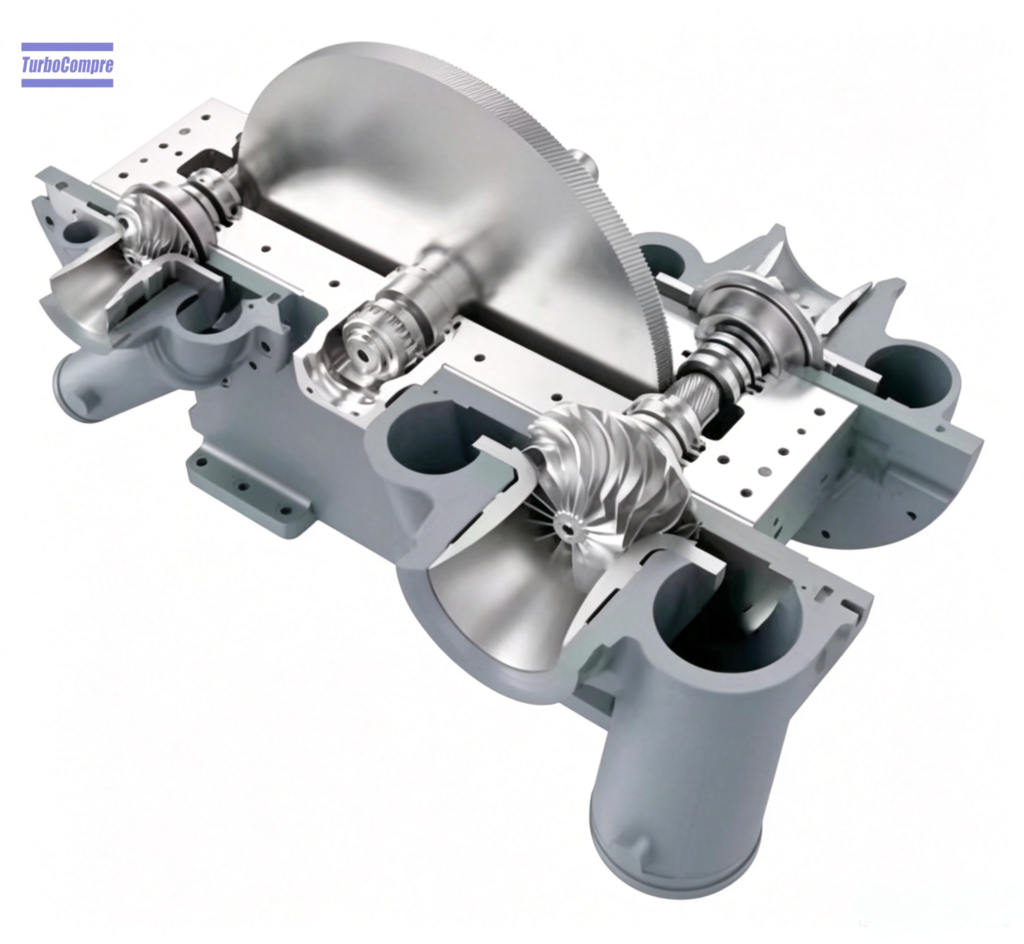
Impeller
The impeller is the core rotating component responsible for transferring energy to the gas.
Diffuser
The diffuser reduces gas velocity and converts kinetic energy into pressure.
Gearbox
In integrally geared centrifugal compressors, the gearbox allows different impellers to operate at optimized speeds.
Bearings and Sealing System
High-performance bearings and seals ensure reliable operation under demanding industrial conditions.
Cooling System
Intercoolers improve efficiency by reducing gas temperature between compression stages.
Advantages of Centrifugal Compressors

1. High Flow Capacity
Centrifugal compressors are designed for large-volume gas compression, making them ideal for applications requiring thousands or even hundreds of thousands of Nm³/h.
2. Energy Efficiency
For continuous large-scale operation, centrifugal compressors typically offer excellent energy performance compared with many traditional compressor technologies.
3. Low Maintenance Requirements
With fewer wearing parts compared with reciprocating compressors, centrifugal compressors provide longer service intervals and lower maintenance costs.
4. Oil-Free Compression
Many centrifugal compressors provide oil-free compression, making them suitable for industries requiring clean compressed air, including air separation and electronics manufacturing.
Centrifugal Compressor Applications
Today, centrifugal compressors are essential equipment in many industries.
Air Separation Plants
Air separation units require stable, high-volume compressed air. Centrifugal compressors provide reliable air compression for oxygen, nitrogen, and argon production.
Chemical & Petrochemical Industry
They are widely used for process gas compression, refrigeration, and pipeline applications.
Clean Energy
With the development of hydrogen energy and industrial heat pumps, centrifugal compressor technology is becoming increasingly important.
Industrial Air Systems
Large factories use centrifugal compressors for energy-efficient compressed air production.

Future Development of Centrifugal Compressor Technology
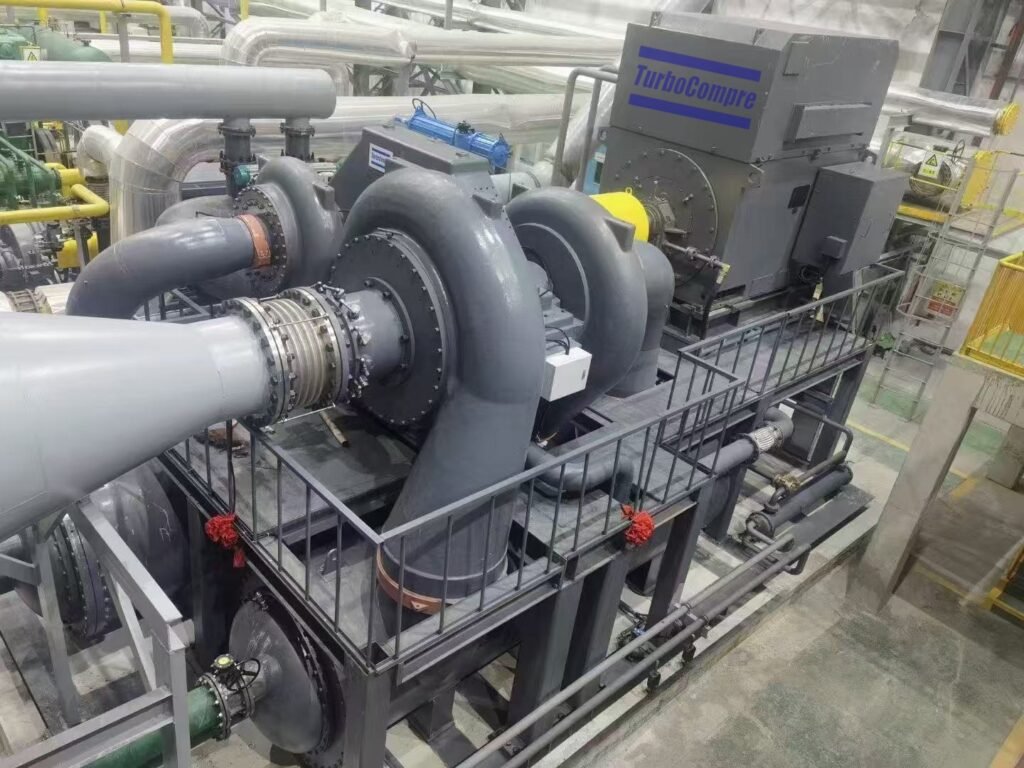
With increasing demand for energy efficiency and sustainable industrial production, centrifugal compressors continue to evolve.
Future trends include:
- Higher efficiency impeller designs
- Digital monitoring systems
- Intelligent control technology
- Energy-saving retrofit solutions
- Application expansion in hydrogen and clean energy
Modern centrifugal compressors are becoming not only compression equipment but also an important part of efficient industrial energy systems.
TurboCompre – Your Reliable Centrifugal Compressor Partner
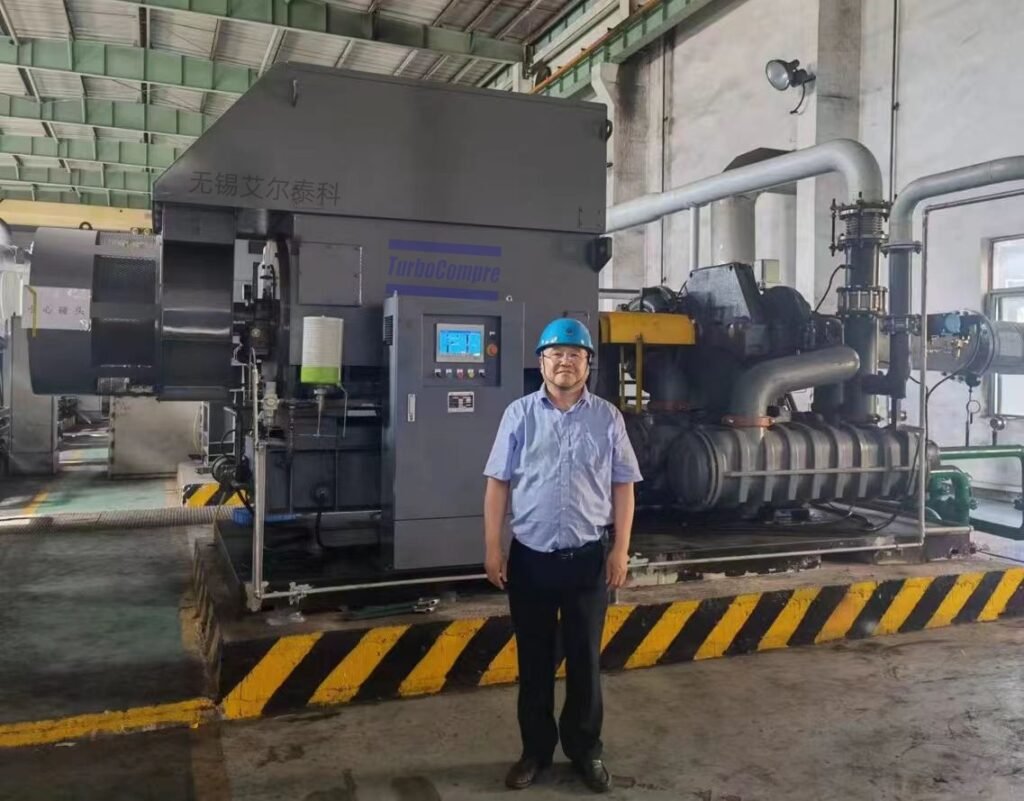
TurboCompre specializes in the design, manufacturing, upgrading, and maintenance of industrial centrifugal compressors and compressor spare parts.
With extensive experience in air separation, industrial air systems, and process applications, TurboCompre provides:
✔ Centrifugal air compressors
✔ Nitrogen compressors
✔ Oxygen and process gas compressors
✔ Compressor retrofit solutions
✔ OEM replacement spare parts
TurboCompre focuses on delivering high-performance centrifugal compressor solutions with competitive cost advantages, helping customers reduce investment and maintenance costs while maintaining reliable operation.
Learn more about centrifugal compressor solutions:
TurboCompre Official Website
Conclusion
So, what is a centrifugal compressor?
A centrifugal compressor is a high-efficiency dynamic compressor that uses rotating impellers to increase gas pressure. Thanks to its large capacity, energy efficiency, and reliable operation, it has become a key technology for modern industrial applications.
For large-scale air and gas compression projects, choosing the right centrifugal compressor supplier can significantly improve operational efficiency and reduce lifecycle costs.