
Single Shaft vs Integrally Geared Centrifugal Compressor: Differences Explained

Choosing between a single-shaft and an integrally geared centrifugal compressor affects energy consumption, equipment layout, maintenance requirements, and long-term operating costs. Although both designs use centrifugal force to compress gas, their rotor arrangements and speed-control methods are fundamentally different.
Single-shaft compressors are often selected for large air volumes, demanding industrial duty, and applications where a robust rotor arrangement is preferred. Integrally geared compressors offer greater flexibility in optimizing individual compression stages and can provide high efficiency in compact packages.
Understanding these differences helps plant engineers and procurement teams select the right compressor for their operating conditions rather than relying on equipment price or design preference alone.
1. What Is a Single-Shaft Centrifugal Compressor?
A single-shaft centrifugal compressor has multiple impellers mounted along a common rotor shaft. The impellers rotate at the same speed, driven by an electric motor, steam turbine, or another suitable driver.
As gas passes through successive impellers and diffusers, its pressure increases stage by stage. The number and arrangement of stages depend on the required flow rate, discharge pressure, gas properties, and compressor performance requirements.
Key characteristics:
Common shaft speed: All impellers on the rotor operate at the same rotational speed.
Robust rotor arrangement: A relatively straightforward mechanical layout can support demanding industrial operating conditions.
High-capacity applications: Suitable for large-volume air compression and various process gas duties.
Maintenance considerations: Rotor alignment, impeller condition, bearings, seals, and shaft dynamics are important to reliable operation.
Single-shaft technology is widely used in industrial air compression, steel production, chemical processing, and other applications requiring continuous, dependable gas delivery.

For additional engineering background, see John Crane’s overview of centrifugal compressor technology and dry gas seals.
2. What Is an Integrally Geared Centrifugal Compressor?
An integrally geared centrifugal compressor uses a central bull gear to drive multiple high-speed pinion shafts. Each pinion drives one or more impellers, depending on the design.
Unlike a single-shaft compressor, an integrally geared machine allows different compression stages to operate at different rotational speeds. Engineers can therefore optimize each stage for its specific gas flow, pressure ratio, and aerodynamic requirements.
Key characteristics:
Independent stage speeds: Different pinion speeds allow more flexibility in aerodynamic optimization.
Compact configuration: Multiple compression stages can be arranged around a common gearbox.
Interstage cooling: Coolers can be incorporated between stages to reduce gas temperature and improve compression efficiency.
Flexible process design: Multiple stage configurations can accommodate different pressure and flow requirements.
Integrally geared compressors are widely used in air separation, industrial gases, petrochemical processing, refrigeration, and other applications where efficiency and process flexibility are important.
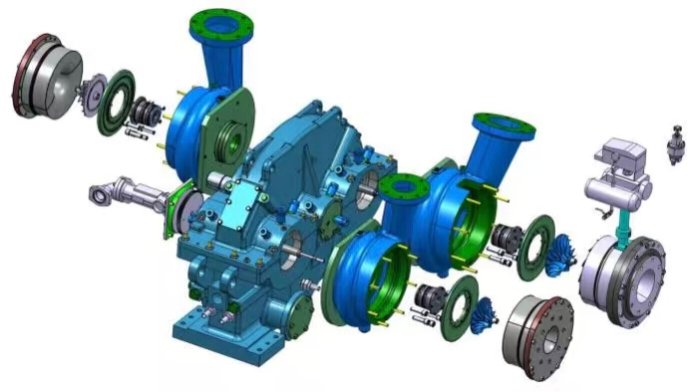
3. Single Shaft vs Integrally Geared: Key Differences
The main difference is how the compressor transfers power to its impellers and controls the speed of each compression stage.
| Comparison | Single-shaft compressor | Integrally geared compressor |
| Rotor arrangement | Multiple impellers on a common shaft | Impellers driven by separate pinion shafts |
| Stage speed | Same speed for impellers on the common rotor | Different speeds can be selected for individual pinions |
| Aerodynamic optimization | Designed around a common rotor speed | Each stage can be optimized for its own speed |
| Interstage cooling | Depends on the configuration; can require more complex arrangements | Generally easier to integrate between stages |
| Equipment footprint | Can be larger for comparable multistage duties | Often compact for equivalent duties |
| Mechanical components | Common rotor, bearings, seals, and associated systems | Additional gears, pinions, and associated components |
| Maintenance focus | Rotor, bearings, seals, alignment, and impellers | Gearbox, pinions, bearings, seals, and impellers |
| Typical selection priority | Robustness, large flow capacity, and established operating requirements | Stage flexibility, compactness, and efficiency optimization |
These are general design tendencies, not universal rules. Actual performance depends on the compressor model, operating point, gas composition, pressure ratio, cooling arrangement, and engineering quality.
4. Which Design Offers Better Energy Efficiency?
Energy efficiency is one of the most important factors when selecting an industrial centrifugal compressor.
An integrally geared compressor can optimize the rotational speed of each stage independently. This is particularly useful when gas volume decreases through successive compression stages, allowing each impeller to operate closer to its intended aerodynamic design point.
Interstage cooling can further reduce the work required for compression by lowering the gas temperature before it enters the next stage.
A single-shaft compressor, however, can also deliver excellent efficiency when its impellers, flow passages, and operating speed are properly matched to the required duty.
When comparing compressor proposals, engineers should evaluate:
Total shaft power or motor input at the specified operating point.
Required flow rate and discharge pressure.
Inlet conditions, gas composition, and discharge temperature.
Performance at partial load and across the expected operating range.
Cooling-water or cooling-air requirements and auxiliary power consumption.
The key is to compare guaranteed performance under identical operating conditions. A theoretical design advantage does not automatically translate into lower energy consumption at every operating point.

5. Maintenance, Reliability, and Lifecycle Cost
The two designs have different maintenance priorities, but neither is automatically more reliable.
Single-shaft compressors have a common rotor assembly. Maintenance typically focuses on impeller condition, shaft integrity, rotor balance, bearings, seals, and clearances. For older machines, precision restoration or replacement of critical rotating components can be essential to restoring performance.
Integrally geared compressors require additional attention to the bull gear, pinions, gear-tooth contact, lubrication, and high-speed rotor assemblies. Their compact layout can simplify access to some components, although actual maintenance accessibility depends on the design.
Lifecycle cost should include more than the initial purchase price:
Preventive maintenance and scheduled overhaul costs.
Spare parts availability and delivery lead times.
Energy consumption over the expected operating life.
Downtime risks and the cost of lost production.
Component repair, replacement, and local technical support.
For either design, access to correctly engineered replacement components and qualified service support can significantly influence long-term operating economics.
6. How Turbocompre Supports Centrifugal Compressor Projects
Selecting the right compressor is only part of the investment decision. Equipment reliability, spare parts quality, service responsiveness, and long-term maintenance costs are equally important.
Turbocompre, the centrifugal compressor brand of Wuxi Airtech Compressor, provides centrifugal compressor manufacturing, critical spare parts, repair, overhaul, and equipment upgrade services.
Our capabilities support customers operating different compressor designs, including single-shaft and integrally geared machines, subject to model and component compatibility.
Our services include:
Centrifugal compressor manufacturing: Solutions for industrial air compression and selected process gas applications.
Critical spare parts: Impellers, shafts, gears, bearings, coolers, seals, and other components for supported equipment models.
Repair and overhaul: Component restoration, replacement, and precision maintenance for aging compressor equipment.
Equipment upgrades: Engineering solutions aimed at improving efficiency, reliability, and operating performance.
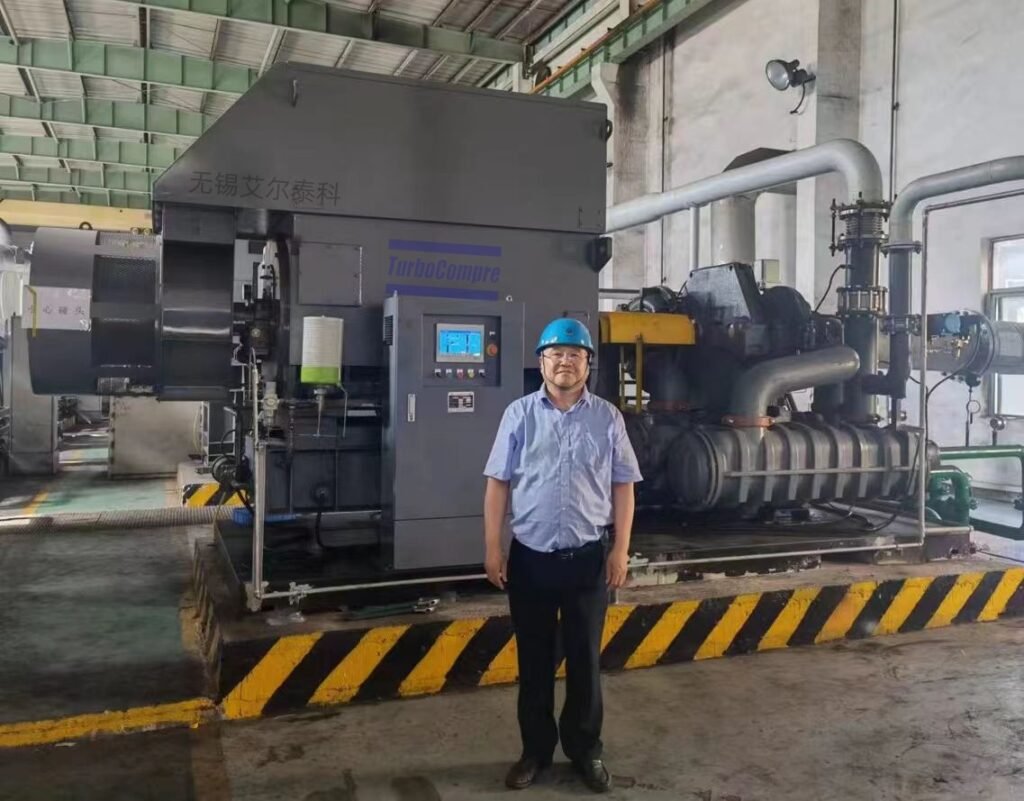
By combining compressor engineering experience with competitive manufacturing and responsive technical support, Turbocompre helps customers pursue reliable operation and lower lifecycle costs without automatically resorting to complete equipment replacement.
Contact Turbocompre today with your required flow rate, discharge pressure, gas type, operating conditions, or existing compressor model. Let us help you evaluate a practical, reliable, and cost-effective solution for your plant.