
Long-Term Operation Maintenance Strategy for Polyester Plant Centrifugal Compressors
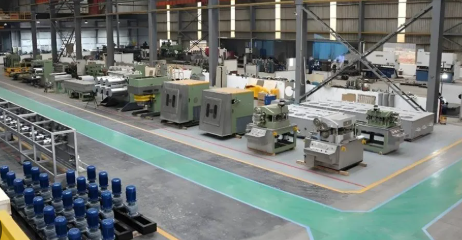
Chemical fiber polyester (PET) production relies on centrifugal compressors for 24/7 continuous pressurization and delivery of process air and nitrogen. Under polyester workshop conditions with high temperature, constant load and trace gaseous oligomers, compressors are prone to impeller fouling, bearing wear, seal leakage and overheating. Any abnormal failure may trigger unplanned shutdowns and cause huge economic losses for continuous production lines.
To guarantee stable long-cycle operation (more than 3 years), traditional fixed-cycle disassembly maintenance must be replaced with condition-based preventive maintenance. This article presents a targeted, graded maintenance strategy for polyester centrifugal compressors, adapting to non-stop production and effectively avoiding common operational risks.
1. Core Operation Pain Points of Centrifugal Compressors in Polyester Production Lines
Polyester working conditions bring unique equipment challenges. The four most common and destructive faults affecting long-term continuous operation are summarized below:
- Impeller oligomer fouling: Trace gaseous polyester oligomers enter the unit with airflow during production and adhere to impellers and blade surfaces for a long time, causing rotor unbalance and continuous slow vibration rise, which is the most frequent fault of polyester centrifugal compressors
- Accelerated deterioration of lubrication system: Long-term high-temperature continuous operation leads to varnish generation and oxidative deterioration of lubricating oil, resulting in excessive moisture, increased particle impurities and other problems, which easily cause bearing wear and oil whirl
- Dry gas seal failure: Trace impurities and water vapor in process gas scour and wear the seal end face for a long time, causing seal gas leakage and excessive vent flow and triggering unit interlock trip
- Thermal alignment drift: Long-term high-temperature operation generates thermal stress on equipment pipelines and frames, causing coupling alignment deviation and aggravating equipment vibration and component loss
To address the above defects, polyester compressor maintenance strictly follows condition monitoring priority, preventive maintenance supplementation, hierarchical management and source control, minimizing shutdown frequency and ensuring stable continuous production.
2. Graded Cycle Maintenance Strategy
Adapting to polyester non-stop production, we adopt a six-level graded maintenance system dominated by online non-stop inspection. In-depth overhaul is only arranged during annual planned short shutdowns to avoid production interruption.
2.1 Daily Shift Inspection
Daily shift inspection is the first line of defense against sudden faults. It tracks real-time operational trends, identifies early abnormalities and eliminates hidden dangers in time.
Core work: Monitor vibration, shaft displacement, bearing temperature and system pressure/temperature; inspect oil level, pressure and pipeline tightness; check dry gas seal operating status; replace blocked inlet filters timely; clean surface dust and polyester flocs and record operational data.

2.2 Weekly Special Maintenance
Weekly maintenance focuses on cleaning, fastening and auxiliary system inspection to eliminate minor faults and prevent cumulative damage.
Core work: Clean motor cooling fins and dust accumulation; fasten instrument wiring and aging circuits; drain condensed water and sediments from tanks and coolers; verify oil-free and water-free seal gas quality; confirm normal valve working status.
2.3 Monthly In-depth Detection
Monthly in-depth detection combines offline sampling and data analysis to accurately judge equipment health status and predict potential failures.
Core work: Conduct lubricating oil spectrum analysis for deterioration and wear assessment; perform vibration spectrum analysis to identify unbalance, misalignment and blade abnormalities; monitor coupling thermal drift; analyze long-term parameter trends and update equipment health files.
2.4 Quarterly System Maintenance
Quarterly system maintenance focuses on updating vulnerable auxiliary components to ensure stable system operation and delay equipment degradation.
Core work: Replace oil filter elements and clean oil mist separators; maintain dry gas seal filters and pressure regulating valves; test motor insulation and temperature; evaluate impeller fouling and conduct online wet cleaning to eliminate oligomer accumulation without shutdown.
2.5 Annual Planned Shutdown Maintenance
Annual planned short shutdown is used for comprehensive deep maintenance to eliminate one-year accumulated hidden dangers and reset equipment operating baseline.
Core work: Clean oil tanks and pipelines; calibrate oil pressure interlocks; correct cold and hot coupling alignment; fully calibrate field instruments and test interlock loops; clean and inspect coolers; check dry gas seals and bearings; conduct borescope inspection and rotor dynamic balancing; verify safety valves and pipeline supports.
2.6 Triennial Whole Machine Overhaul

Triennial full overhaul is a complete disassembly and renovation process to restore unit factory performance and guarantee stable operation for the next three years.
Core work: Perform rotor NDT testing and high-precision dynamic balancing; replace all bearings, dry gas seals and sealing rings; repair cylinder and labyrinth gaps; pickle and passivate oil pipelines; complete motor overhaul and insulation testing; calibrate overall unit performance and interlock parameters.
Polyester centrifugal compressors face industry-specific faults mainly including impeller oligomer fouling, lubricant deterioration, seal failure and thermal alignment deviation. Targeted prevention and control can effectively reduce failures and support long-term non-stop operation.
3.1 Comprehensive Prevention and Control of Impeller Oligomer Fouling
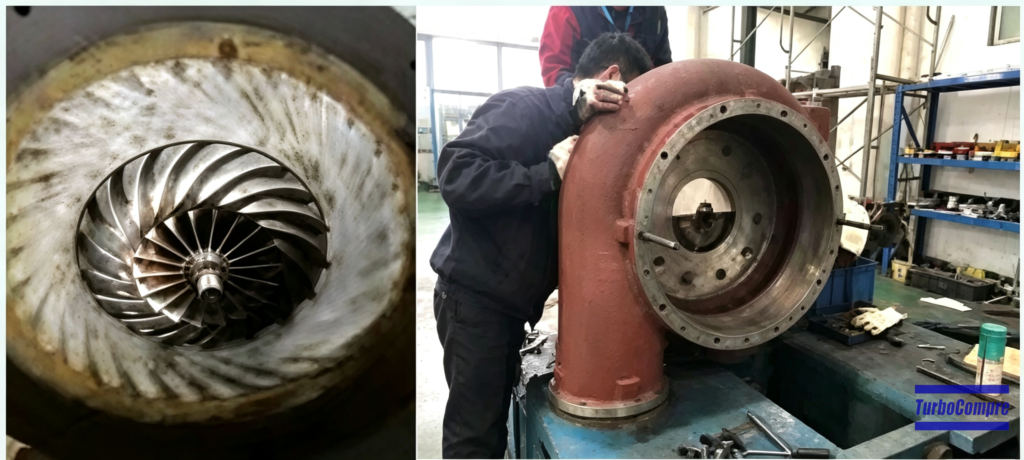
Oligomer adhesion causes rotor unbalance and continuous vibration rise, which damages bearings and seals. Equip multi-stage inlet filtration and adsorption devices to block pollutants at the source; monitor vibration trends in real time and perform online wet cleaning regularly to avoid hardened fouling and forced shutdown maintenance.
3.2 Integrated Protection of Oil System and Dry Gas Seal

Long-term high-temperature operation easily causes oil varnish, moisture and impurity accumulation. Strictly implement monthly oil analysis and timely oil replacement; keep breathers and filters unblocked. Meanwhile, adopt oil-free and water-free clean sealing gas; replace seal filters regularly and monitor vent flow to prevent dry gas seal failure under continuous operation.
3.3 Accurate Correction of Thermal Alignment Deviation
Continuous high-load operation produces thermal stress and coupling alignment drift, aggravating vibration and wear. Complete both cold and hot alignment correction during annual shutdown overhaul to eliminate thermal deviation and ensure long-term stable rotor operation.
Turbo Compre is a professional high-tech enterprise focusing onpolyester (PET) industrial centrifugal compressors. With over ten years of industry experience, we integrate equipment R&D, complete machine matching, spare parts supply and professional long-cycle overhaul services. We are deeply familiar with polyester workshop high-temperature and oligomer pollution characteristics, and specialize in solving common pain points such as fouling, seal failure, oil degradation and thermal misalignment.

Facing polyester enterprises’ zero unplanned shutdown and long-term continuous operation demands, Turbo Compre providesone-stop professional solutions including customized graded maintenance schemes, online fault diagnosis, impeller cleaning, cold & hot alignment correction, unit overhaul and compatible high-quality spare parts replacement. With professional and practical field technology, we help customers reduce maintenance costs, avoid production loss and extend compressor service life, ensuring stable and efficient operation of PET production lines.