Compressor Applications in Gas Processing Plants: Key Uses and Selection Guide
Gas processing plants rely on compressors to move, boost, recycle, and stabilize gas throughout the process. From raw gas gathering to NGL recovery and pipeline transmission, each application has different pressure, flow, and gas-property requirements. Selecting the wrong compressor can result in higher energy consumption, unstable operation, and increased maintenance costs.
1. Gas Gathering and Feed Gas Boosting
Raw natural gas may enter a processing plant at insufficient pressure for downstream treatment and separation. Feed gas compressors and booster compressors increase pressure and maintain stable gas flow.
For large, continuous gas flows, centrifugal compressors can provide high capacity and efficient operation. Selection should consider suction pressure, discharge pressure, gas composition, molecular weight, temperature, and operating range.
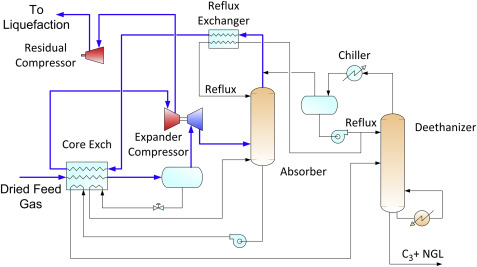
Natural gas processing often involves separating ethane, propane, and heavier natural gas liquids (NGLs) from the gas stream. Compressors work together with cooling and separation equipment to achieve the required process conditions.
In low-temperature and cryogenic processes, compressor performance becomes especially important because pressure and temperature directly affect the separation process.
3. Pipeline Gas Transmission and Recompression
After processing, natural gas may need to be recompressed before entering a pipeline or moving to another processing stage.
These applications require high capacity, stable operation, and good efficiency. Centrifugal compressors are commonly used for high-flow continuous applications, while other compressor types may be more suitable for high-pressure or lower-flow conditions.
According to the U.S. EPA, centrifugal compressors are used across natural gas production, gathering, processing, transmission, storage, and distribution.
4. Process Gas Compression
Gas processing facilities may handle more than natural gas. Compressors can also be used for CO₂, hydrogen, nitrogen, recycle gas, synthesis gas, and hydrocarbon gases.
These applications require more than simply matching flow and pressure. Gas molecular weight, temperature, compressibility, impurities, corrosiveness, sealing, and material requirements can all affect compressor design.
For petroleum, chemical, and gas industry applications, API 617is an important reference for centrifugal and other process compressors.
5. Recycle Gas and Process Circulation
Many gas processing systems continuously recycle part of the gas stream. Recycle gas compressors and process circulation compressors maintain system pressure and compensate for pressure losses.
Because operating conditions can change, compressor selection should consider the complete operating envelope rather than a single design point. Surge margin, turndown capability, efficiency, and control strategy are particularly important.
6. Looking for a Gas Processing Compressor?
Turbocompre specializes in large centrifugal compressors and process gas compression solutions. With capabilities covering complete-unit manufacturing, component production, compressor repair, upgrading, and replacement, Turbocompre supports applications involving natural gas, CO₂, nitrogen, and other industrial gases.
Whether you need a new centrifugal process compressor, gas booster, recycle compressor, or replacement for an imported unit, send us your gas composition, flow rate, suction pressure, discharge pressure, and temperature.
Let’s evaluate the right compression solution for your gas processing project.