Gearboxes in centrifugal compressors operate under high speed and continuous load. Especially in integrally geared compressors, gear, bearing, shaft, and lubrication problems can quickly lead to abnormal vibration, overheating, noise, or unexpected shutdown. Identifying early warning signs and selecting the right repair or replacement solution can significantly reduce downtime.
1. Gear Tooth Wear and Pitting
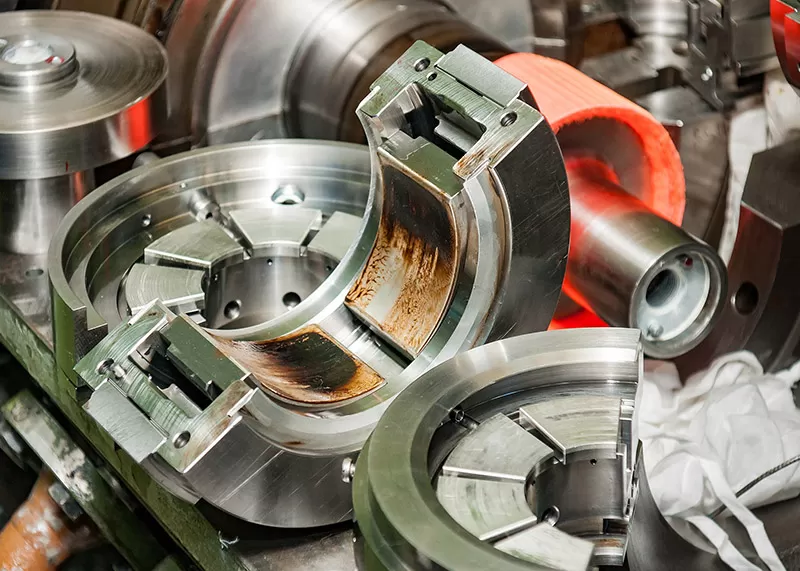
Gear tooth wear is one of the most common gearbox problems. Continuous high-speed operation, insufficient lubrication, contamination, excessive load, or incorrect gear alignment can gradually damage the tooth surfaces.
Typical problems include:
Wear: gradual loss of material from the tooth surface.
Pitting: small fatigue cavities caused by repeated contact stress.
Scuffing: surface damage caused by excessive friction and insufficient lubrication.
Tooth breakage: usually associated with severe fatigue, overload, or cracks.
Gear condition should be evaluated through tooth surface inspection, backlash, contact pattern, vibration, and operating history rather than visual inspection alone. Relevant API standards can also be referenced for special-purpose gears and centrifugal compressors. API Standards
When damage exceeds acceptable limits, replacing the complete gear pair and checking the shaft, bearings, alignment, and lubrication system may be necessary.
2. Bearing and Shaft Problems
Gearbox bearings support high-speed rotating components and directly affect gear alignment and rotor stability.
Warning signs include:
Increasing radial or axial vibration
Abnormal bearing temperature
Metallic particles in oil
Unstable oil pressure
Unusual operating noise
A failed bearing is not always the root cause. Poor lubrication, gear misalignment, or excessive mechanical loads can also damage bearings. Therefore, bearing replacement should be accompanied by inspection of the shaft journal, bearing housing, gears, lubrication system, and alignment.
3. Lubrication Problems and Overheating
Lubrication problems are a major cause of gearbox damage. Insufficient oil flow, contaminated oil, incorrect viscosity, blocked filters, high oil temperature, or poor cooler performance can reduce the protective oil film.
During inspection, engineers should check:
Oil pressure and temperature
Oil cleanliness
Filter differential pressure
Oil pump condition
Oil cooler performance
Lubrication passages and nozzles
If abnormal oil temperature or pressure continues, simply changing the oil will not solve the problem. The complete lubrication system should be inspected to prevent repeated failures.
4. Misalignment, Vibration, and Rotor Imbalance
High gearbox vibration does not always mean that the gears are damaged. Misalignment between the gearbox, compressor, coupling, or driver can create abnormal mechanical loads.
Rotor imbalance can also generate significant vibration at high speed, accelerating wear of bearings, seals, gears, and shafts.
This helps identify the actual source of vibration and avoid unnecessary component replacement.
5. Repair or Replace the Gearbox?
When serious damage occurs, the key question is whether the gearbox can be reliably repaired within the required cost and shutdown period.
Repair may include gear replacement, bearing replacement, shaft repair, sealing replacement, precision machining, balancing, and alignment.
A complete gearbox replacement may be considered when:
Multiple gears are seriously damaged
The housing or shaft is severely damaged
Original parts are unavailable
Required tolerances cannot be restored
Production downtime must be minimized
For older centrifugal compressors, replacing the gearbox does not necessarily mean replacing the entire compressor. A properly engineered replacement must match speed, power, gear ratio, shaft dimensions, bearings, lubrication requirements, and rotor dynamics.
6. Turbocompre Gearbox Replacement and Repair Solutions
For aging centrifugal compressors, gearbox problems are often related to gears, bearings, shafts, seals, and lubrication systems. Turbocompre provides centrifugal compressor spare parts, repair, overhaul, and replacement solutions, including gears, gearboxes, shafts, bearings, impellers, seals, and coolers.
Based on the compressor model, gearbox data, operating conditions, drawings, and inspection information, our engineering team can evaluate whether repair, component replacement, localized manufacturing, or complete gearbox replacement is appropriate.
If your compressor has abnormal vibration, gear wear, bearing damage, overheating, or lubrication problems, contact Turbocompre for a technical evaluation and practical repair or replacement solution. Visit Turbocompreto learn more.