How to Improve the Reliability of Centrifugal Compressors
Reliability Starts with the Right Design
A centrifugal compressor is expected to operate continuously under demanding conditions. In industries such as air separation, chemical processing, petrochemical, steel, and industrial gases, unexpected downtime can quickly lead to production losses.
Improving centrifugal compressor reliability is not simply about replacing parts more frequently. It requires a combination of proper design, stable operation, condition monitoring, preventive maintenance, and timely technical support.
For process applications, API 617 provides requirements for axial and centrifugal compressors and emphasizes long-term mechanical and operational performance.
1. Keep the Compressor Operating Within Its Design Range
Operating conditions have a direct impact on compressor reliability.
Key parameters should be continuously monitored:
Inlet and discharge pressure
Inlet and discharge temperature
Flow rate
Compressor speed
Motor power
Bearing temperature
Vibration
Lubricating oil pressure and temperature
Avoid prolonged operation outside the recommended operating envelope. In particular, operation close to the surge region can cause severe pressure fluctuations, vibration, and mechanical stress.
A reliable control system should respond quickly to changes in flow and pressure to keep the compressor away from unstable operating conditions.
2. Pay Special Attention to Lubrication
For compressors equipped with oil-lubricated bearings and gear systems, lubricationis one of the most important reliability factors.
Poor oil quality or insufficient oil flow can lead to:
Oil analysis can also help identify wear particles or contamination before they develop into major mechanical problems. The U.S. Department of Energy’s compressor maintenance guidance recommends routine monitoring of lubricant conditions and related parameters.
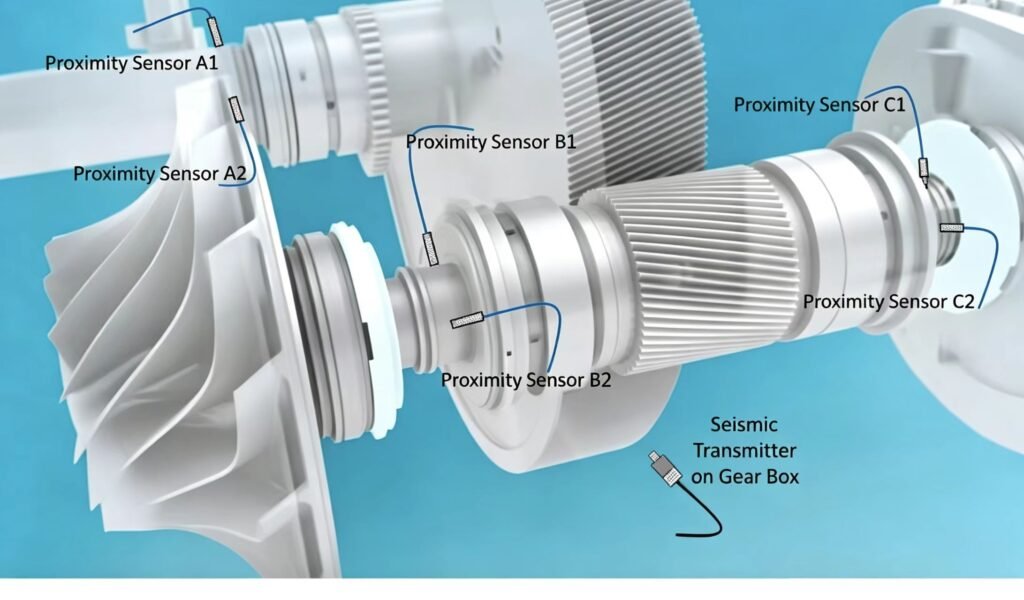
3. Monitor Vibration Before It Becomes a Failure
Vibration is one of the most valuable early-warning indicators for rotating equipment.
A sudden change in vibration may indicate:
Rotor imbalance
Misalignment
Bearing problems
Shaft issues
Coupling problems
Mechanical rubbing
Aerodynamic instability
Instead of looking only at whether vibration exceeds a limit, operators should monitor long-term trends.
A gradual increase can be just as important as a sudden alarm.
For high-value centrifugal compressors, vibration monitoring and mechanical run testing are also important elements of compressor inspection and testing practices.
4. Maintain Effective Surge Control
Surge is one of the most serious operating risks for a centrifugal compressor.
An effective anti-surge system should include:
Fast detection → Fast control response → Stable operating margin
Regularly verify:
Anti-surge valve response
Pressure and flow transmitters
Control logic
Surge control settings
Valve sealing and actuator condition
A control system that works correctly in normal operation but responds too slowly during transient conditions can still create significant reliability risks.
5. Keep Air and Gas Path Components Clean
Performance degradation often starts with contamination.
Dirty:
Inlet filters
Impellers
Diffusers
Intercoolers
Aftercoolers
Air passages
can increase pressure losses and reduce compressor efficiency.
Higher operating temperature and reduced efficiency may then increase the load on the entire system.
Regular inspection and cleaning should therefore be part of the maintenance strategy, especially in environments with dust, oil mist, moisture, or corrosive gases.
6. Inspect the Rotor, Bearings and Impellers
The rotating assembly is at the heart of a centrifugal compressor.
During scheduled overhauls, important components should be inspected for:
Wear
Cracks
Corrosion
Erosion
Rubbing marks
Balance condition
Bearing clearance
Shaft condition
Impeller damage
For critical equipment, rotor balancing and dynamic behavior should be verified according to the applicable technical requirements.
API 617 specifically covers centrifugal compressor design requirements, while API also maintains standards related to machinery protection, lubrication systems, and rotor dynamics.
7. Use Condition-Based Maintenance
Traditional maintenance often relies on fixed operating hours.
A more effective approach combines scheduled maintenance with condition monitoring.
Useful data includes:
Parameter
What It Can Indicate
Vibration
Rotor, bearing or alignment problems
Oil temperature
Lubrication or bearing issues
Oil pressure
Pump, filter or lubrication problems
Discharge temperature
Performance or cooling problems
Pressure ratio
Compressor performance
Motor power
Efficiency and operating condition
Filter differential pressure
Inlet restriction
This approach can help maintenance teams identify problems earlier and reduce unnecessary shutdowns.
8. Choose the Right Spare Parts and Repair Strategy
Reliability also depends on the quality of replacement components.
Critical components such as impellers, shafts, bearings, seals, gears, coolers and filters should meet the required dimensional, material, balancing and performance specifications.
For older compressors, a professional retrofit or modernization program can sometimes improve reliability without replacing the entire machine.
TurboCompre: Reliability Through Engineering
TurboCompre provides centrifugal compressor design, manufacturing, retrofit, maintenance and spare parts solutions for industrial customers.
Our technical capabilities cover key rotating components and compressor systems, including impellers, shafts, bearings, seals, gears and coolers. For customers operating imported centrifugal compressors, TurboCompre can also provide inspection, replacement parts and technical upgrade solutions.
The goal is simple: reduce downtime, extend equipment life and improve the long-term value of the compressor.
9. Build a Preventive Maintenance Routine
A structured maintenance program helps identify problems early and reduce unexpected downtime.
Daily: Check pressure, temperature, vibration, and lubrication. Periodic: Inspect filters, coolers, bearings, and anti-surge systems. Overhaul: Inspect the rotor, impellers, seals, gears, and critical clearances, with balancing when required.
Combining routine monitoring, preventive maintenance, and condition analysis helps extend compressor service life.
Reliable Operation Starts with Professional Maintenance
Centrifugal compressor reliability depends on stable operation, effective monitoring, and proper maintenance.
With the right maintenance, spare parts, and retrofit solutions, downtime can be reduced and equipment life extended.
TurboCompre provides centrifugal compressor repair, retrofit, and spare parts solutions.