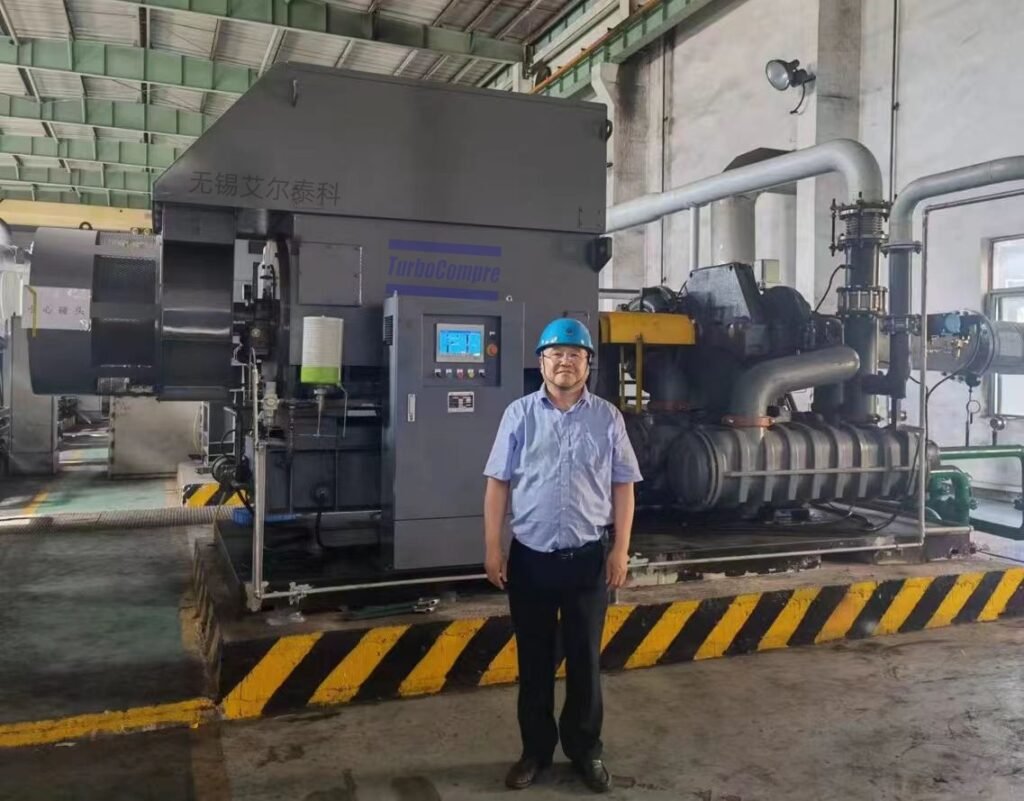
Why Air Separation Plants Use Centrifugal Compressors
The Preferred Choice for Efficient Industrial Gas Production
In modern industrial gas production, Air Separation Units (ASUs) play a critical role in supplying oxygen, nitrogen, and argon for steel, chemical, electronics, energy, and medical industries. At the heart of every large ASU is one key piece of equipment: the centrifugal compressor.
Why do most air separation plants choose centrifugal compressors instead of screw or reciprocating machines? The answer lies in flow capacity, efficiency, reliability, and lifecycle cost.
The Role of Compressors in Air Separation Plants
An ASU separates atmospheric air into industrial gases through processes including compression, purification, cooling, and distillation.
The compressor is responsible for delivering a continuous flow of air at the required pressure to the downstream process. Since compression consumes the majority of the plant’s energy, compressor selection directly affects:
Energy consumption
Operating costs
Plant reliability
Production stability
Return on investment
For large flow applications, centrifugal compressors provide clear advantages over other compressor technologies.
1. High Efficiency at Large Flow Rates
Air separation plants typically require large air volumes, ranging from several thousand to hundreds of thousands of Nm³/h.
Centrifugal compressors are specifically designed for high-flow applications and offer:
Higher isothermal efficiency
Lower specific power consumption
Continuous operation under stable conditions
Compared with positive displacement compressors, centrifugal machines can significantly reduce electricity costs over long operating periods.
For more information about compressor efficiency, visit:
Initial equipment cost is only one part of the investment.
For an ASU operating over 15–20 years, energy savings and maintenance expenses often have a greater impact on total ownership cost.
Centrifugal compressors provide:
Factor
Benefit
Energy Consumption
Lower operating cost
Maintenance
Reduced spare parts expense
Reliability
Less downtime
Service Life
Long-term stable operation
This makes centrifugal compressors a cost-effective solution for industrial gas producers.
5. Flexible Design for Different ASU Capacities
Modern centrifugal compressors can be customized for:
Oxygen plants
Nitrogen generation systems
Cryogenic ASUs
Liquid oxygen (LOX) plants
Large integrated industrial gas projects
Design flexibility allows optimization according to:
Flow rate
Pressure
Ambient conditions
Energy targets
TurboCompre: Your Partner for Air Separation Compressors
As a professional centrifugal compressor manufacturer, TurboCompre provides:
✔ Air compressors for ASU applications ✔ Nitrogen booster compressors ✔ Process gas compressors ✔ Compressor retrofits and upgrades ✔ Spare parts and maintenance services
TurboCompre combines advanced aerodynamic design, precision manufacturing, and experienced engineering support to deliver reliable solutions for industrial gas projects worldwide.
Choosing the Right Compressor Means Choosing Long-Term Efficiency
For modern air separation plants, compressor selection is not simply an equipment decision—it is a strategic investment in energy efficiency, reliability, and operating cost control.
With their advantages in high flow, continuous operation, oil-free air delivery, and low life-cycle cost, centrifugal compressors remain the preferred technology for medium and large ASUs worldwide.