
Centrifugal Compressor TCO Analysis: Why Purchase Price Should Never Be Your Only Priority

Most industrial enterprises make a critical mistake when purchasing centrifugal air compressors: only comparing the initial purchase price. Prioritizing low-cost models to cut upfront budgets seems cost-effective but leads to a long-term vicious cycle of high energy consumption, high maintenance costs, and frequent shutdown losses.
According to industrial equipment industry standards, the purchase cost of a centrifugal air compressor accounts for less than 15% of the total lifecycle cost. Hidden costs including energy consumption, maintenance, and shutdown losses dominate overall expenses. Mastering the TCO (Total Cost of Ownership) calculation method is essential for accurate cost control and optimized equipment selection.
This article elaborates on the complete TCO cost structure and standard calculation formulas for centrifugal air compressors, helping enterprises avoid low-price traps and calculate real equipment investment costs accurately.
1. What is Full Lifecycle Centrifugal Compressor TCO?
TCO (Total Cost of Ownership) refers to the sum of all explicit and implicit costs of a centrifugal air compressor throughout its entire service life, covering pre-purchase installation, operational maintenance, and final scrapping. It is the core criterion for evaluating true cost performance and equipment investment value.
The standard service life of centrifugal air compressors is 8–10 years, and high-quality models can last over 12 years. Practical industrial data proves: energy consumption accounts for 70%–85% of total TCO, maintenance and shutdown losses account for 10%–15%, while purchase cost is less than 15%.
This explains why low-priced ordinary models always incur far higher long-term operating costs than energy-saving premium models.

2. Complete TCO Cost Structure of Centrifugal Air Compressors
Accurate TCO calculation requires full cost coverage without missing hidden expenses. The full lifecycle cost falls into five core categories: initial procurement cost, operational energy cost, maintenance and consumable cost, hidden shutdown cost, and scrap residual value offset.
This is the most transparent upfront one-time investment, including all pre-operation expenses:
- Equipment purchase cost: Main unit, motor, control system, cooling system and other complete machine components
- Auxiliary equipment cost: Pipes, filters, air storage tanks, dryers and supporting facilities
- Installation and commissioning cost: Circuit layout, pipeline installation, equipment debugging and acceptance (5%–15% of equipment price)
- Training cost: Pre-job training for operation and maintenance personnel
Though the smallest cost proportion, this is the sole reference for most buyers, becoming the biggest cost-calculation misconception.
2.2 Operational Energy Cost (Largest Lifecycle Cost)
Centrifugal air compressors are high-energy-consumption industrial devices, and electricity cost is the core expense throughout the service life. It is mainly determined by equipment power, operating hours, load rate, industrial electricity price and energy-saving configuration.
Centrifugal compressors show outstanding energy efficiency in long-duration, high-load working conditions. However, old models, low-load operation and mismatched working conditions cause severe long-term energy waste.
2.3 Maintenance & Consumable Cost (Mandatory Recurring Cost)
With sophisticated structures, centrifugal air compressors require professional maintenance and high-quality consumables. Recurring maintenance costs include routine upkeep and fault repairs:

- Routine consumables: Air filters, oil filters, cooling oil, seals, bearings and impeller cleaning maintenance
- Labor cost: Regular inspection, maintenance and debugging by professional technicians
- Fault repair cost: Component replacement and troubleshooting for aging or operation-induced failures
High-quality energy-saving centrifugal compressors feature stable performance and low failure rates, effectively reducing annual maintenance expenses compared with low-end models.
2.4 Hidden Shutdown Cost (Most Overlooked Loss)
As core air supply equipment for industrial production, centrifugal compressors cause full production line shutdowns once faulty, bringing huge implicit losses — the most easily ignored and costly expense in TCO accounting.
Shutdown losses include production capacity loss, order delay penalties, temporary equipment rental fees and emergency repair premiums. Low-cost inferior models with high failure rates generate far higher long-term hidden losses than the initial price gap.
2.5 Scrap Disposal & Residual Value Offset (Terminal Cost Adjustment)
At the end of the service life, equipment generates dismantling, transportation and environmental disposal costs. Meanwhile, metal frames and reusable core parts have recyclable residual value, which can offset part of the total lifecycle expenditure.
3. Standard TCO Calculation Method for Centrifugal Air Compressors
Combined with universal industrial accounting standards, we sorted out practical and accurate TCO calculation formulas suitable for enterprises of all sizes.
3.1 Core Universal TCO Formula
Total Lifecycle TCO = Total Initial Cost + Total Lifecycle Energy Cost + Total Lifecycle Maintenance Cost + Total Lifecycle Shutdown Loss – End-of-Life Equipment Residual Value
For 8–10 year lifecycle accounting, the detailed sub-formulas are as follows:
① Total Initial Cost = Equipment Purchase Price + Auxiliary Facility Cost + Installation & Commissioning Cost + Pre-operation Training Cost
② Annual Energy Cost = Rated Power (kW) × Annual Operating Hours × Load Rate × Industrial Electricity Price (kWh)
③ Total Lifecycle Energy Cost = Annual Energy Cost × Service Life
④ Total Lifecycle Maintenance Cost = Average Annual Maintenance Cost × Service Life + Reserve for Major Fault Repairs
⑤ Total Lifecycle Shutdown Loss = Annual Average Shutdown Duration × Hourly Production Loss × Service Life
3.2 Simplified Accurate Accounting Steps
Step 1: Confirm the accounting cycle
Adopt a unified 10-year full lifecycle (industry standard service life of centrifugal compressors) to ensure fair comparison of different models.
Step 2: Count all explicit fixed costs
Accurately record all one-time upfront investments including procurement, installation, auxiliary facilities and training.
Step 3: Calculate annual dynamic operating costs
Based on actual production conditions, count daily operating hours, average load rate and local electricity price to obtain real annual energy, maintenance and shutdown loss data.
Step 4: Offset residual value and confirm total TCO
Estimate the equipment residual value after 10 years, offset total costs, and obtain the real full-lifecycle investment.
For long-service-life, high-energy-consumption centrifugal air compressors, the one-time purchase price is never the real investment cost — full-lifecycle TCO is. Within a 10-year service cycle, energy, maintenance and hidden shutdown costs account for more than 85% of total expenses. Blindly pursuing low initial purchase prices results in the dilemma of saving upfront but losing hugely in long-term operation.
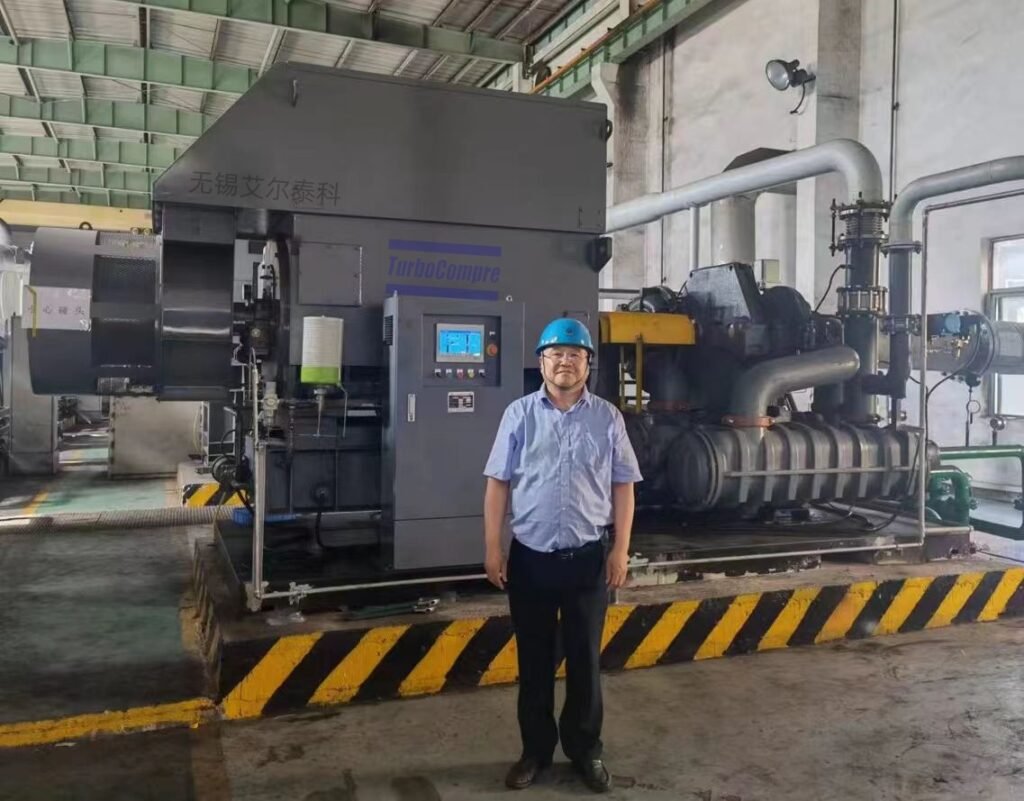
Turbo Compre specializes in the R&D, production and customized energy-saving supporting services of centrifugal air compressors. We always adhere to the TCO full lifecycle optimization service principle, providing manufacturing and mining enterprises with highly energy-saving, stable and low-maintenance centrifugal air compressors instead of low-quality, low-price products.According to your actual working conditions, operating hours and air demand, we provide one-on-one professional TCO cost calculation and customized model matching.