
Centrifugal Compressor Seal Replacement Guide: Inspection, Selection and Installation

A centrifugal compressor seal may be a small component, but seal failure can quickly become a major operating problem. Increased leakage, unstable pressure, higher gas consumption and even unplanned shutdowns can occur when a seal is worn or damaged. The right solution is not simply replacing the seal—it requires identifying the failure condition, selecting the correct replacement and checking the related components before returning the compressor to service.
1. When Should a Centrifugal Compressor Seal Be Replaced?
Seal replacement should be based on operating condition rather than operating hours alone. Typical warning signs include increasing leakage, abnormal seal gas consumption, unstable seal pressure, higher seal temperature, damaged carbon rings, deteriorated O-rings or abnormal vibration.
However, increased leakage does not always mean the seal itself is the root cause. Shaft wear, excessive rotor movement, incorrect clearance, contamination or an unstable seal gas system can produce similar symptoms. Proper diagnosis should therefore come before replacement.
For background on sealing systems used in centrifugal compressors, the U.S. EPA’s centrifugal compressor information provides useful technical context.
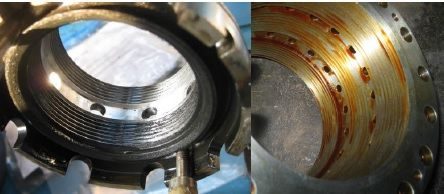
2. Confirm the Correct Seal Before Ordering
One of the most common mistakes in compressor maintenance is selecting a seal based only on the compressor brand and model.
Before ordering a replacement, verify the compressor model and serial number, seal location, seal type, original part number, shaft dimensions, housing dimensions, material specifications, O-ring details and operating pressure and temperature.
Historical drawings and maintenance records are particularly valuable for older machines. A replacement seal that looks identical may still have different materials, tolerances or clearances. For high-speed centrifugal compressors, these differences can directly affect leakage and reliability.
3. Inspect the Shaft and Seal Housing
A new seal cannot compensate for a damaged shaft or seal housing.
After removing the old seal, inspect the shaft surface, seal housing, O-ring grooves and related components for scratches, wear, corrosion, deformation or contamination.
For carbon ring seals, check for broken segments, uneven wear, cracks, chipping and abnormal deposits. For dry gas seals, the seal faces, secondary seals and seal gas system should also be checked.
If the original failure was caused by shaft movement, vibration, contamination or incorrect installation, simply installing another seal may only provide a temporary solution. Technical information from Siemens Energy on dry gas seals also highlights the importance of proper sealing-system conditions.

4. Installation Quality Is Critical

Correct installation is just as important as the quality of the replacement seal.
Before installation, clean the seal housing and mating surfaces and remove burrs, foreign particles and contamination. O-rings should be installed carefully without twisting or cutting.
During installation, technicians should confirm the seal orientation, shaft condition, housing condition and specified clearances. Fasteners should be tightened according to the required sequence and torque, and the rotor should be checked for free rotation before startup.
The seal clearance should never be modified simply to reduce leakage. Excessively small clearance can create friction, heat generation and rotor-to-seal contact during operation.
5. Replacement Seals for Major Centrifugal Compressor Brands
For older centrifugal compressors, original seals may have long lead times, high costs or limited availability. OEM-equivalent replacement parts can provide a practical alternative when they are properly engineered and verified.
Turbocompre provides centrifugal compressor manufacturing, repair, overhaul and replacement parts for equipment from brands including Ingersoll Rand, Atlas Copco, IHI-Sullair and Samsung/Hanwha.
Rather than supplying a part based only on a part number, Turbocompre evaluates available drawings, compressor configuration, operating conditions and component specifications to develop a suitable replacement solution.
This capability is particularly useful for older machines where original documentation or spare parts are difficult to obtain. Turbocompre can also support the replacement and localization of other critical components, including impellers, bearings, gears, shafts and coolers.

6. Inspection After Seal Replacement
The replacement job is not complete when the new seal is installed.
During startup and loading, technicians should monitor seal leakage, seal gas pressure, seal temperature, vibration, bearing temperature, discharge pressure, flow and motor load.
Particular attention should be paid to the initial operating period. If leakage, vibration or temperature remains abnormal, the problem should be investigated rather than repeatedly replacing the seal.
For process gas compressors, testing should also consider the gas properties, operating pressure and temperature, seal-gas requirements and applicable safety standards.
Turbocompre — Your Centrifugal Compressor Spare Parts & Repair Partner
Choosing the right seal is only one part of reliable compressor maintenance. The real challenge is identifying the cause of failure and providing a replacement that matches the compressor’s design and operating conditions.
Turbocompre combines centrifugal compressor manufacturing with years of experience in compressor repair, overhaul and replacement parts. We support Ingersoll Rand, Atlas Copco, IHI-Sullair, Samsung/Hanwha and other centrifugal compressor brands, providing seals and other critical spare parts as well as repair and localization solutions.
Need a centrifugal compressor seal replacement or OEM-equivalent spare part? Send us your compressor model, part number, drawing or operating parameters. Turbocompre’s engineering team can evaluate your requirements and provide a suitable solution and quotation.

Contact Turbocompre today for centrifugal compressor seals, spare parts, repair and overhaul support.