
Why Do Centrifugal Compressor Quotations Differ So Much in Price?

When purchasing an industrial centrifugal compressor, you may receive quotations from several suppliers that differ significantly in price—even when the stated flow rate and discharge pressure appear similar.
As a buyer, it is natural to ask: Why is one quotation much more expensive than another? Is the higher-priced compressor more reliable, or does the lower-priced option offer better value?
The answer is that similar headline specifications do not necessarily mean equivalent equipment. Differences in compressor design, performance guarantees, core components, auxiliary systems, quality control, and after-sales support can all affect the final price.
Understanding these factors helps you compare quotations more accurately, avoid hidden costs, and choose a compressor that meets your operational and financial goals.
1. Different Compressor Designs and Engineering Requirements
Not all centrifugal compressors use the same design. Single-shaft and integrally geared compressors, for example, have different structural configurations, speed arrangements, and engineering requirements.
The appropriate design depends on your required flow rate, discharge pressure, gas properties, operating conditions, and expected load profile. More complex applications may require additional engineering, specialized materials, or customized configurations.
When comparing quotations, ask suppliers to clarify:
Compressor type and configuration
Number of compression stages
Design flow rate and discharge pressure
Required motor power and operating speed
Suitability for your actual operating conditions
A lower quotation may reflect a simpler configuration, but it could also indicate a more suitable design with less unnecessary complexity. The important question is whether the proposed equipment meets your actual requirements without compromising performance or reliability.

2. Energy Efficiency Can Make a Major Difference
For many industrial users, electricity is one of the largest expenses associated with operating a centrifugal compressor. A compressor with a lower purchase price may cost more to operate if its specific power consumption is higher.
When comparing quotations, look beyond motor power alone. Evaluate the guaranteed flow rate, discharge pressure, gas conditions, and total power consumption at the same operating point.
You should also consider performance under your actual load conditions. A compressor operating far from its optimal range may consume more energy than expected.
The U.S. Department of Energy’s Compressed Air Sourcebook provides useful guidance on improving compressed air system performance and evaluating energy-saving opportunities.
Buyer tip: Request guaranteed performance data and calculate the expected annual electricity cost. Even a relatively small efficiency difference can become financially significant over years of continuous operation.
3. Core Components and Manufacturing Quality
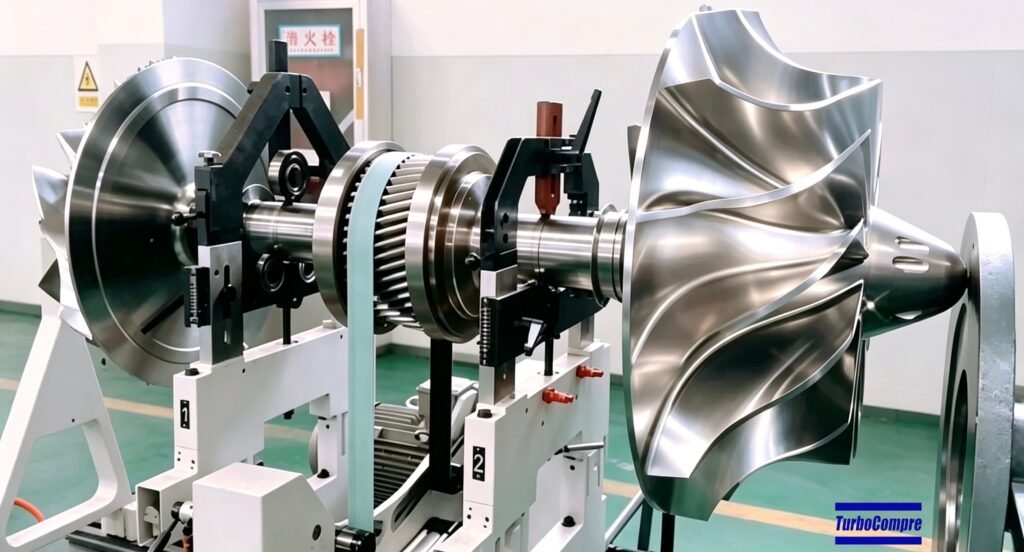
Precision components have a direct influence on compressor performance, reliability, and service life. Impellers, gearboxes, high-speed shafts, bearings, and coolers all contribute to the overall quality of the machine.
However, two suppliers may use different manufacturing processes, component specifications, materials, and inspection procedures, even when their quotations describe similar products.
Before making a decision, ask about:
Impeller design and machining accuracy
Gear and bearing specifications and sourcing
Material traceability and inspection records
Rotor balancing and assembly procedures
Factory testing and quality assurance
A lower price does not automatically mean lower quality, just as a higher price does not automatically guarantee better performance. What matters is whether the manufacturer can demonstrate that the equipment meets the required technical standards.
4. What Is Actually Included in the Quotation?
One of the most common reasons for price differences is that suppliers are not quoting the same scope of supply.
One quotation may cover only the compressor package, while another includes the motor, control system, lubrication system, cooling equipment, instrumentation, and commissioning support.
Installation requirements, export packaging, transportation, and site services can also affect the total project cost.
Before comparing prices, confirm whether each quotation includes:
Main compressor and drive motor
Lubrication and cooling systems
Control panel and instrumentation
Required valves, piping, and accessories
Factory performance testing and documentation
Installation supervision and commissioning
Packaging, freight, and other delivery costs
Ask each supplier to provide a clearly defined scope of supply. This makes it easier to identify genuine savings instead of comparing incomplete quotations.

5. Brand Premiums and the Value of Technical Capability
Established international brands may have extensive operating histories, engineering resources, and global service networks. These capabilities can be valuable, but the brand name alone does not determine whether a quotation offers the best value for your application.
Qualified alternative manufacturers may offer competitive pricing while providing suitable engineering, precision manufacturing, documented quality control, and technical support.
For buyers considering alternatives to established brands, the key is to verify the supplier’s actual capabilities rather than focusing exclusively on the country of origin or the quoted price.
Ask for relevant project references, technical documentation, performance guarantees, and evidence of manufacturing and inspection capabilities. Where replacement equipment or components are involved, confirm dimensional compatibility and operating performance before ordering.
6. Warranty, Spare Parts, and After-Sales Support
A compressor is a long-term production asset. If a critical component fails, the cost of downtime may be far greater than the original purchase price difference.
Suppliers may offer different warranty terms, spare-parts availability, response times, and levels of technical assistance. Some quotations include commissioning or service support, while others cover equipment supply only.
Before placing an order, clarify:
Warranty duration and coverage
Availability and lead time of critical spare parts
Technical response and troubleshooting arrangements
On-site service and commissioning options
Responsibilities for transportation and replacement parts
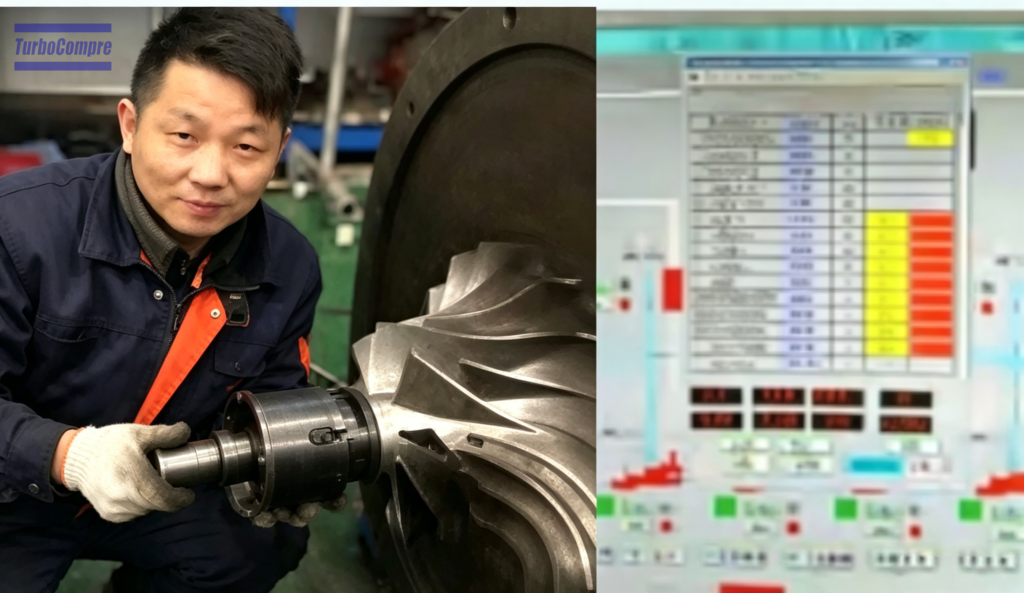
A supplier that can provide dependable technical support and timely spare parts may help reduce maintenance risks and production interruptions throughout the compressor’s service life.
7. How to Compare Quotations Fairly
Instead of ranking suppliers by initial price alone, use a consistent technical and commercial evaluation.
| Evaluation factor | What buyers should check |
|---|---|
| Performance | Same flow, pressure, gas conditions, and guaranteed operating point |
| Energy consumption | Total power and expected annual electricity cost |
| Equipment scope | Motor, controls, cooling, lubrication, and accessories |
| Manufacturing quality | Materials, precision machining, balancing, and inspections |
| Delivery | Lead time, packaging, shipping terms, and documentation |
| Service | Warranty, spare parts, commissioning, and technical support |
| Lifecycle cost | Purchase, installation, energy, maintenance, and downtime |
For a more meaningful comparison, calculate the total cost of ownership over your expected operating period:
Total cost of ownership = Purchase cost + Installation cost + Energy cost + Maintenance cost + Expected downtime cost
The calculation should use consistent operating hours, electricity prices, performance assumptions, and maintenance periods for every supplier. This approach gives you a more realistic picture of the financial value of each offer.
8. How TurboCompre Helps Buyers Achieve Better Value
At TurboCompre, we understand that industrial buyers need more than a competitive quotation. They need equipment that performs reliably, meets technical requirements, and delivers long-term value.
With experience in centrifugal compressor engineering, manufacturing, and servicing, TurboCompre focuses on balancing technical reliability with cost-effectiveness.
Our capabilities include:
Centrifugal compressor manufacturing: Solutions designed around the required flow rate, pressure, and operating conditions.
Precision core components: In-house design and manufacturing capabilities for key components, with specialized suppliers for selected items such as gears and bearings.
Replacement parts and overhaul services: Support for centrifugal compressors from brands including Ingersoll Rand, Atlas Copco, Hanwha, and IHI-Sullair, subject to model and technical verification.
Quality-focused production: Manufacturing and inspection procedures intended to support dimensional accuracy, performance, and operational reliability.
Responsive technical support: Assistance with equipment selection, replacement-part compatibility, maintenance, and project requirements.
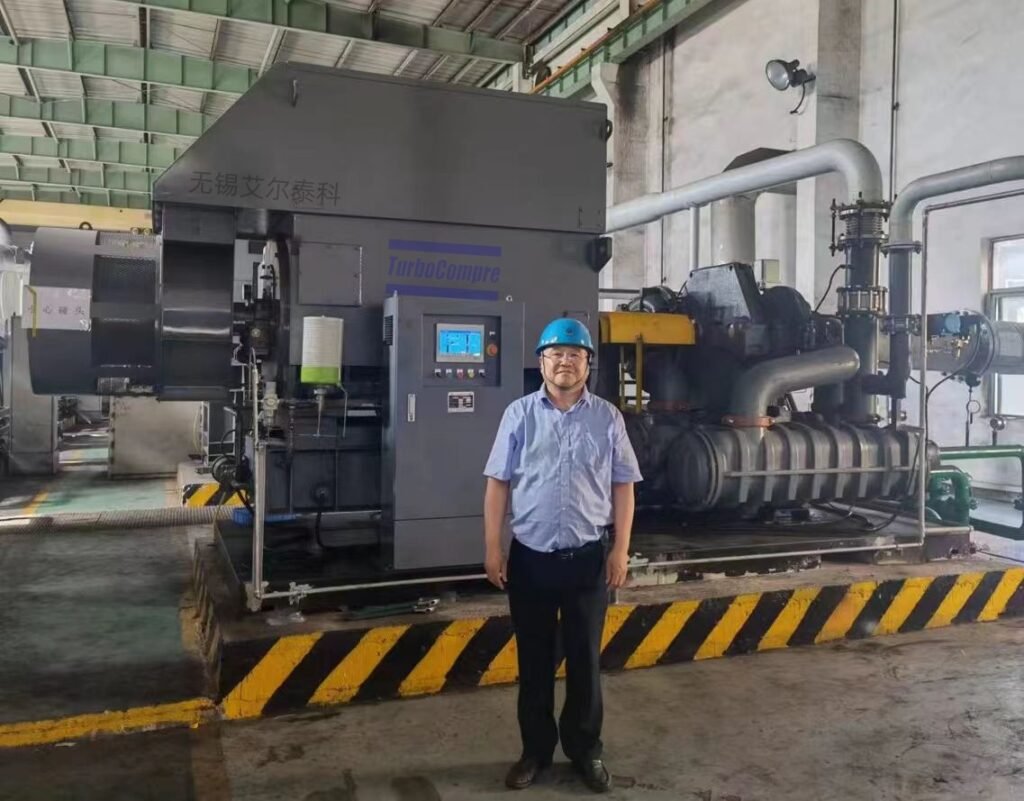
Our goal is to provide a dependable, cost-effective alternative without treating quality assurance as an optional extra. We encourage buyers to compare technical specifications, manufacturing capabilities, and lifecycle costs—not just the initial quotation.
Contact TurboCompre to discuss your centrifugal compressor project, replacement requirements, or spare-parts needs. Share your required flow rate, discharge pressure, gas or air conditions, and operating hours, and our team can help you evaluate a suitable, cost-effective solution.