
Centrifugal Compressor Commissioning Is Where Reliability Begins

A centrifugal compressor can be well designed and precisely manufactured, yet still experience vibration, unstable operation, poor efficiency, or unexpected downtime if commissioning is not properly executed.
Centrifugal compressor commissioning connects three critical stages:
Installation → Startup → Stable Operation
The objective is not simply to start the machine. It is to verify that the compressor, auxiliaries, control system, piping, and operating conditions work together as designed.
For industrial projects, commissioning should follow the manufacturer’s procedures and applicable project standards. API 617, for example, covers axial and centrifugal compressors used in petroleum, chemical, and gas industry services.
01 — Installation Verification
Before energizing or rotating the compressor, the mechanical installation should be carefully inspected.
Foundation & Base
Check:
- Foundation condition and level
- Anchor bolts and mounting surfaces
- Baseplate installation
- Grouting condition
- Equipment cleanliness
- Accessibility for maintenance
A stable foundation is essential because high-speed rotating equipment is sensitive to installation errors and mechanical vibration.
Shaft & Coupling Alignment
Alignment between the compressor, gearbox, motor, or turbine is one of the most important commissioning activities.
Improper alignment can contribute to:
- Excessive vibration
- Bearing loading
- Coupling problems
- Seal damage
- Reduced equipment life
Alignment should be checked using the specified measurement method and corrected according to the manufacturer’s tolerances.
02 — Check Piping and Auxiliary Systems
The compressor is only one part of a complete compression package.
Before startup, inspect the connected systems.
Process Piping
Verify:
- Suction and discharge piping
- Valve installation
- Pipe supports
- Expansion arrangements
- Filters and strainers
- Flange connections
- Piping cleanliness
Particular attention should be paid to pipe stress. Excessive external loads transmitted to the compressor casing can affect alignment and equipment reliability.


Lubrication System
For compressors equipped with an oil system, verify:
- Correct oil type
- Oil level
- Oil temperature
- Oil pressure
- Oil pump operation
- Oil filter condition
- Cooler operation
- Alarm and trip functions
Lubrication and oil-control systems are also covered by API 614 for applicable industrial machinery packages.
03 — Instrumentation & Control Checks
A modern centrifugal compressor depends heavily on its control and protection system.
Before startup, confirm that all critical instruments have been installed, calibrated, and correctly connected.
Typical parameters include:
| Parameter | Purpose |
|---|---|
| Suction pressure | Verify inlet condition |
| Discharge pressure | Monitor compression performance |
| Suction temperature | Confirm process condition |
| Discharge temperature | Detect abnormal compression |
| Vibration | Monitor rotor condition |
| Bearing temperature | Protect bearings |
| Oil pressure | Protect lubrication system |
| Speed | Verify operating point |
| Anti-surge control | Prevent unstable operation |
The anti-surge system deserves particular attention.A centrifugal compressor should not run near surge without a proper control strategy.
04 — Manual Rotation & Pre-Startup Inspection
Before the first powered rotation, the rotating assembly should be checked according to the manufacturer’s procedure.
Typical checks include:
- Rotor free rotation
- Coupling condition
- Lubrication availability
- Seal system readiness
- Valve position
- Electrical connections
- Instrument signals
- Emergency shutdown system
- Interlocks and alarms
The purpose is simple:Find installation problems before the compressor reaches operating speed.
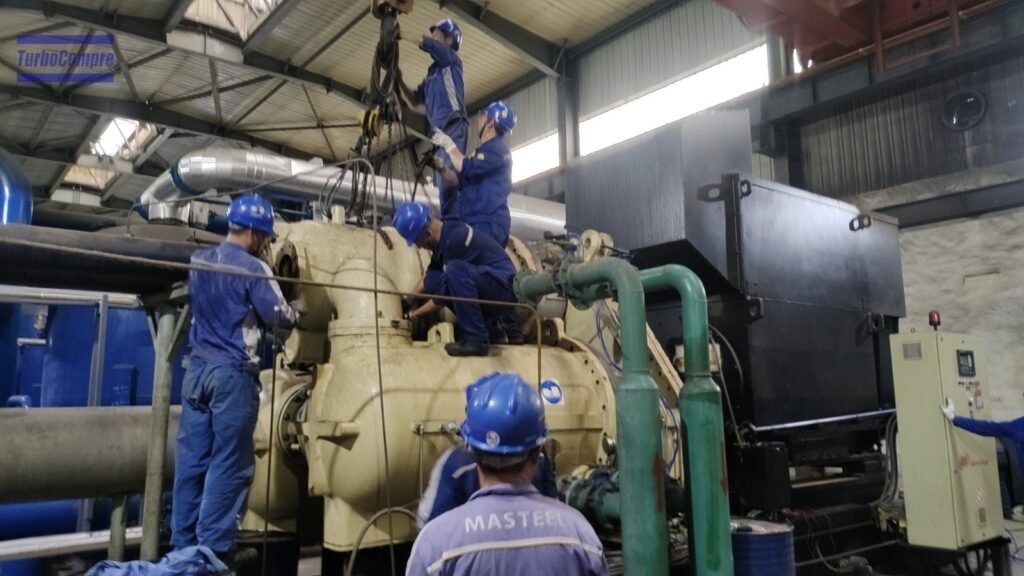
The purpose is simple: Find installation problems before the compressor reaches operating speed.
A structured commissioning process should include installation verification, functional testing, documentation, and final handover. This approach is consistent with broader commissioning practices recommended by the U.S. Department of Energy.
05 — First Startup
The first startup should be gradual and controlled.
Do not immediately push the compressor to full load.
A typical sequence is:
Lubrication → Auxiliary Systems → Rotation → Speed Increase → Parameter Monitoring → Load Increase → Performance Verification
During the initial run, engineers closely monitor:
- Vibration
- Bearing temperature
- Oil pressure
- Motor current
- Speed
- Suction pressure
- Discharge pressure
- Discharge temperature
- Flow
- Anti-surge valve position
Any abnormal trend should be investigated before continuing the startup.

06 — Operating Point & Anti-Surge Control
One of the most important tasks during centrifugal compressor commissioning is confirming that the compressor operates within its intended performance range.
The actual operating point depends on:
Flow + Pressure + Gas Properties + Speed + Temperature
The compressor should run based on its approved performance map.
Why Surge Protection Matters
Surge is an unstable operating condition that can cause rapid changes in flow and pressure.
A properly commissioned anti-surge system should:
- Detect operation approaching the surge region
- Open the recycle/anti-surge valve when required
- Restore stable compressor operation
- Protect the compressor during transient conditions
Control logic should be tested before full-load operation rather than being treated as an afterthought.
07 — Performance Testing
Mechanical startup is only the beginning.
The next step is confirming whether the compressor actually meets its design requirements.
Typical performance parameters include:
Flow
Is the compressor delivering the required gas flow?
Pressure
Does the discharge pressure meet the specified operating condition?
Power
Is the compressor consuming power within the expected range?
Efficiency
Is the machine achieving the expected compression efficiency?
Vibration
Does vibration remain within the applicable acceptance limits?
Performance testing should use agreed measurement methods and project acceptance criteria. For applicable process compressors, API 617 provides the relevant equipment standard framework.

08 — Load Testing & Stable Operation
After basic startup checks are completed, the compressor can gradually move toward its normal operating condition.
Engineers should observe whether the machine remains stable under different loads.
Important questions include:
Can the compressor maintain the required pressure?
Does vibration remain stable?
Does the anti-surge system respond correctly?
Are bearing temperatures normal?
Is power consumption consistent with the expected performance?
Can the compressor respond smoothly to load changes?
The goal is to demonstrate not only that the compressor can run, but that it can run reliably under actual plant conditions.
09 — Commissioning Documentation
Good commissioning should leave behind more than a machine that is running.
A complete commissioning package may include:
- Installation inspection records
- Alignment reports
- Instrument calibration records
- Oil system inspection records
- Startup records
- Vibration measurements
- Performance test results
- Alarm and trip test records
- Anti-surge test results
- Punch-list closure
- Operating parameters
- Maintenance recommendations
This documentation becomes valuable later when troubleshooting, maintaining, upgrading, or troubleshooting the compressor.

Turbocompre: Commissioning Support from Installation to Operation
For industrial users, compressor commissioning is not simply about turning on a machine. It requires coordination between compressor design, mechanical installation, control systems, process conditions, and field engineering.
Turbocompre provides centrifugal compressor solutions covering engineering, manufacturing, technical upgrades, spare parts, maintenance, and commissioning support.
With experience in centrifugal compressor applications, Turbocompre can support customers with:
- Centrifugal compressor installation guidance
- Startup and commissioning support
- Compressor performance verification
- Troubleshooting
- Compressor retrofit and upgrades
- OEM-compatible spare parts
- Impeller and rotor-related services
- Maintenance and repair support
For plants replacing or upgrading existing equipment, commissioning can also be an opportunity to optimize the compressor’s operating point, control strategy, and energy performance.
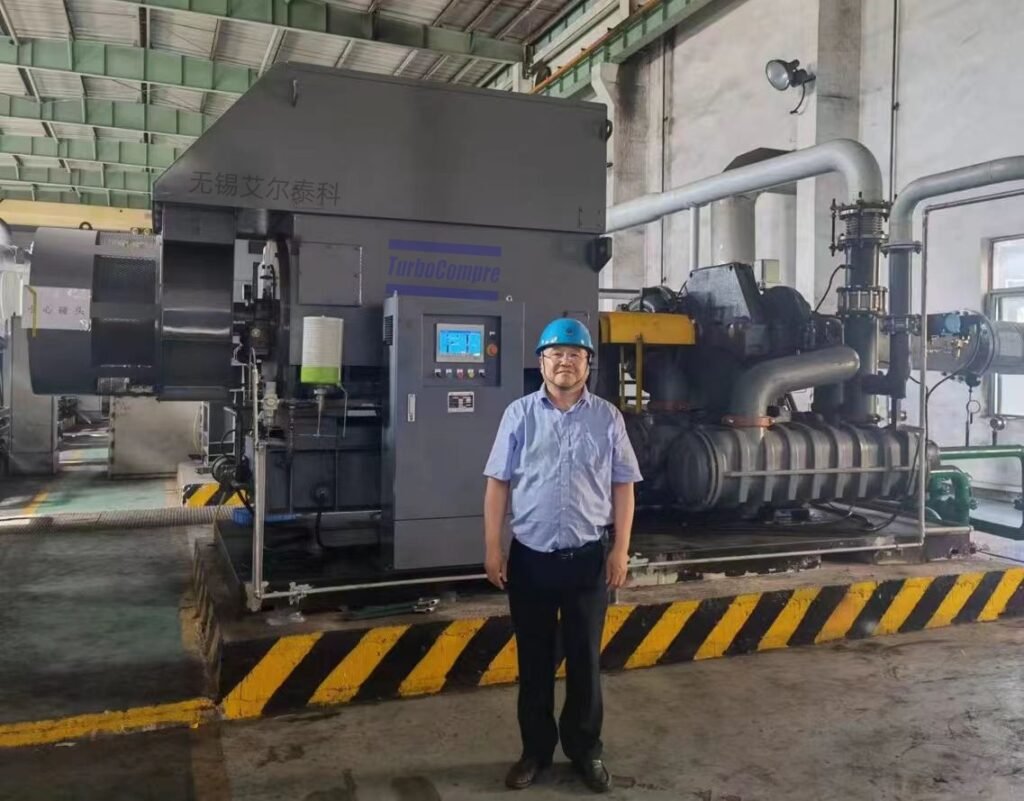
A successful compressor project does not end when the compressor starts. It begins when the machine reaches stable, reliable operation.