
Centrifugal Compressor Bearing Temperature: Lubrication vs Rotor Unbalance
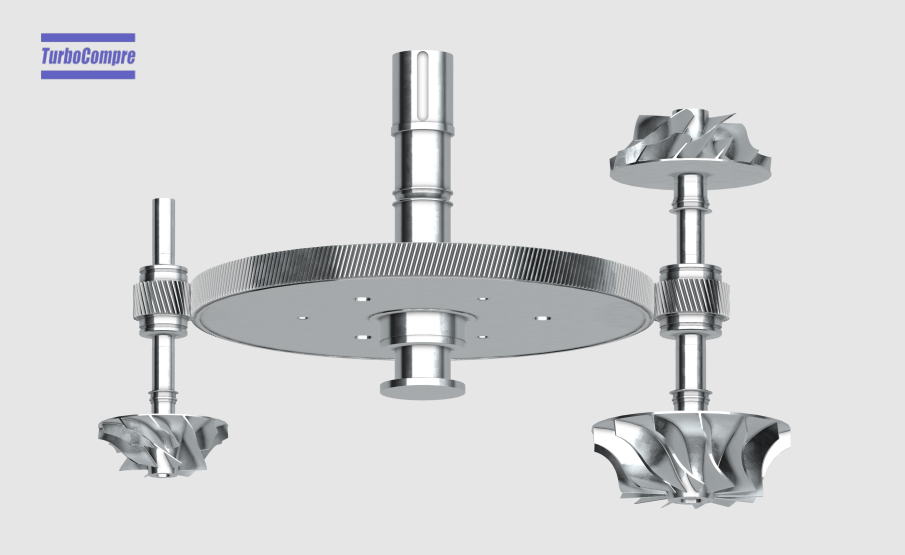
In chemical, petrochemical, air-separation, power and other industrial scenarios, centrifugal compressors serve as core process equipment whose operational stability directly determines production capacity and safety of entire production lines. Abnormal bearing temperature rise ranks among the most frequent and misdiagnosed compressor faults. Many field technicians merely top-up or replace lubricating oil upon bearing overheating, alarms or shutdowns, while overlooking rotor unbalance as a root mechanical cause. Such improper handling leads to recurring faults, bearing pad wear and burnout, excessive unit vibration, unplanned downtime and costly major overhauls.
Industrial equipment failure statistics indicate that roughly 50% of centrifugal compressor bearing overheating incidents stem from lubrication system anomalies, and 27.5% result from rotor unbalance. Both present bearing temperature overshoot, yet they differ drastically in troubleshooting logic, solutions and hazard levels. This article clarifies core distinctions, identification criteria and practical inspection workflows to help maintenance personnel pinpoint root causes accurately and avoid ineffective repairs.
I. Underlying Failure Mechanisms of Two Fault Types
Accurate fault identification starts with understanding the fundamental physics behind overheating caused by lubrication failure and rotor unbalance.
1. Lubrication-related Issues: Frictional Heat from Oil-film Failure
Bearings of centrifugal compressors rely on a rigid oil-film to separate journals from bearing pads for friction reduction and heat dissipation. All lubrication-originated overheating arises from incomplete or broken oil-film, which causes direct metal-to-metal contact, poor heat removal and sharp temperature rise. Common triggers fall into four categories:
- Improper lubricant quantity: Insufficient oil supply pressure or oil volume prevents a complete oil-film and triggers partial dry friction. Excessive oil fills bearing housing clearance and generates heavy churning heat during high-speed operation, pushing temperature rapidly to 70–80°C.
- Degraded or contaminated oil: Oxidized lubricant, off-spec viscosity, water ingress or particulate contamination weaken oil-film strength and impair friction-reduction and heat-transfer performance.
- Defective oil supply & cooling circuits: Fouled oil coolers, clogged filters or insufficient cooling-water flow raise inlet oil temperature. Heat cannot be carried away and accumulates inside bearings.
- Abnormal bearing pad clearance: Too-small clearance restricts oil return and oil storage and increases friction resistance. Excessive clearance destabilizes the oil-film and produces local impact friction and heat.
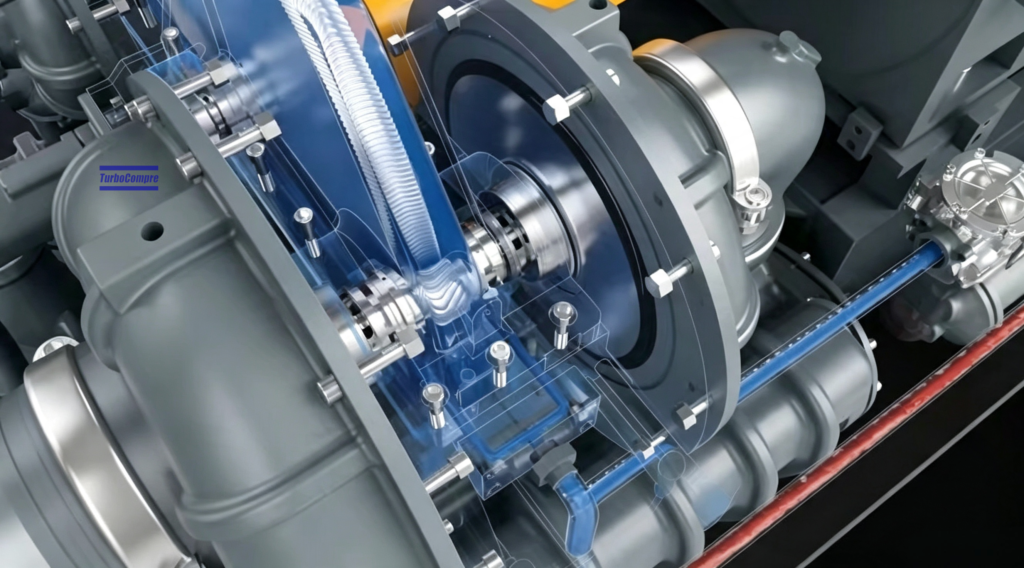
2. Rotor Unbalance: Frictional Heat Induced by Mechanical Vibration
Rotor unbalance is a typical structural mechanical fault. It originates from impeller fouling, abrasion, corrosion, material non-uniformity, assembly misalignment after overhaul, and minor rotor deformation. During high-speed rotation, unbalanced mass generates continuous periodic centrifugal force and forces the rotor to deviate from its ideal rotational center.
Abnormal vibration subjects bearings to persistent alternating loads. Repeated impact and friction between journal and bearing pad produce substantial mechanical frictional heat. Meanwhile vibration destabilizes the bearing oil-film, aggravating oil-film rupture and partial dry rubbing, which manifests as gradual bearing temperature increase. Different from lubrication faults, the root cause lies in abnormal mechanical vibration loads rather than lubrication system defects.

II. Practical Comparison: Lubrication Fault vs Rotor Unbalance
Field crews can differentiate the two faults via temperature trends, vibration signatures and operational parameters without sophisticated instruments.
|
Evaluation Item |
Lubrication System Abnormality (Oil Temperature / Quality / Quantity) |
Rotor Unbalance (Mechanical Structural Fault) |
|---|---|---|
|
Temperature variation rate |
Sharp temperature surge within 10–30 min; high-temperature alarms and interlock trips occur easily |
Slow, progressive temperature rise; sudden overheating rarely happens |
|
Vibration characteristics |
Vibration stays within allowable range without obvious fluctuation |
Marked radial vibration; amplitude rises with the square of rotating speed; spectrum dominated by 1X fundamental frequency; vibration intensifies at higher speed |
|
Affected bearings |
Overheating usually occurs on one single bearing; other bearings remain normal |
Both rotor-end bearings heat up synchronously with small temperature deviation between them |
|
Lubricant condition |
Visible anomalies: abnormal oil level, turbid/foamy/black oil, water or particle contaminants; abnormal supply pressure and oil inlet temperature |
Oil quality, oil level, supply pressure and cooling system all function normally |
|
Acoustic symptoms |
Mild friction noise without regular patterns; vibration sound unchanged |
Increased unit noise; continuous low-frequency hum that worsens with higher rotating speed |
|
Restart performance |
Temperature drops quickly after oil top-up, oil change or cooling circuit cleaning; fault is eliminated immediately |
Fault persists after restart; temperature climbs again after temporary cooling; vibration remains excessive and recurs repeatedly |
III. Precise Instrument-aided Diagnosis to Avoid Visual Misjudgment
Visual inspection may fail to detect subtle deviations. Standard measuring instruments enable reliable root-cause confirmation for precision-critical compressors.

1. Vibration Spectrum Analysis (Primary Diagnostic Tool)
Vibration spectrum serves as the golden criterion for discrimination. Predominant 1X rotational-frequency amplitude without prominent 2X / 3X harmonics strongly indicates rotor unbalance. If the spectrum shows no abnormal peaks while bearing temperature rises, lubrication system problems are highly suspected. This is a core diagnostic method for industrial compressors.
2. Lubricant Oil Analysis
Sample circulating lubricant for laboratory testing. Off-spec viscosity, water content, particle count, acid number or abnormal metallic wear debris points to lubrication-induced bearing overheating. When all oil indices qualify but temperature and vibration deviate, lubrication factors can be ruled out and mechanical rotor faults become the prime suspect.
3. Temperature & Pressure Trend Monitoring
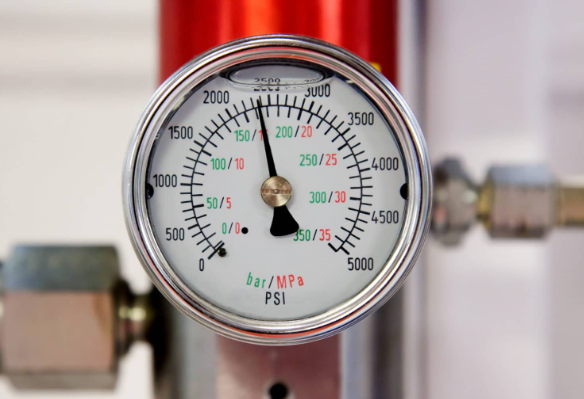
Track oil supply pressure, bearing inlet-oil and return-oil temperature. Insufficient supply pressure, elevated inlet-oil temperature or abnormal temperature difference across the oil cooler indicates lubrication-system failure. Normal pressure and oil temperature with isolated bearing-body overheating suggests secondary heating triggered by rotor unbalance.
IV. Standard On-site Troubleshooting Procedure
Follow the “lubrication-first, mechanics-second” workflow aligned with industrial maintenance specifications to prevent missed or wrong judgements.
Step 1: Inspect the lubrication system
- Check oil-tank level for under-filling or over-filling; verify oil supply pressure against equipment specifications and watch for pressure fluctuation or relief anomalies.
- Inspect oil coolers and filters for clogging; confirm cooling-water flow and temperature; remove scale and debris.

- Observe lubricant appearance for water ingress, foaming or degradation. Take oil samples for lab analysis and replace non-conforming oil when necessary.
- Verify unobstructed bearing oil-return lines; check for heat accumulation caused by insufficient clearance and poor oil return.

Step 2: Evaluate mechanical vibration and rotor status
- After eliminating lubrication defects, measure radial and axial vibration and record vibration trends at different rotating speeds.
- Perform spectrum analysis to quantify 1X fundamental-frequency amplitude and assess rotor unbalance severity.
- Shut down the unit and inspect rotors for impeller fouling, wear, corrosion, deformation, or degraded dynamic balance after disassembly-reassembly.
Step 3: Validation test
- For lubrication faults: restart after rectifying oil-system defects. Acceptance criteria: fast temperature fall and stable vibration, fault fully resolved.
- For rotor unbalance: lubrication rectification yields no improvement. After rotor dynamic-balance correction and impeller cleaning, both temperature and vibration return to baseline.
For centrifugal compressor bearing overheating: prioritize lubrication checks if temperature rises fast, vibration remains stable and only one bearing overheats; investigate rotor unbalance for slow temperature drift, high vibration and simultaneous overheating of both rotor-side bearings. Lubrication faults belong to process-related system issues with simple rectification and fast recovery. Rotor unbalance is a concealed structural mechanical defect with severe consequences and requires proper dynamic-balance correction.

Turbo Compre ,China-based centrifugal compressor manufacturer dedicated to reliable, high-efficiency turbomachinery and OEM-grade spare parts for chemical, petrochemical, air-separation, textile, pharmaceutical and steel plants. Backed by in-house engineering and vibration/diagnosis expertise, the company supports customers across India, Egypt, Indonesia and Pakistan with field troubleshooting, bearing and rotor analysis, preventive maintenance and fast-response aftermarket service.