
Are Aftermarket Compressor Parts Reliable? How to Balance Quality, Performance, and Cost
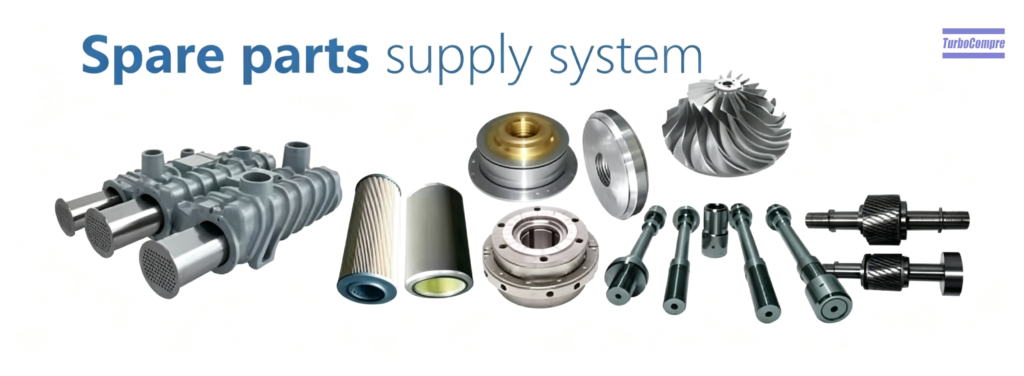
For industrial buyers, compressor spare parts are not simply a purchasing expense. They directly affect equipment reliability, production continuity, maintenance budgets, and long-term operating costs.
Original equipment manufacturer (OEM) parts are often considered the safest option, but they may come with higher prices or longer delivery times. For older compressors, certain original parts may also be difficult to obtain.
This is why many plant managers, maintenance engineers, and procurement teams consider aftermarket compressor parts as an alternative. The key question is not whether aftermarket parts are cheaper, but whether they can deliver the required performance without compromising equipment reliability.
The answer is yes—but only when the parts are manufactured to the correct specifications and supported by effective quality control.
1. What Determines the Reliability of Aftermarket Compressor Parts?
Not all aftermarket parts are manufactured to the same standard. Buyers should evaluate the engineering and manufacturing capabilities behind the product rather than relying on price or appearance alone.
Dimensional Accuracy and Manufacturing Quality
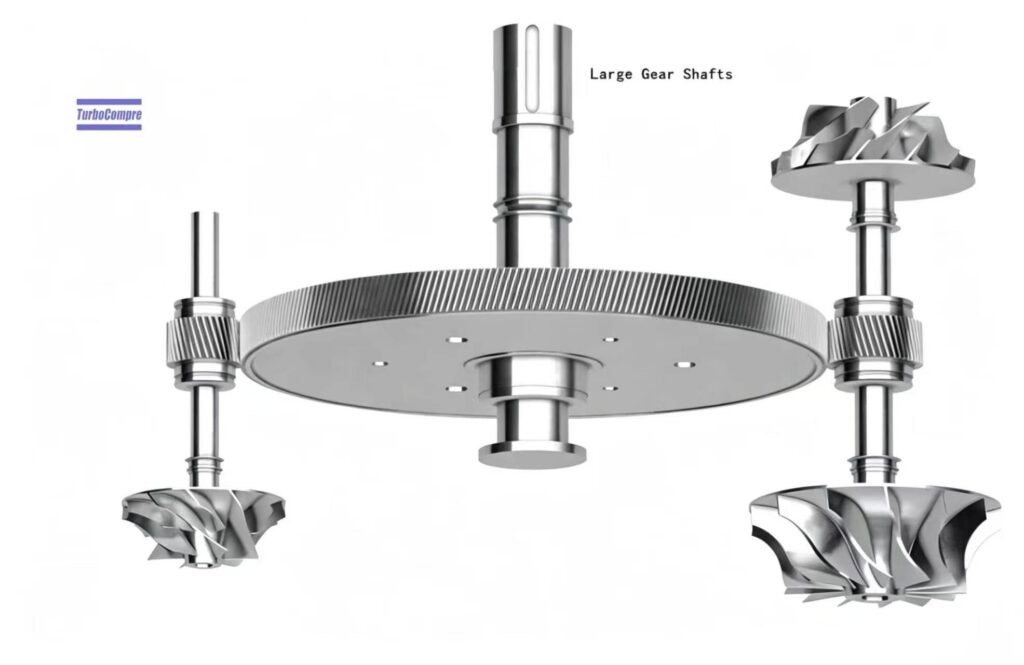
Critical components such as impellers, gear shafts, bearings, seals, and coolers must meet the specifications required by the compressor design. Even small deviations in critical dimensions, clearances, balance, or surface finish can affect vibration, efficiency, temperature, and service life.
For high-speed centrifugal compressors, precision is particularly important. An impeller that looks identical to the original may still perform differently if its aerodynamic profile, material properties, or balance quality is incorrect.
Material Selection and Component Performance
Materials must be suitable for the operating pressure, temperature, gas composition, rotational speed, and working environment. For example, a replacement component used in a process-gas compressor may face different corrosion or temperature requirements from one used in a standard air compressor.
Reliable suppliers should be able to explain their material selection and relevant inspection procedures.
Quality Control and Traceability
Buyers should ask how components are inspected before delivery. Depending on the part, quality assurance may include dimensional inspection, material verification, dynamic balancing, non-destructive testing, and final inspection records.
For critical replacement components, documented quality control provides greater confidence than a supplier’s verbal assurance alone.
2. OEM Parts vs. Aftermarket Parts: What Should Buyers Compare?
The real difference is not simply the brand name. It is the level of engineering accuracy, manufacturing consistency, quality assurance, and technical support behind each part.
| Evaluation Factor | OEM Parts | Quality Aftermarket Parts |
|---|---|---|
| Design reference | Original manufacturer’s design | May use original drawings or independently developed designs |
| Manufacturing quality | Depends on OEM specifications and controls | Depends on the supplier’s capabilities and controls |
| Purchase cost | Often higher | May offer substantial savings |
| Availability | Depends on the OEM’s supply chain | May provide an alternative source |
| Technical support | Depends on the OEM’s service network | Depends on the supplier’s engineering and service capabilities |
A qualified aftermarket supplier that works from authorized or otherwise legitimately available original design documentation can manufacture replacement parts to the required specifications. However, not every aftermarket supplier has access to original drawings or the capability to reproduce critical components accurately.
Buyers should verify the actual manufacturing basis instead of assuming all aftermarket products are equivalent.
For general guidance on compressor maintenance and equipment reliability, consult the U.S. Department of Energy’s Better Buildings resources.
3. Why Are Original Design References and Manufacturing Precision Important?
For critical centrifugal compressor components, a reliable replacement must meet more than dimensional requirements. Material properties, machining accuracy, dynamic balancing, and actual operating conditions must also be considered.
Original engineering drawings can provide an important technical reference for manufacturing replacement parts, helping suppliers understand critical dimensions, tolerances, and design requirements. However, drawings are only the starting point. The final quality also depends on the supplier’s engineering expertise, machining equipment, manufacturing processes, and quality inspection procedures.
Components such as impellers and gear shafts require a high level of manufacturing precision and operational stability. Effective control of design requirements, material selection, precision machining, and quality verification helps ensure that replacement parts meet the equipment’s operating requirements.
When evaluating a supplier, buyers should focus on three key areas:
Design references: Does the supplier have access to applicable original engineering drawings or validated technical documentation?
Manufacturing capabilities: Does the supplier have the equipment, processes, and inspection capabilities required for critical components?
Quality verification: Can the supplier provide inspection records for the actual components supplied and demonstrate compliance with the relevant technical requirements?

Choosing a supplier with strong engineering knowledge, precision manufacturing capabilities, and an effective quality control system can help improve the compatibility and operational reliability of third-party replacement compressor parts.
4. How Can Buyers Reduce Risk When Purchasing Aftermarket Parts?
Choosing an aftermarket supplier should be treated as a technical evaluation, not just a price comparison.
First, confirm equipment compatibility. Provide the compressor manufacturer, model, serial number where available, component part number, and operating conditions. For critical parts, confirm the relevant drawings and technical specifications.
Second, request evidence of quality. Depending on the component, this may include inspection reports, material certificates, balancing reports, dimensional records, and manufacturing photographs. The documents should correspond to the actual parts being supplied.
Third, assess the supplier’s experience. A supplier with experience in the same compressor brand, model, or component type is generally better positioned to understand installation requirements and potential failure modes.
Finally, clarify after-sales support. Before placing an order, establish warranty terms, delivery arrangements, technical communication procedures, and the supplier’s ability to support installation, troubleshooting, or commissioning.

These steps help buyers reduce the risks of receiving incompatible parts, experiencing unexpected downtime, or paying for repeated repairs.
5. Look Beyond Purchase Price: Evaluate Total Cost of Ownership
A lower quotation does not automatically mean a lower maintenance cost. Equally, a higher-priced OEM component does not always represent the best economic choice for every application.
Consider the full cost of ownership, including:
Initial purchase price and shipping costs
Lead time and the potential cost of production downtime
Installation, inspection, and commissioning expenses
Expected service life and maintenance frequency
Warranty coverage and technical support
For example, a replacement component that costs less but requires repeated adjustment or early replacement may create higher overall costs. A properly manufactured aftermarket part, by contrast, may help reduce procurement expenses while maintaining the performance required by the application.
For plant operators, the objective should be to secure reliable performance at a competitive total cost, rather than simply selecting the cheapest quotation.
6. How Turbocompre Helps Customers Source Reliable Compressor Spare Parts
Turbocompre, the international sales and service brand associated with Wuxi Airtech Compressor, supports industrial customers seeking dependable replacement parts and compressor maintenance solutions.
With experience in centrifugal compressor spare parts and repair services, Turbocompre focuses on engineering accuracy, manufacturing quality, and practical support for customers operating equipment from multiple manufacturers.
Our capabilities include replacement components for brands such as Ingersoll Rand, Atlas Copco, Hanwha/Samsung, and IHI-Sullair, subject to model and component verification.
For applicable projects, replacement components can be manufactured using original engineering drawings as the production reference, rather than relying solely on reverse measurement of worn parts. Manufacturing and inspection requirements are established according to the component and application.
Beyond supplying parts, Turbocompre can also discuss technical compatibility, repair solutions, and installation or commissioning support for suitable projects.

For customers seeking a dependable alternative to conventional spare-parts procurement, the goal is straightforward: maintain equipment reliability, control maintenance costs, and minimize avoidable downtime.
Contact Turbocompre to discuss your equipment, replacement requirements, and maintenance challenges. Our team will help assess suitable solutions based on your technical requirements, quality expectations, and budget.