
How to Minimize Production Losses from Compressor Downtime: A Practical Guide for Industrial Buyers

1. Why Compressor Downtime Costs More Than Repair Bills
For manufacturers in steel, chemicals, petrochemicals, power generation, and other process industries, compressor downtime can quickly become a production problem rather than just an equipment problem.
When a critical compressor stops, the consequences may include reduced production capacity, interrupted processes, product quality issues, delayed deliveries, and additional labor costs. In continuous-process plants, an unexpected shutdown can also affect upstream and downstream equipment.
The true cost of compressor downtime therefore includes more than the repair invoice. It may include lost production margin, restart costs, wasted materials, contractual penalties, and the cost of emergency maintenance.
For plant managers and purchasing teams, the key question is not simply how to repair a compressor after failure, but how to reduce the likelihood of failure and minimize the time required to restore production.
2. Identify Early Warning Signs Before Failure Occurs
Many compressor failures develop gradually. Changes in operating conditions may provide early indications that a component is deteriorating.
Rather than relying only on alarms or scheduled inspections, operators should regularly monitor:
Vibration: Increasing vibration may indicate bearing wear, rotor imbalance, misalignment, or other mechanical problems.
Temperature: Abnormal bearing, discharge, or cooling-system temperatures may signal lubrication, cooling, or mechanical issues.
Pressure and flow: Declining capacity or unstable discharge pressure may indicate fouling, internal leakage, control problems, or changing process conditions.
Power consumption: Increasing power demand at comparable operating conditions may indicate declining efficiency or an abnormal operating state.
Noise and operating trends: Unusual sounds, repeated trips, and changing control-system behavior deserve prompt investigation.
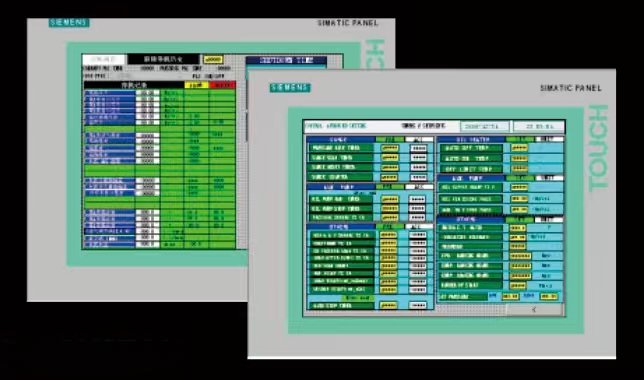
Establishing baseline operating data and comparing current readings with historical trends helps maintenance teams identify deterioration before it develops into a major failure.
For more guidance, refer to the U.S. Department of Energy’s Improving Compressed Air System Performance resources.
3. Build a Preventive Maintenance Plan Around Production Risk
A maintenance schedule should reflect not only the compressor manufacturer’s recommendations but also the equipment’s operating conditions and importance to production.
For critical centrifugal compressors, a practical maintenance plan should cover bearings, gears, shafts, impellers, seals, lubrication systems, coolers, instrumentation, and control systems, as applicable to the machine design.
The plan should include three levels of activity:
Routine inspections: Check operating parameters, cooling conditions, lubrication, and abnormal vibration or noise.
Condition-based maintenance: Use vibration analysis, temperature trends, oil analysis where applicable, and other diagnostic methods to determine when intervention is necessary.
Planned overhauls: Schedule major inspections and component replacement during suitable maintenance windows rather than waiting for an unexpected shutdown.
Maintenance records should document operating hours, previous failures, replaced components, inspection findings, and recurring problems.

The objective is not to replace components unnecessarily. It is to identify deterioration early enough to plan repairs, arrange parts, and coordinate maintenance with the production schedule.
4. Keep Critical Spare Parts Available Before They Are Needed
One of the most avoidable causes of prolonged compressor downtime is waiting for a critical spare part after a failure has already occurred.
For large centrifugal compressors, specialized components such as impellers, gear shafts, gears, bearings, and cooler assemblies may require engineering confirmation and manufacturing lead time. Depending on the equipment model and supplier, emergency procurement can significantly extend the shutdown.
Customers can reduce this risk by classifying spare parts according to their criticality, replacement lead time, failure consequences, and availability from qualified suppliers.
A practical strategy includes:
Identifying components that could immediately prevent the compressor from operating.
Keeping essential consumables and frequently replaced parts in stock.
Establishing supply arrangements for long-lead-time components.
Preparing equipment drawings, model information, and part specifications in advance.
Confirming whether the supplier can provide emergency manufacturing, repair, and technical support.

Stocking every component is rarely economical. A better approach is to balance inventory costs against the potential financial impact of an extended shutdown.
For critical equipment, a reliable spare-parts supplier is not merely a purchasing resource. It is part of the plant’s production-risk management strategy.
5. Choose Replacement Parts Based on Reliability, Not Purchase Price Alone
When a compressor requires repair, choosing the lowest-priced replacement parts may seem economical. However, poor compatibility or manufacturing quality can lead to installation problems, reduced performance, premature wear, and repeated downtime.
Before purchasing replacement parts, customers should evaluate:
Compatibility with original equipment specifications and dimensions.
Material quality, manufacturing precision, and inspection procedures.
Suitability for actual operating conditions.
Quality documentation, warranty, and technical support.
Qualified third-party replacement parts can be a cost-effective alternative to OEM parts when supported by appropriate engineering expertise and quality control.
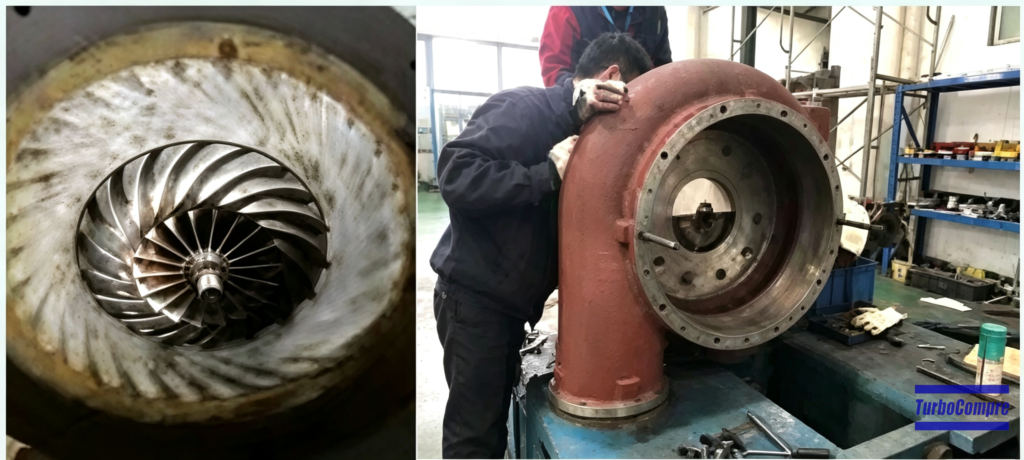
TurboCompre provides centrifugal compressor replacement parts and repair solutions for selected equipment from Ingersoll Rand, Atlas Copco, Hanwha/Samsung, and IHI-Sullair. We focus on technical compatibility, manufacturing precision, and reliable support to help customers control maintenance costs without compromising operational reliability.
6. Evaluate Repair Capability and Response Time Before an Emergency
When a critical compressor fails, recovery time depends not only on parts availability but also on the supplier’s engineering expertise and repair capabilities.
Before an emergency occurs, customers should confirm whether their service partners can provide:
Fault assessment and root-cause analysis.
Component repair or replacement based on actual equipment conditions.
Manufacturing and quality inspection of critical parts.
Installation, commissioning, and troubleshooting support.
For centrifugal compressors, the condition of impellers, rotor assemblies, gears, bearings, and clearances can directly affect performance. Repairs should therefore follow verified technical requirements rather than simply replacing visibly damaged components.
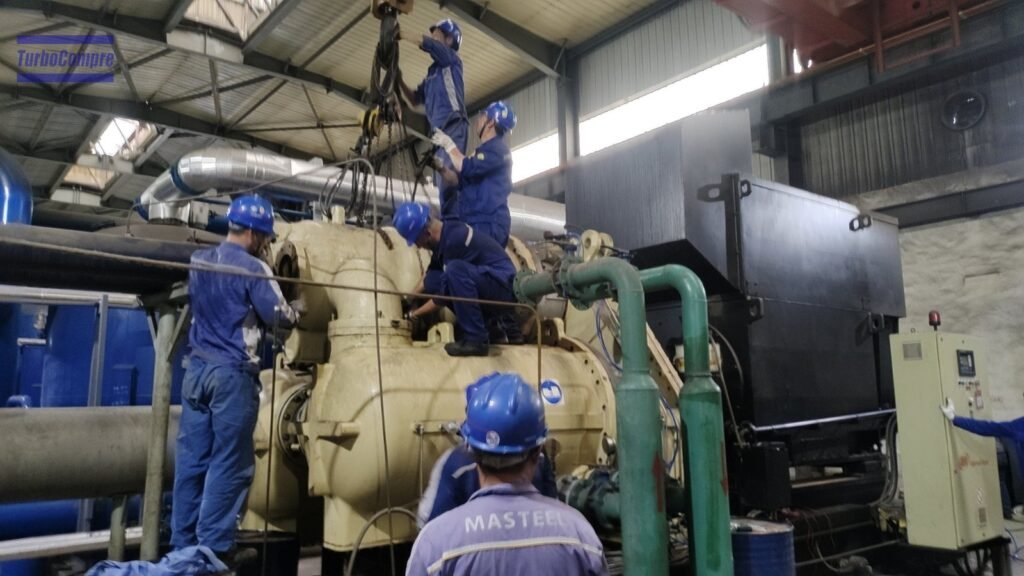
TurboCompre offers spare-parts manufacturing, compressor repair, overhaul, and technical support for applicable equipment. For projects requiring additional assistance, installation and commissioning support can also be discussed in advance.
7. Prepare a Contingency Plan for Critical Compressors
Preventive maintenance reduces the risk of failure but cannot eliminate it. For compressors essential to production, a practical contingency plan can help minimize the impact of unexpected downtime.
Customers should assess the availability of standby equipment, safe switching procedures, and sufficient process or compressed-gas reserves where applicable.
The plan should clearly define:
Who makes shutdown and recovery decisions.
Who contacts the repair supplier and coordinates technical support.
Which critical spare parts must be available.
How equipment drawings, operating data, and fault records will be shared.
If installing a standby compressor is not economically feasible, management should identify the safest and fastest recovery options in advance. Review the plan regularly to ensure it reflects current equipment conditions and production requirements.
8. Calculate Downtime Costs to Prioritize Investments
Not every compressor requires the same level of maintenance investment or spare-parts inventory. Customers should estimate the financial impact of downtime before deciding where to allocate resources.
A practical calculation is:
Downtime cost per hour = Lost production contribution + Additional operating costs + Other attributable losses
For example, if a compressor shutdown results in a production contribution loss of $8,000 per hour, a 10-hour interruption could mean $80,000 in lost production contribution, excluding repair and restart costs.
This is an illustrative example, not an industry benchmark. Actual figures should be based on the plant’s own operating and financial data.
By comparing potential downtime losses with the cost of critical spare parts, preventive maintenance, condition monitoring, and emergency repair arrangements, companies can make better-informed decisions about compressor reliability and production risk.
Reduce Downtime Risk with the Right Compressor Partner
Reducing compressor-related production losses requires a coordinated approach: early fault detection, planned maintenance, appropriate spare-parts inventory, technically sound repairs, and a realistic contingency plan.
For industrial customers, supplier selection is equally important. A partner with relevant manufacturing capability, compressor experience, and responsive technical support can help shorten repair lead times and improve confidence in equipment recovery.
TurboCompre works with industrial customers to provide centrifugal compressor spare parts, repair, overhaul, and technical support solutions. Our goal is to help customers maintain reliable operation while managing maintenance costs and avoiding unnecessary production interruptions.
Is your plant looking for a more reliable and cost-effective way to maintain critical centrifugal compressors?
Contact TurboCompre to discuss your compressor model, operating conditions, spare-parts requirements, or repair project. Our team can help evaluate a suitable solution for your equipment and production needs.
