
Centrifugal Compressor Project Delivery: From Engineering to Commissioning

A successful centrifugal compressor project involves much more than manufacturing and delivering a machine. It requires accurate engineering, reliable manufacturing, systematic quality control, coordinated installation, and professional commissioning.
For industrial plants, delays or technical issues at any stage can affect production schedules, operating costs, and long-term equipment reliability. A well-managed project ensures that the compressor meets the specified flow, pressure, and operating requirements and integrates smoothly with the plant’s existing systems.
1. Engineering Design: Define Requirements Before Manufacturing
Engineering is the foundation of every centrifugal compressor project. Before selecting a compressor model, the project team must confirm the actual process requirements and site conditions.
Key parameters include:
Gas properties: Composition, molecular weight, temperature, and potential contaminants.
Operating conditions: Inlet and discharge pressure, required flow, and variations in demand.
Performance requirements: Compression head, power consumption, efficiency, and operating range.
Site conditions: Ambient temperature, cooling water availability, installation space, and power supply.
Control and safety requirements: Anti-surge protection, alarms, trips, and integration with the plant control system.
For process gas applications, engineering requirements should be aligned with the applicable project specifications and industry standards, such as API Standard 617, where applicable. Selecting equipment based only on nominal flow and pressure can result in poor performance under actual operating conditions.
2. Compressor Selection and System Integration
Once the operating requirements are established, engineers determine the appropriate compressor configuration, drive system, cooling arrangement, and auxiliary equipment.
The selection process should consider more than the compressor itself. Motors, gearboxes, intercoolers, aftercoolers, lubrication systems, inlet filters, piping, instrumentation, and control panels must work together as an integrated package.
For example, a compressor operating in a steel plant may prioritize continuous high-volume air supply, while a chemical or gas-processing application may require specific materials, sealing arrangements, and tighter control of process conditions.
Early coordination between the compressor supplier, plant engineering team, electrical contractor, and piping contractor helps prevent interface problems during installation.

Turbocompre provides centrifugal compressor solutions for industrial air and process gas applications, with support for equipment selection, engineering coordination, manufacturing, and technical upgrades. Matching the compressor to the actual operating conditions helps customers pursue reliable performance while controlling project costs.
3. Manufacturing and Quality Control
After engineering approval, the project moves into manufacturing. The quality of critical rotating components directly affects compressor efficiency, vibration, and service life.
Important manufacturing and inspection activities include:
Inspection of raw materials and critical components.
Precision machining of impellers, shafts, and gears.
Rotor balancing and dimensional verification.
Assembly checks and verification of critical clearances.
Inspection and testing of auxiliary systems and instruments.
A structured inspection plan should define acceptance criteria, inspection records, and responsibility at each stage. Depending on the project, documentation may include material certificates, dimensional inspection reports, balancing records, and factory test results.
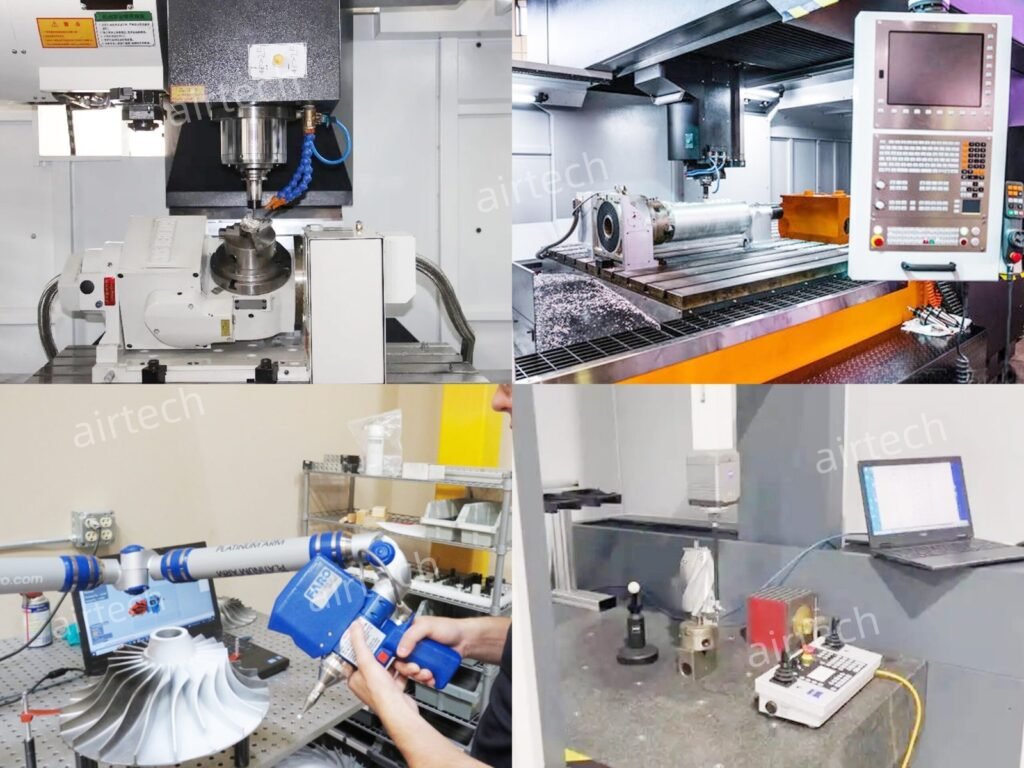
Factory acceptance testing (FAT), when specified, provides an opportunity to verify agreed mechanical, functional, and performance requirements before shipment. Identifying deviations at the factory is generally easier than correcting them after equipment has arrived at the customer’s site.
4. Packaging, Shipment, and Project Coordination
Industrial centrifugal compressors may involve oversized components, auxiliary skids, control cabinets, and multiple shipments. Delivery planning should therefore begin well before manufacturing is completed.
A practical delivery plan includes:
Pre-shipment inspection: Confirm equipment identification, quantities, accessories, and documentation.
Protective packaging: Protect machined surfaces, electrical components, and sensitive instruments against moisture, corrosion, and transport damage.
Shipping coordination: Confirm dimensions, weights, lifting points, transport arrangements, and delivery schedules.
Document preparation: Prepare packing lists, commercial invoices, certificates, manuals, and other documents required by the contract.
For international projects, customs clearance, import requirements, and local transportation should also be considered. Clear communication between the manufacturer, freight forwarder, and customer helps minimize avoidable delays.
5. Installation and Pre-Commissioning
After delivery, correct installation is essential to achieving the compressor’s designed performance. Even a well-manufactured machine can experience excessive vibration, bearing problems, or unstable operation if site preparation and installation are inadequate.
Before startup, the project team should verify the following:
Foundation, baseplate, grouting, and anchor bolts.
Compressor, gearbox, motor, and coupling alignment, as applicable.
Piping cleanliness and proper support, including checks for excessive nozzle loads.
Lubrication and sealing systems, including flushing and functional checks where required.
Cooling water, electrical supply, instrumentation, and control connections.
Alarm, trip, interlock, and anti-surge protection functions, where applicable.
The installation should follow the manufacturer’s instructions and the relevant project standards. For additional practical guidance, see Turbocompre’s Centrifugal Compressor Commissioning Guide.

6. Commissioning and Performance Verification
Commissioning connects equipment installation with actual plant operation. The objective is not simply to start the compressor, but to confirm that the complete system operates safely and meets the agreed acceptance criteria.
A typical commissioning sequence includes:
Step 1 — Pre-startup checks
Verify mechanical completion, lubrication, cooling, instrumentation, protection systems, and operating readiness.
Step 2 — Initial startup
Follow the approved startup procedure and monitor vibration, bearing temperatures, oil pressure, and other critical parameters.
Step 3 — Load adjustment
Gradually adjust the operating conditions while confirming stable control, adequate surge protection, and satisfactory system response.
Step 4 — Performance acceptance
Compare measured flow, discharge pressure, power consumption, vibration, and other agreed parameters against the project specifications.
The acceptance criteria and test conditions should be agreed upon before testing. Actual measurements must be evaluated under the specified operating conditions rather than against nominal values alone. Any deviation should be documented, investigated, and resolved before final acceptance, as required by the project contract.
7. Documentation, Training, and Final Handover
A compressor project is not fully complete until the customer has the information and support needed to operate and maintain the equipment.
The final handover package may include:
Approved and as-built drawings.
Operation and maintenance manuals.
Factory and site test reports.
Commissioning records and final parameter settings.
Recommended commissioning and maintenance spare parts.
Maintenance schedules and troubleshooting guidance.
Operator training and outstanding-item closure records.
The project team should also establish a baseline of operating parameters during successful commissioning. This gives maintenance personnel a reference for identifying changes in vibration, temperature, pressure, or efficiency during future operation.

For plants with limited in-house compressor expertise, access to technical support and critical spare parts can be especially important in reducing downtime.
8. How Turbocompre Supports Centrifugal Compressor Projects
Choosing a supplier that understands the entire equipment lifecycle can simplify project coordination and reduce technical risks.
Turbocompre, backed by Wuxi Airtech Compressor’s centrifugal compressor manufacturing and service experience, provides solutions for industrial compressed air and process gas applications.
Our capabilities include:
Centrifugal compressor engineering and equipment manufacturing.
Technical upgrades and replacement solutions for existing installations.
OEM and OEM-compatible spare parts for multiple centrifugal compressor brands.
Technical assistance for installation, startup, commissioning, and troubleshooting.
For customers replacing older imported equipment, we aim to combine dependable engineering and quality assurance with competitive pricing. The goal is not simply to supply a lower-cost machine, but to deliver a solution that meets the application requirements and supports long-term operating value.
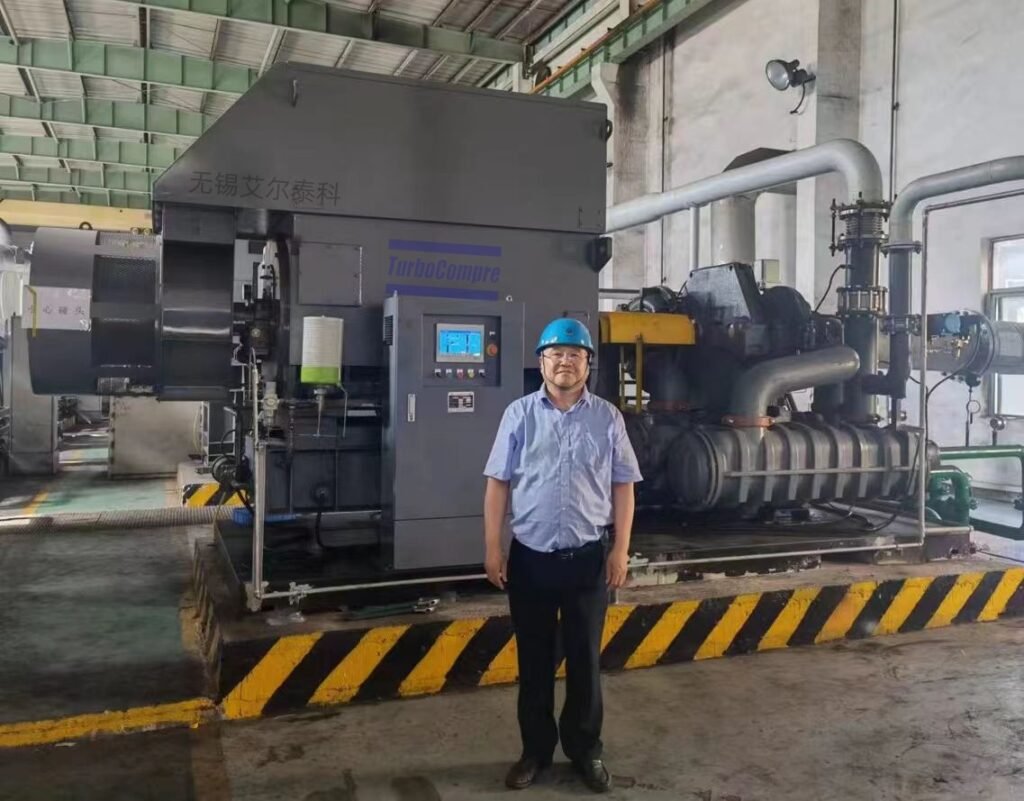
Contact Turbocompre to discuss your compressor requirements. Share your required flow, inlet and discharge pressures, gas composition, operating conditions, and project schedule. Our team can help evaluate a suitable centrifugal compressor solution for your application.