
Centrifugal Compressors in Food and Beverage Manufacturing
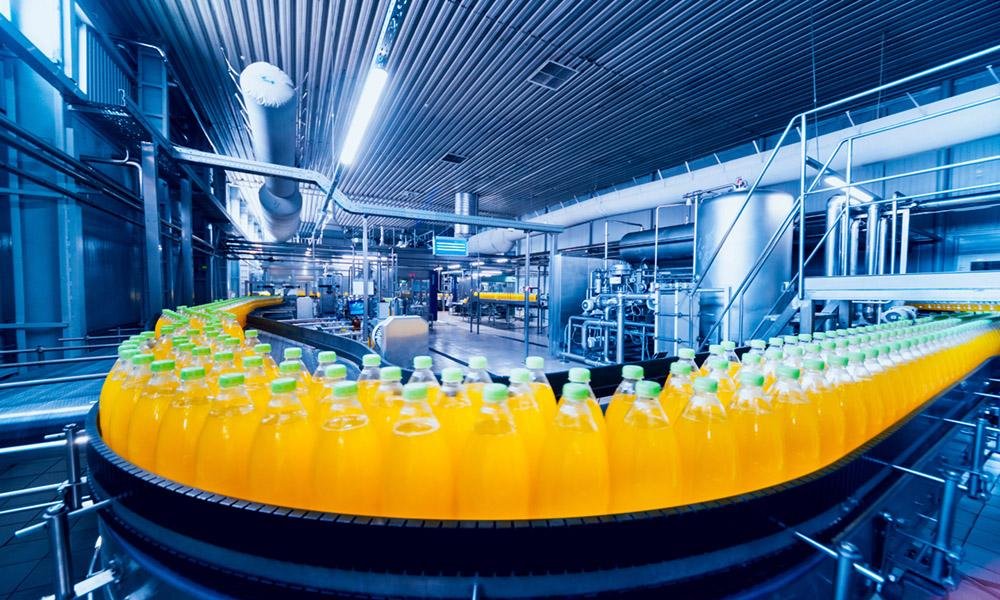
Food and beverage manufacturers depend on reliable compressed air to maintain production efficiency, product quality, and continuous operation. From bottling and packaging lines to pneumatic conveying and automated processing equipment, an unstable air supply can cause production interruptions and increase operating costs. Choosing the right industrial air compressor is therefore essential for plants with high and continuous compressed air demand.
1. Key Applications of Centrifugal Compressors
Centrifugal compressors are well suited to food and beverage facilities that require large volumes of compressed air at relatively stable pressure. Typical applications include:
Bottling and packaging: Supplying compressed air for pneumatic actuators, filling equipment, labeling machines, and packaging systems.
Pneumatic conveying: Moving suitable dry ingredients and powders through closed conveying systems.
Food processing: Supporting automated production equipment, valves, and pneumatic controls.
Plant utilities: Providing compressed air for centralized systems serving multiple production lines.

The ideal compressor depends on the required airflow, operating pressure, duty cycle, and air-quality specifications. High-demand facilities may benefit from centralized centrifugal compressor systems, while smaller or intermittent applications may be better served by other compressor technologies.
2. Why Air Quality Matters in Food Production
Compressed air can come into direct or indirect contact with food, packaging, and product-contact surfaces. Oil, moisture, particles, and microorganisms can create contamination risks if the compressed-air system is not properly designed and maintained.
Centrifugal compressors are commonly used in oil-free compressed-air systems, but oil-free compression alone does not guarantee food-grade air quality. Air treatment, including filtration, drying, condensate management, and regular testing, must be selected according to the application and the risk of product contamination.
Manufacturers should establish appropriate air-quality requirements and verify them against recognized guidance, such as the ISO 8573 series for compressed-air purity. For applications involving direct product contact, a documented risk assessment and suitable monitoring procedures are particularly important.

3. Energy Efficiency and Operating Costs
Compressed air is one of the major energy consumers in many food and beverage plants. Since production lines often operate for long hours, even small improvements in compressor efficiency can reduce electricity costs over time.
Centrifugal compressors are particularly attractive for facilities with high, relatively steady air demand. Their oil-free compression design, continuous-duty capability, and potential for high energy efficiency make them worth evaluating for large-scale production.
When selecting a compressor, manufacturers should consider:
Specific power: Compare energy consumption against the actual airflow delivered.
Operating pressure: Avoid excessive discharge pressure, which increases energy consumption.
Part-load performance: Evaluate efficiency when demand fluctuates throughout the day.
Cooling requirements: Assess cooling-water or ventilation needs and their associated costs.
Rather than comparing equipment based only on purchase price, evaluate total cost of ownership, including electricity, maintenance, spare parts, and downtime.
4. How to Choose the Right Centrifugal Compressor
The right compressor must match the plant’s actual operating conditions. An oversized unit may operate inefficiently at low demand, while an undersized unit may struggle during peak production.
Before selecting a system, assess the following factors:
Airflow and pressure: Establish actual demand, peak consumption, and required discharge pressure.
Air-quality requirements: Define particle, water, and oil limits according to each application.
Production schedule: Determine whether demand is continuous, seasonal, or variable.
Installation conditions: Consider ambient temperature, cooling-water availability, available space, and ventilation.
Reliability requirements: Evaluate backup capacity, maintenance access, and the availability of critical spare parts.
For food and beverage plants, compressed-air quality should be verified at the relevant points of use, not assumed from the compressor type alone. The ISO 8573 compressed-air standards provide a framework for defining and measuring air purity.

5. Why Choose TurboCompre Centrifugal Compressors?
For food and beverage manufacturers seeking reliable industrial compressed-air solutions, TurboCompre offers centrifugal compressor manufacturing expertise, technical support, and cost-effective alternatives for demanding industrial applications.
Our key advantages include:
Competitive equipment costs: A practical alternative for plants looking to balance equipment investment and long-term operating expenses.
Engineering and manufacturing capabilities: Experience in centrifugal compressor design, component manufacturing, and equipment servicing.
Spare parts and maintenance support: Solutions for centrifugal compressors from TurboCompre and other major brands, helping customers manage maintenance costs and equipment downtime.
Repair and upgrade services: Support for compressor overhauls, component replacement, and performance improvement projects.

Whether you are planning a new production facility, expanding an existing compressed-air system, or upgrading aging equipment, TurboCompre can help assess your requirements and identify a suitable solution.
Contact TurboCompre to discuss your airflow, operating pressure, air-quality requirements, and current equipment challenges. Our team can help you evaluate centrifugal compressor solutions, spare parts, and maintenance options tailored to your plant.