
Skid-Mounted vs On-Site Split Installation Comparison
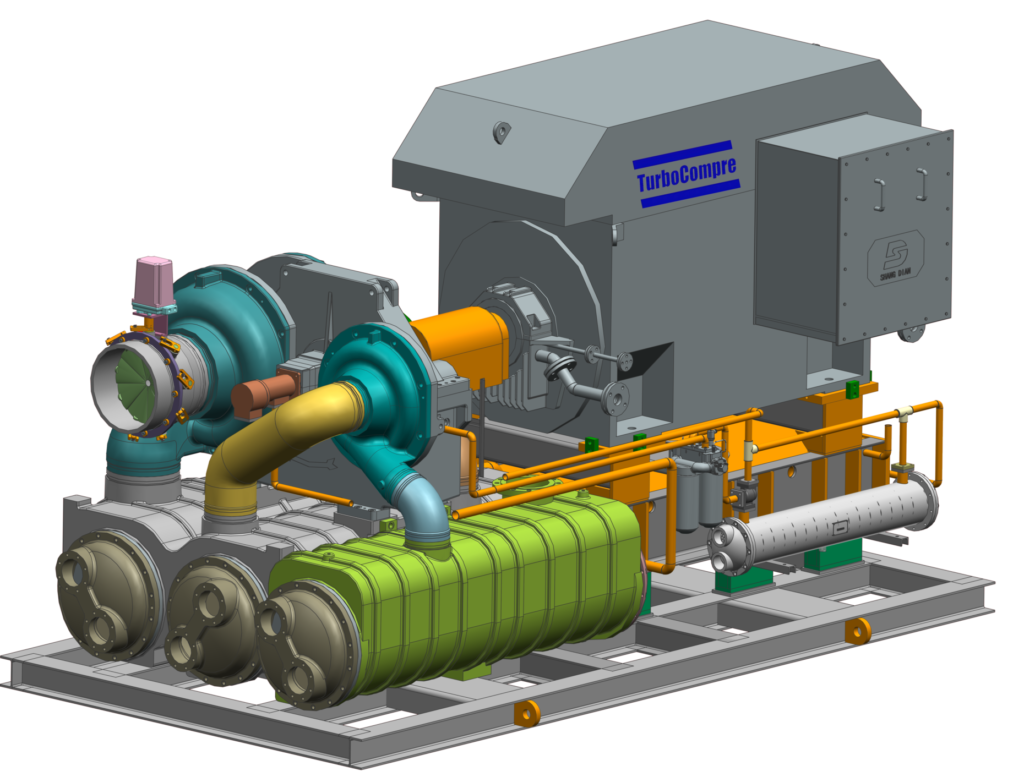
In industrial unit, energy equipment, air compressor, refrigeration unit, oil and gas processing, and other engineering projects, the installation method directly determines the project duration, construction cost, operational stability, and later maintenance efficiency. At present, the mainstream industrial installation modes are divided into skid-mounted integrated installation and on-site split assembly installation.
With the upgrading of industrial modular and standardized construction, skid-mounted units have gradually replaced traditional on-site split installation by virtue of their core advantages of high efficiency, simplicity, safety and controllability, becoming the preferred solution in chemical, oil and gas, municipal, intelligent manufacturing, new energy and other fields.
1. Overview: Skid-Mounted Unit vs On-Site Split Installation
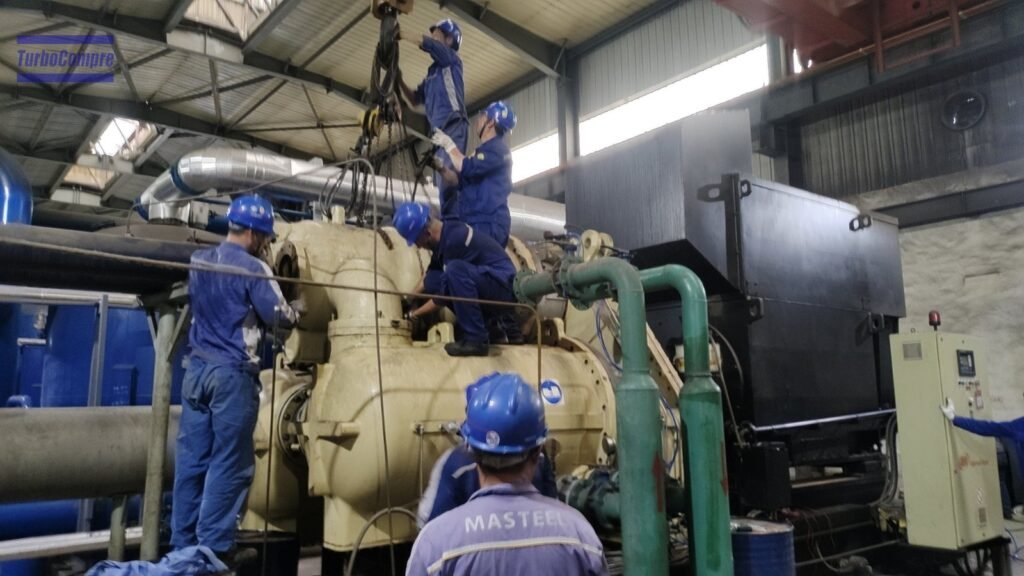
On-site split installation is a traditional fragmented construction mode. Equipment is delivered in loose and split parts with independent hosts, auxiliary machines, pipelines, electric control and accessories. All assembly, docking, debugging, pressure testing and calibration work is completed on the project site. It relies on on-site construction and supervision teams for phased operation, greatly affected by site conditions, weather and workers’ technical proficiency, resulting in far lower construction standardization and controllability than skid-mounted design.
Skid-mounted unit adopts factory prefabricated integrated modular design. Manufacturers integrate and fix all supporting components including the unit host, pipelines, valves, instruments, control system, filtration system and heat dissipation system on a standard steel skid base. The whole process of assembly, wiring, debugging, pressure testing and quality inspection is completed in the factory. The equipment is delivered as a finished product.

2. Core Advantages of Skid-Mounted Unit Design
2.1 Greatly Shorten Project Duration and Double Implementation Efficiency
Short construction period is one of the most core advantages of skid-mounted units. All production, assembly and debugging work of skid-mounted units is completed in standardized factory workshops, free from the interference of on-site civil engineering, weather and cross construction. Factory assembly line operation is far more efficient than scattered on-site construction, with more than 95% of debugging work finished before delivery.
Only simple positioning, pipeline docking and power commissioning are required on site, reducing the overall construction cycle by 60%-80%. It is especially suitable for time-sensitive emergency projects, new factory supporting projects, and field oil & gas operation projects. In contrast, on-site split installation requires waiting for civil engineering completion, phased equipment delivery and step-by-step assembly and debugging, featuring cumbersome procedures, uncontrollable construction period and high delay risks.
2.2 Factory Standardized Production Ensures Higher Operational Stability
The operational stability of industrial units mainly depends on assembly accuracy, pipeline calibration, electric control matching and pressure testing inspection. Skid-mounted units adopt factory standardized and refined operation with professional tooling equipment, fixed technical teams and mature production processes. All pipeline connection, wiring layout and equipment calibration follow unified standards, with strict pressure tests, power-on tests and load tests conducted before delivery to eliminate assembly errors.
On the contrary, the open and temporary construction environment for on-site split installation is complex with variable dust, humidity and temperature. The technical level of construction workers varies unevenly, making it difficult to unify pipeline docking accuracy, wiring standardization and equipment calibration. It is prone to loose sealing, circuit disorder, pipeline vibration noise and parameter matching deviation, leading to frequent equipment failures and shutdowns in the later stage.
2.3 Reduce Comprehensive Construction Costs with Higher Full-Life-Cycle Cost Performance
Many enterprises mistakenly believe that skid-mounted equipment has a higher unit price. In fact, its full-life-cycle cost is much lower than that of split installation. In terms of comprehensive construction cost, skid-mounted design saves a large number of on-site labor costs, temporary facility costs, on-site debugging costs and rework maintenance costs.
Meanwhile, factory batch integrated production optimizes the consumption of pipelines, accessories and steel materials,avoiding material waste and redundant procurement caused by on-site split installation. In addition, skid-mounted units pass commissioning at one time without repeated rework and rectification. With lower failure rates, later maintenance costs and shutdown losses are greatly reduced. On-site split installation is accompanied by high labor costs, large material loss and high rework rates, resulting in high hidden costs.
2.4 Improve Safety and Avoid On-Site Construction Risks
Industrial unit installation involves high-risk processes such as hot work, pressure testing, wiring and high-altitude operation. On-site split installation features scattered working procedures, messy personnel and difficult supervision, easily causing potential safety hazards. For skid-mounted units, all high-risk operations are completed in closed factory workshops with perfect safety management and controllable and traceable risks.
After equipment delivery, there is no large-scale on-site hot work, disassembly and assembly, greatly reducing the risk of on-site safety accidents. Meanwhile, the integrated skid-mounted structure is stable. The steel skid base has the advantages of shock absorption, anti-corrosion and load bearing, effectively preventing pipeline loosening and equipment displacement during operation. It features excellent explosion-proof, shock-proof and sealing performance, adapting to high-risk working conditions such as field and chemical flammable and explosive scenarios.
2.5 Simple Installation & Maintenance with Convenient Later Upgrade and Relocation
Skid-mounted units adopt modular integrated design and standardized layout with neatly arranged and clearly marked pipelines, electric control systems and instrument components. Maintenance personnel can quickly be familiar with the equipment structure and accurately locate fault points for efficient inspection, maintenance and parts replacement.
In addition, skid-mounted units support overall hoisting, displacement and relocation, with high reusability for plant renovation, project migration and site adjustment. In comparison, equipment installed by on-site split method is disorderly arranged with staggered pipelines and circuits, bringing difficult and time-consuming troubleshooting. The equipment cannot be relocated as a whole, resulting in extremely high renovation and upgrading costs.

2.6 Wide Compatibility and Strong Scene Adaptability
Skid-mounted units can be customized and integrated according to customer working conditions, site size and parameter requirements. It is applicable to various industrial equipment such as air compressor units, refrigeration units, heat exchange units, oil and gas treatment units, water purification units and generator sets, adapting to field construction sites, remote mining areas, temporary projects, standardized factories and explosion-proof workshops and other complex scenarios without site restrictions.
3. Comprehensive Comparison: Skid-Mounted vs On-Site Split Installation
Comparison Dimension | Skid-Mounted Installation | On-Site Split Installation |
|---|---|---|
Construction Site Requirement | Only simple flat foundation needed, adaptable to narrow and remote sites | Requires large construction space and complete on-site conditions |
Construction Period | Short, controllable cycle; on-site commissioning finished in 1-3 days | Long, uncertain cycle with high delay risks |
Installation Accuracy | High factory assembly accuracy with zero error and reliable sealing | Unstable manual assembly, easy to cause leakage and dislocation |
Construction Cost | Low labor and rework cost, excellent full-cycle cost performance | High labor and material loss, with many hidden rework costs |
Safety Factor | All high-risk work completed in factory, low on-site safety risks | Numerous on-site high-risk operations with potential safety hazards |
Equipment Stability | Fully pre-tested before delivery, stable operation and low failure rate | Unstable assembly quality, prone to leakage and unexpected shutdowns |
Maintenance Difficulty | Standard layout, easy maintenance and integral relocation | Disordered layout, hard maintenance and no relocatable capability |
Project Acceptance | Standard finished product with high one-time acceptance pass rate | Frequent acceptance issues and tedious rectification work |
4. Applicable Scenarios for Skid-Mounted Units
Combined with the comparative advantages, skid-mounted units are preferentially recommended for the following industrial scenarios to maximize project efficiency and reduce engineering risks:
- Time-sensitive new construction, reconstruction and expansion industrial projects
- Field operations, remote mining areas, oil & gas fields and temporary construction sites with poor construction conditions
- Chemical, flammable, explosive and other working conditions with high safety requirements
- Factory renovation projects with narrow sites and limited construction space
- Projects requiring later relocation, repeated utilization and flexible transformation
- Precision production supporting projects with high requirements for equipment stability and maintenance convenience

Compared with traditional on-site split installation, skid-mounted unit design offers overwhelming advantages. It adopts full factory prefabrication and standardized testing, featuring fast installation, high precision, stable operation, higher safety and lower overall cost. With easy maintenance and flexible relocation, skid-mounted modular units perfectly meet modern industrial construction needs and have become the ideal choice for various engineering projects.
Turbo Compre is a professional global supplier specialized in skid-mounted industrial unit design, customized modular equipment manufacturing and turnkey installation solutions. Focusing on industrial air compression, process cooling, fluid treatment and energy-saving equipment fields, we integrate independent R&D, standardized factory prefabrication, strict quality testing and full-life-cycle after-sales service.
