
Centrifugal Compressors Applications in Chemical Industry
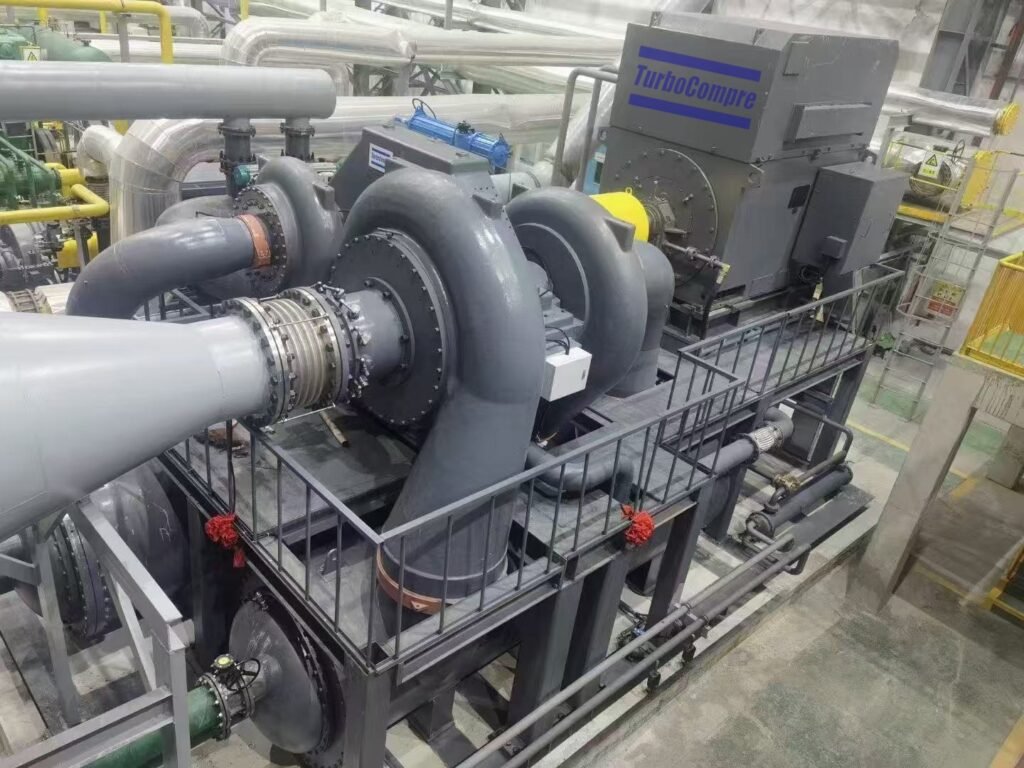
Chemical production often requires large volumes of process gas to be compressed continuously and reliably. Centrifugal compressors are well suited to these conditions because they can deliver high flow rates, stable continuous operation, and efficient multistage compression.
The technology is already widely used in chemical plants, refineries, and gas-processing facilities. API 617 specifically covers process centrifugal compressors used in petroleum, chemical, and gas industry services.
01 — Ethylene & Petrochemical Plants
One of the most important applications is ethylene production.
Centrifugal compressors can be used for:
- Cracked-gas compression
- Refrigeration systems
- Process gas compression
- Propylene and other hydrocarbon processing
In ethylene plants, compressor performance directly affects plant throughput and energy consumption. AIChE also identifies cracked-gas compression and refrigeration as key centrifugal compressor applications in ethylene production.

02 — Ammonia & Fertilizer Production

Ammonia plants require reliable compression for gases such as:
- Hydrogen
- Nitrogen
- Synthesis gas
- Refrigeration gases
High-flow centrifugal compressors can provide continuous gas delivery for large-scale ammonia and fertilizer processes, where stable operating conditions are particularly important.
03 — Methanol & Syngas Compression
Methanol production involves synthesis gas containing hydrogen, carbon monoxide and other components.
Centrifugal compressors may be applied to:
Syngas → Compression → Synthesis → Methanol
For these services, compressor selection must consider gas composition, molecular weight, pressure ratio, temperature, flow variation, and potential impurities.
The compressor is not simply a pressure-boosting machine—it is part of the overall process performance.

04 — Hydrogen, Nitrogen & Process Gas

Chemical plants increasingly require compression of industrial gases such as hydrogen, nitrogen, oxygen and carbon monoxide.
Centrifugal compressor designs can be configured for different gas properties and operating conditions, including:
- High-volume nitrogen compression
- Hydrogen process gas
- Oxygen-related applications
- Gas circulation
- Process gas boosting
For critical process services, engineering should consider sealing, materials, lubrication, rotor dynamics, surge control and gas compatibility from the beginning.
05 — Refrigeration & Gas Circulation
Refrigeration is another important area.
Chemical and petrochemical processes frequently use refrigerants to control process temperatures. Centrifugal compressors can provide continuous compression for large refrigeration systems where high gas flow is required.
Their dynamic compression principle makes them particularly suitable for applications requiring large capacity and continuous operation.
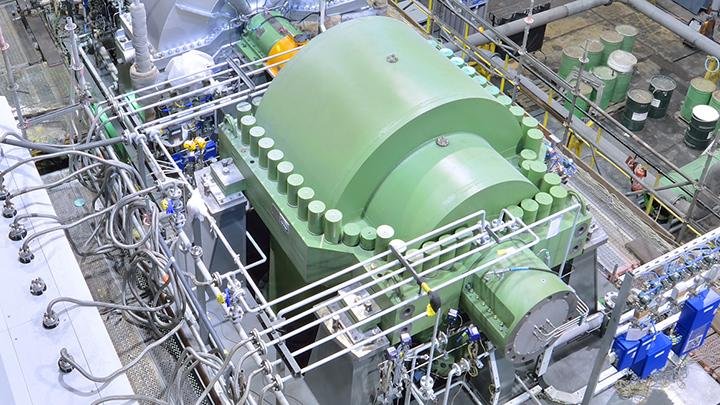
What Makes Centrifugal Compressors Suitable?
High Flow Capacity
Chemical plants often operate continuously with large gas volumes. Centrifugal compressors are designed to handle high flow rates efficiently.
Continuous Operation
Compared with reciprocating equipment, centrifugal compressors provide a relatively smooth gas flow, making them attractive for continuous industrial processes.
Multistage Compression
Multiple stages can be integrated to achieve higher pressure ratios while controlling discharge temperature and improving overall process performance.
Flexible Configuration
Single-shaft and integrally geared configurations can be selected according to the required flow, pressure ratio, gas properties and process arrangement.

For special-purpose chemical and process gas applications, API 617 is an important engineering reference. The current edition is the ninth edition, published in 2022.
Selecting the Right Compressor for Chemical Service
A chemical process compressor should be selected from the process conditions, rather than from compressor capacity alone.
Key parameters include:
| Parameter | Why It Matters |
| Gas composition | Determines compressor performance and material requirements |
| Flow rate | Defines machine capacity |
| Suction pressure | Affects compression ratio |
| Discharge pressure | Determines required stages |
| Suction temperature | Influences gas density and power |
| Molecular weight | Strongly affects compressor performance |
| Gas impurities | May affect sealing and corrosion |
| Operating range | Determines surge control requirements |
For demanding applications, rotor dynamics, mechanical design, sealing systems, cooling, lubrication and control systems should also be evaluated during the engineering stage.
TurboCompre — Centrifugal Compressor Solutions for Chemical Industry
TurboCompre provides centrifugal compressor engineering, manufacturing, retrofit and service solutions for industrial gas and process applications.
Our engineering approach focuses on matching the compressor to the actual process conditions rather than offering a one-size-fits-all machine.
Typical solutions can include:
- Process gas compressors
- Nitrogen and oxygen compressors
- Chemical gas compressors
- Centrifugal air compressors
- Compressor retrofit and replacement
- OEM-equivalent spare parts
- Compressor maintenance and technical services
For customers looking for a cost-effective alternative to imported centrifugal compressors, TurboCompre can provide customized technical solutions based on flow rate, pressure, gas composition and operating conditions.

From Process Data to Compressor Design
The best centrifugal compressor for a chemical plant is determined by the interaction between process requirements, aerodynamic performance, mechanical reliability and lifecycle cost.
When these factors are properly matched, the compressor can become a reliable core component of continuous chemical production—not simply another piece of rotating equipment.