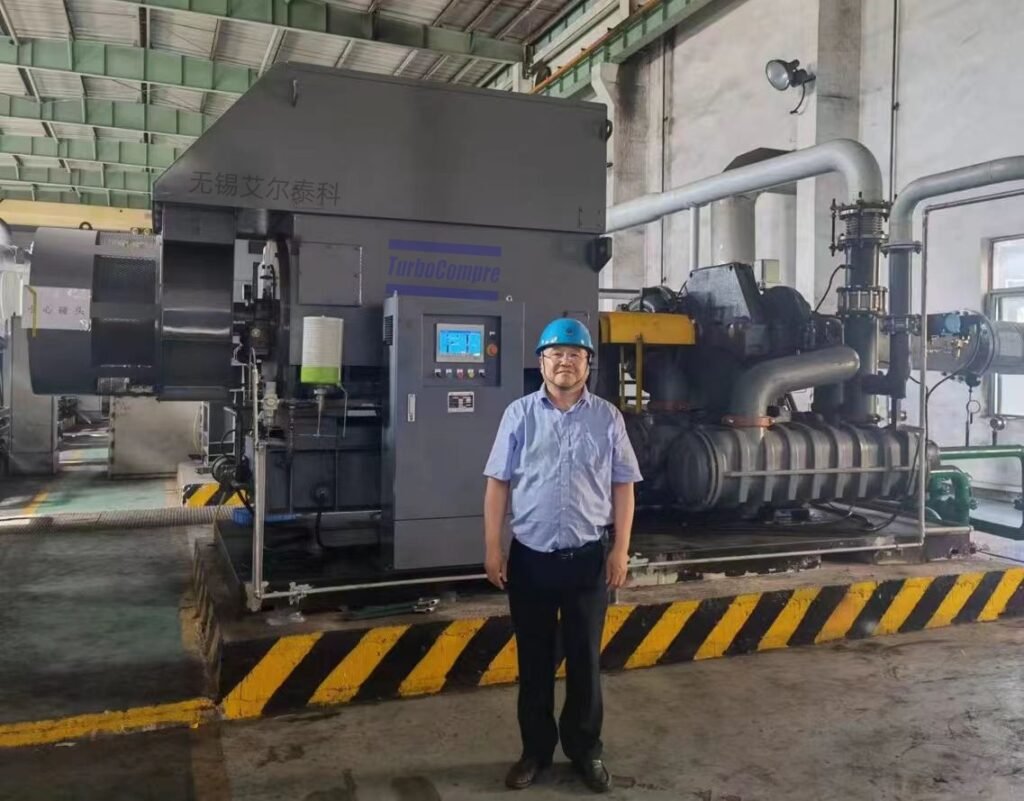
Centrifugal Compressor Lubrication System: Components and Maintenance

A centrifugal compressor operates at high rotational speeds, making reliable lubrication essential for bearings, gears, shafts, and other rotating components.
The lubrication system does more than simply supply oil. It must maintain the correct oil pressure, temperature, flow, and cleanliness throughout operation.
A well-designed centrifugal compressor lubrication system helps:
- Reduce bearing and gear wear
- Control operating temperature
- Prevent excessive friction
- Extend component service life
- Improve compressor reliability
- Reduce unexpected shutdowns
For industrial applications, lubrication-system design may also be related to standards such as API 614, while compressor requirements are covered by API 617.
Main Components of a Centrifugal Compressor Lubrication System
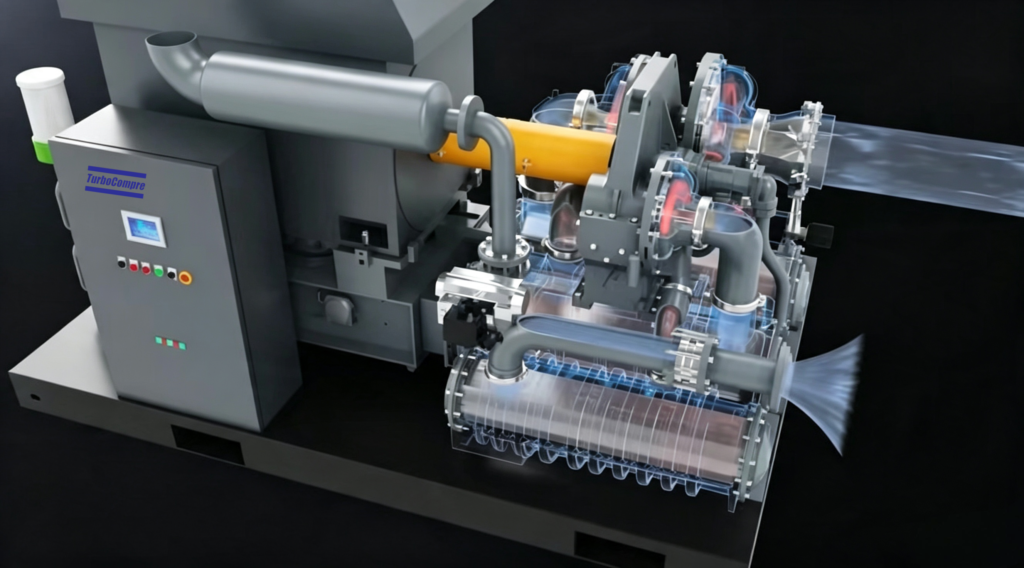
A typical system consists of several interconnected components.
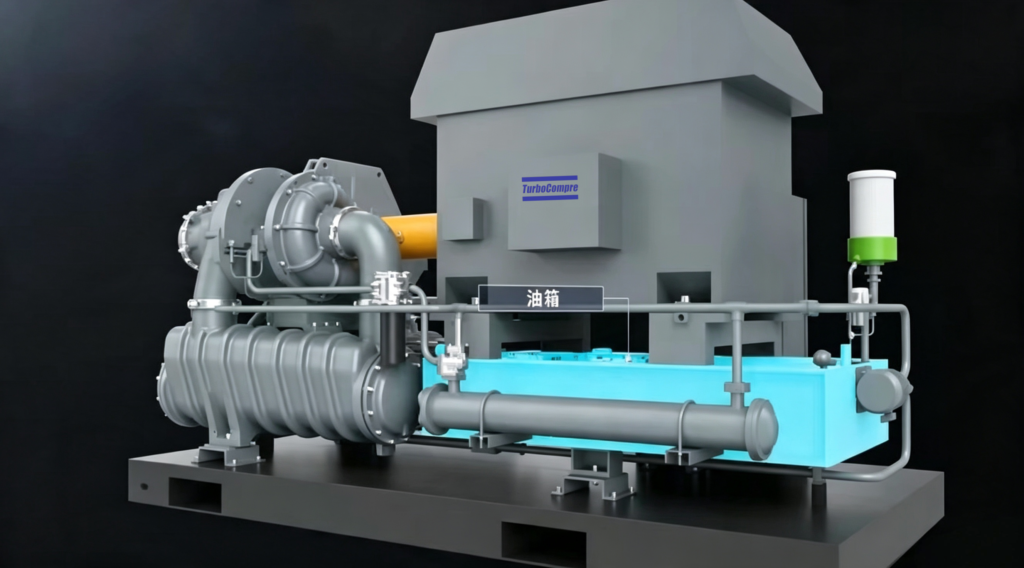
01 — Oil Reservoir
The reservoir stores and supplies lubricating oil to the circulation system.
Its design should provide enough capacity for:
- Oil circulation
- Heat dissipation
- Air separation
- Contaminant settling
- Safe oil level control
Keeping the reservoir clean is critical because contamination can quickly circulate through bearings and gears.

02 — Main Oil Pump
The main oil pump continuously circulates oil during normal compressor operation.
Depending on the compressor package, the system may also include:
Main pump + auxiliary pump + emergency oil pump
This arrangement provides additional protection when the main oil supply is interrupted.
The auxiliary pump can automatically start when oil pressure falls below the required level.
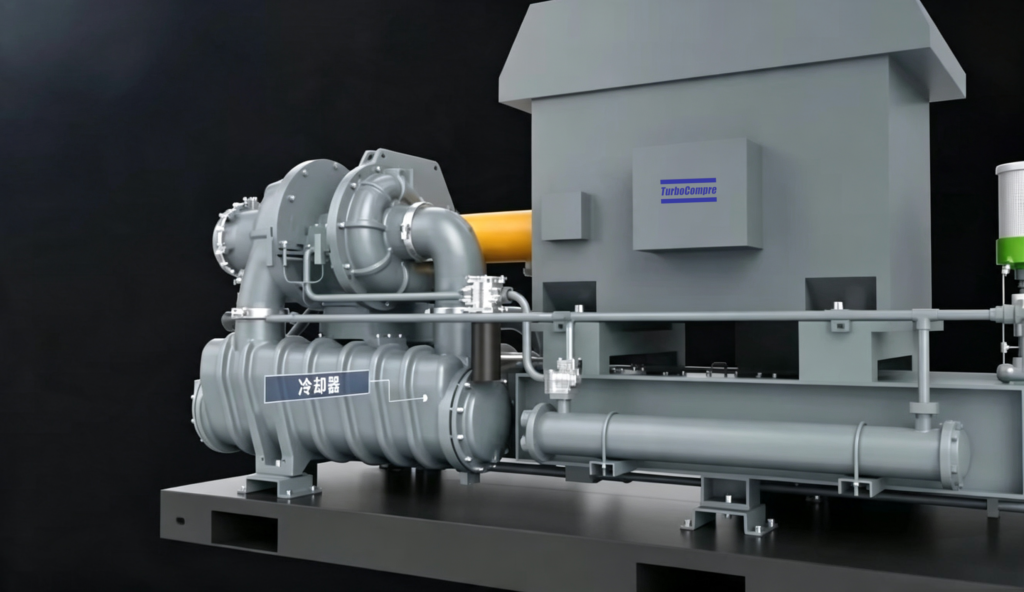
03 — Oil Cooler
Oil temperature directly affects viscosity and lubrication performance.
An oil cooler removes heat generated by:
- Bearings
- Gear meshes
- High-speed rotating components
- Oil circulation
Maintaining the correct oil temperature helps ensure that the lubricant forms a stable protective film between moving surfaces.
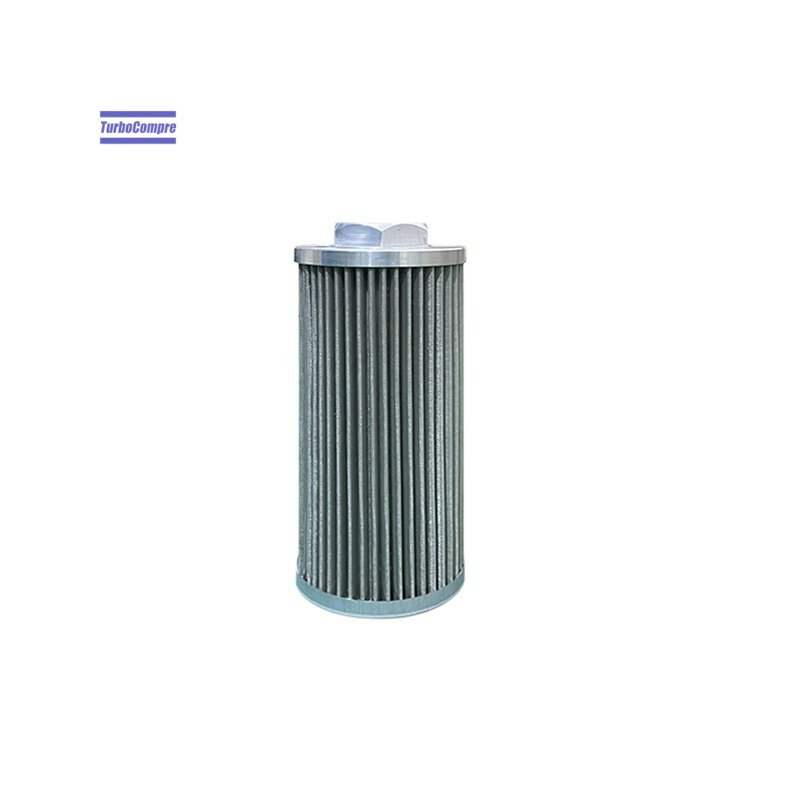
04 — Oil Filter
The filter removes particles and contaminants from circulating oil before the oil reaches sensitive components.
Typical contamination may include:
- Metal particles
- Dust
- Installation debris
- Seal materials
- Oil degradation products
SKF notes that contamination is a major source of lubrication-system and component problems, making filtration and contamination control important parts of lubrication management.
For critical compressor applications, duplex filters are commonly used so that one filter can remain in service while the other is maintained.
05 — Pressure Control Components
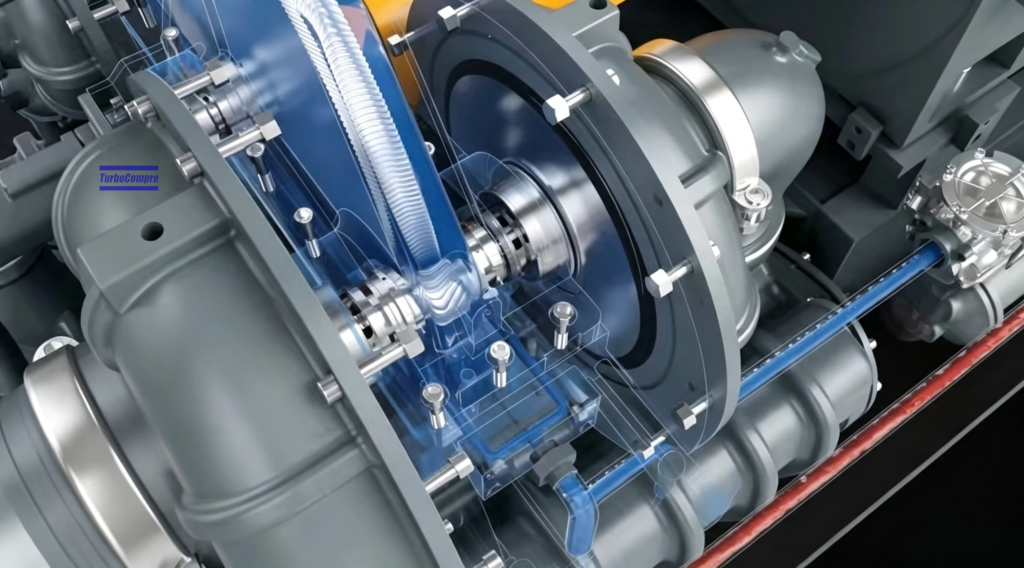
Pressure-control devices regulate the oil supply to the compressor.
Typical components include:
- Pressure regulating valves
- Pressure relief valves
- Check valves
- Pressure switches
- Pressure transmitters
Stable oil pressure is particularly important for high-speed bearings.
Low pressure may cause insufficient lubrication, while excessive pressure can create leakage and other operating problems.
06 — Oil Piping and Instrumentation
Oil piping connects the reservoir, pump, cooler, filter, bearings, and return system.
Important monitoring points generally include:
Oil pressure → Oil temperature → Oil flow → Filter differential pressure → Oil level
These parameters provide an early indication of lubrication problems.
How the Lubrication System Works
The basic circulation process is straightforward:
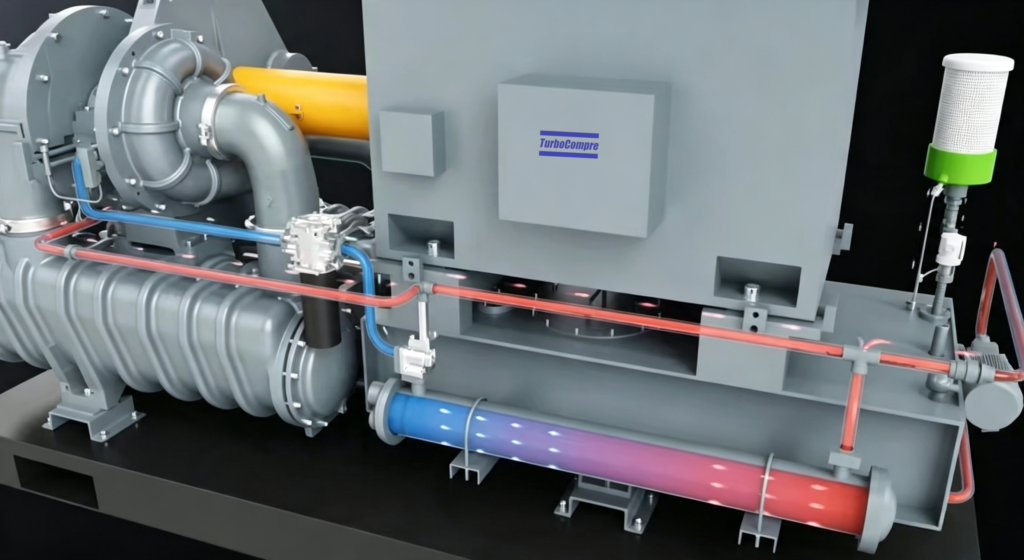
Oil Reservoir → Oil Pump → Cooler → Filter → Bearings/Gears → Return Line → Reservoir
During operation, the pump sends oil through the cooling and filtration stages before distributing it to the lubricated components.
After absorbing heat and carrying away small amounts of wear debris, the oil returns to the reservoir and begins another circulation cycle.
The entire process is continuous.
Centrifugal Compressor Lubrication Maintenance
A good maintenance program should focus on oil condition, system cleanliness, temperature, pressure, and filtration.
Check Oil Pressure Regularly
Monitor operating oil pressure and compare it with the compressor manufacturer’s specified range.
A sudden pressure decrease may indicate:
- Pump problems
- Oil leakage
- Blocked piping
- Excessive filter differential pressure
- Incorrect valve position
Do not wait for a low-pressure trip before investigating abnormal trends.
Monitor Oil Temperature
Oil temperature should remain within the specified operating range.
An abnormal increase may be associated with:
- Cooler fouling
- Insufficient cooling-water flow
- Excessive bearing load
- Oil degradation
- Abnormal friction
Trend monitoring is often more useful than checking a single temperature value.
Maintain Oil Cleanliness
Oil cleanliness is one of the most important factors affecting bearing and gear life.
Contaminants can enter the system during:
- Initial installation
- Oil filling
- Maintenance
- Filter replacement
- Seal leakage
- Component wear
ISO 10438 provides requirements for lubrication, shaft-sealing and control-oil systems, while ISO 10438-3 specifically addresses general-purpose oil systems serving equipment such as compressors, gears, pumps, and drivers.
Oil Analysis: A Powerful Preventive-Maintenance Tool
Regular oil analysis can reveal problems before they become major failures.
Important parameters may include:
| Parameter | What It Can Indicate |
| Viscosity | Oil degradation or incorrect oil |
| Water content | Cooling or sealing problems |
| Particle count | Contamination and wear |
| Oxidation | Oil ageing |
| Metal elements | Component wear |
| Acid number | Lubricant degradation |
For critical equipment, oil analysis should form part of a condition-monitoring program rather than being performed only after a problem occurs.
Common Lubrication System Problems
Low Oil Pressure
Possible causes include:
- Pump wear
- Low reservoir level
- Excessive leakage
- Blocked suction line
- Incorrect valve position
High Oil Temperature
Possible causes include:
- Dirty oil cooler
- Insufficient cooling
- Excessive bearing load
- Wrong oil viscosity
High Filter Differential Pressure
This can indicate a loaded or blocked filter element.
Ignoring the condition may reduce oil flow
and eventually trigger a compressor shutdown.
Oil Leakage
Oil leakage can result from:
- Damaged seals
- Loose connections
- Pipe or flange problems
- Excessive oil pressure
- Improper installation
Leakage should be investigated promptly because it can also introduce external contamination into the lubrication system.
Turbocompre: Reliable Compressor Systems and Professional Support
For industrial users, the lubrication system should be considered together with the compressor, bearings, gearbox, oil system, control system, and operating conditions.
Turbocompre provides centrifugal compressor solutions, replacement parts, technical upgrades, maintenance, and engineering support for industrial applications.
For customers operating imported compressor equipment, Turbocompre can also support inspection, troubleshooting, spare-parts replacement, maintenance, and retrofit projects, helping extend equipment service life while controlling maintenance costs.
Whether you need a new centrifugal compressor or technical support for an existing unit, proper lubrication-system management is an important part of achieving reliable long-term operation.