
Advantages of Using a Compressor Manufacturer to Service Imported Compressors

When an imported centrifugal compressor has been running for years, maintenance is no longer simply about replacing filters, seals, or bearings.
The real challenge is understanding how the entire machine works together—from the impeller and diffuser to the gearbox, lubrication system, control system, and performance parameters.
This is where working with a compressor manufacturer can provide a significant advantage.
A professional compressor manufacturer does not only supply parts. It can approach maintenance from the perspective of design, manufacturing, performance, repair, and system integration.
1. Maintenance Starts with Understanding the Whole Machine
A general maintenance company may focus on individual components.
A compressor manufacturer looks at the compressor as a complete system.
For centrifugal compressors, a proper inspection may involve:
- Impeller condition
- Shaft and bearing condition
- Mechanical seals
- Gearbox condition
- Lubrication system
- Cooler performance
- Vibration and temperature
- Compressor operating point
- Pressure ratio
- Flow rate
- Motor and coupling condition
- Control and protection system
This broader perspective helps identify the root cause rather than simply repairing the visible failure.
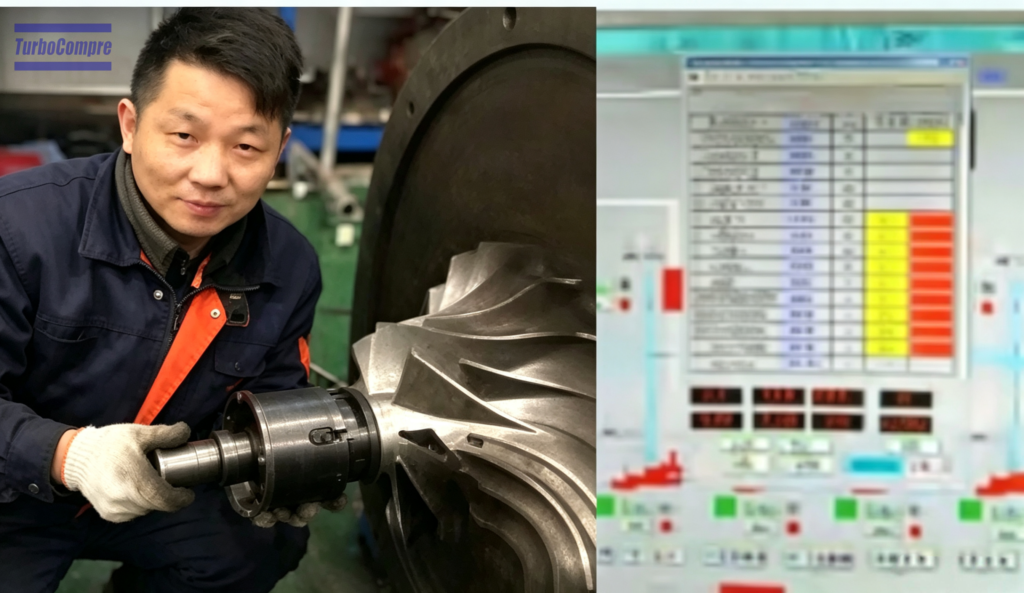
For example, abnormal vibration may not be caused by the bearing itself. It could be related to rotor balance, shaft alignment, gear condition, coupling, operating conditions, or other components.
2. Engineering Knowledge Goes Beyond Spare Parts
One of the biggest differences between a parts supplier and a compressor manufacturer is engineering capability.
A manufacturer understands why a component was designed in a particular way.
During an overhaul, engineers can evaluate:
Design → Manufacturing → Operation → Failure → Repair
This creates a more complete maintenance process.
For example, when inspecting an impeller, the evaluation should not stop at checking for visible damage. Engineers may also need to consider:
- Aerodynamic performance
- Material condition
- Surface damage
- Balance condition
- Dimensional tolerances
- Operating history
- Potential performance degradation
This is especially important for older imported compressors where original technical support, drawings, or spare parts may be difficult to obtain.

3. More Flexible for Imported Compressor Maintenance
Many industrial facilities operate compressors from international brands such as Atlas Copco, Ingersoll Rand, IHI, Sullair, or other manufacturers.
When these machines require maintenance, customers are often faced with several challenges:
- Long spare-part lead times
- High OEM service costs
- Limited local engineering support
- Discontinued models
- Difficult-to-source components
- Expensive emergency repairs
A compressor manufacturer with multi-brand service experience can provide another option.
Interestingly, even major compressor companies recognize the demand for multi-brand service. Atlas Copco, for example, promotes service for compressors regardless of manufacturer, model, or age.
This demonstrates an important market trend:
Customers increasingly care about technical capability—not simply the name on the compressor.
4. Better Control of Maintenance Costs
For an imported compressor, maintenance costs can come from more than the spare parts themselves.
The total cost may include:
Parts + Engineering + Labor + Transportation + Downtime + Emergency Service
A compressor manufacturer can often combine engineering, machining, parts manufacturing, balancing, assembly, and testing into one service process.
This can reduce unnecessary intermediate steps.
or example, depending on the compressor and repair scope, a manufacturer may be able to provide:
- Reverse engineering
- Replacement impellers
- Shaft repair
- Bearing replacement
- Seal replacement
- Gearbox inspection
- Dynamic balancing
- Rotor assembly
- Performance evaluation
- On-site installation support
The result is not simply a lower parts price—it can be a lower overall maintenance cost.

5. Faster Spare Parts and Repair Solutions
For critical industrial compressors, downtime can be much more expensive than the repair itself.
A delayed bearing or impeller can potentially keep an entire production line waiting.
A compressor manufacturer can combine spare-parts supply with technical evaluation.
Instead of asking:
“Which part should we replace?”
the engineering team can ask:
“What is the fastest reliable way to restore the compressor?”
Depending on the situation, the solution could involve:
- Original replacement parts
- Interchangeable components
- Reverse-engineered parts
- Repair of existing components
- Local manufacturing
- Complete rotor overhaul
- Compressor retrofit
This flexibility can be particularly valuable for older imported equipment.

6. Manufacturing Capability Creates an Important Advantage
A manufacturer that owns or controls its production capabilities can respond differently from a traditional service contractor.
For precision centrifugal compressor components, manufacturing capability may include:
- CNC machining
- 5-axis impeller machining
- Dynamic balancing
- Precision measurement
- Heat treatment
- Welding and repair
- Rotor assembly
- Factory testing
This allows engineers to move from inspection to actual manufacturing and repair without relying entirely on third-party suppliers.
For customers, that can mean fewer communication links and better control over quality and delivery.

7. Maintenance Can Become an Upgrade Opportunity
Maintenance does not always have to mean restoring the machine to its original condition.
For older compressors, an overhaul can also be an opportunity to improve performance.
Depending on the machine, possible improvements may include:
Aerodynamic Optimization
Improve impeller or diffuser design to better match the current operating conditions.
Sealing Improvements
Upgrade sealing components to reduce leakage and improve efficiency.
Cooling System Optimization
Improve cooler performance and reduce operating temperature.
Control System Upgrades
Modernize control and monitoring functions where appropriate.
Spare Parts Localization
Develop replacement components for difficult-to-source imported parts.

This approach transforms maintenance from a cost center into a potential performance improvement project.
8. TurboCompre: Manufacturer-Level Support for Imported Compressors
TurboCompre focuses on centrifugal compressor manufacturing, engineering, spare parts, maintenance, repair, and technical upgrades.
For customers operating imported compressors, TurboCompre can provide technical support covering both individual components and complete compressor systems.
Our capabilities can include:
- Imported centrifugal compressor inspection
- Compressor overhaul
- Impeller replacement
- Bearing and seal replacement
- Gearbox inspection
- Rotor dynamic balancing
- Spare parts manufacturing
- Reverse engineering
- Performance optimization
- Compressor retrofit
- On-site technical support
The goal is simple:
Keep a reliable compressor running longer—without automatically replacing the entire machine.
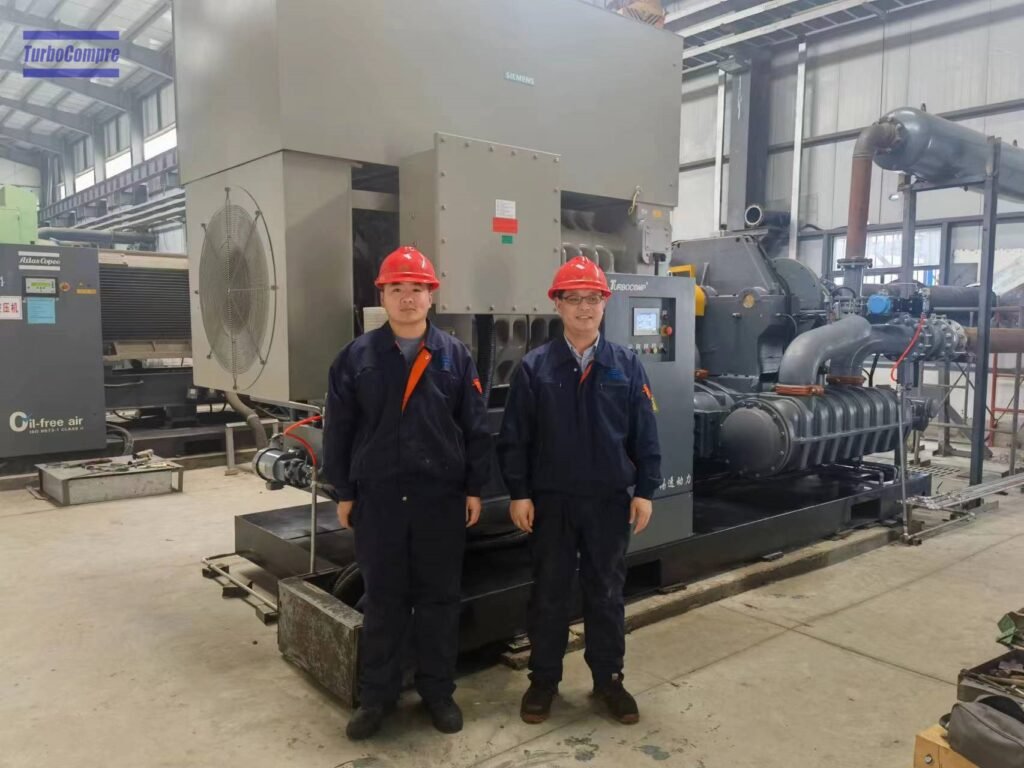
For customers considering maintenance or retrofit, the most useful starting point is usually the compressor’s model, operating parameters, maintenance history, and current problems.
9. Quality Control Still Matters
Choosing a manufacturer for maintenance does not mean choosing the cheapest repair.
Precision compressor components require controlled manufacturing and inspection processes.
A suitable supplier should be able to provide clear quality procedures covering:
- Material verification
- Dimensional inspection
- Machining accuracy
- Rotor balancing
- Assembly inspection
- Testing and documentation
Quality management is also an important consideration. ISO describes ISO 9001 as a framework for establishing, maintaining, and continually improving a quality management system.
For high-speed rotating equipment, traceability and inspection records can be just as important as the component itself.
10. When Should You Consider Manufacturer-Level Maintenance?
Manufacturer-level service can be especially valuable when:
The compressor is critical to production
A short shutdown can create significant production losses.
The original equipment is aging
Older models may have limited spare-part availability.
OEM maintenance costs are increasing
Alternative technical solutions may help control lifecycle costs.
The machine has recurring failures
Repeated component replacement without identifying the root cause can become expensive.
The compressor needs an upgrade
A retrofit may be more economical than complete replacement.
You need a long-term maintenance partner
A manufacturer can support not only one repair but also future spare parts, overhaul, and technical upgrades.

From Repairing Components to Managing Compressor Lifecycle
For imported centrifugal compressors, the best maintenance solution is not necessarily the one with the lowest individual part price.
It is the solution that combines engineering knowledge, manufacturing capability, spare-parts availability, repair experience, and long-term technical support.
That is the key advantage of working directly with a compressor manufacturer.
Instead of simply asking:
“Who can repair this compressor?”
a better question is:
“Who understands this compressor well enough to repair, improve, and support it for the next several years?”
For aging imported compressors, that difference can have a major impact on reliability, maintenance cost, energy efficiency, and equipment lifetime.