
Axial vs Centrifugal Compressor: Differences & Industrial Selection Guide

1. Core Working Principle Differences
Working Principle of Axial Compressor
Working Principle of Centrifugal Compressor

Centrifugal compressors are equipped with high single-stage pressure ratio, flexible load adaptability, and wide stable operation range. They can meet medium and high-pressure gas supply demands without excessive compression stages, becoming the mainstream and preferred equipment for modern air separation, chemical, pharmaceutical, and petrochemical industries.
2. Full Parameter Comparison: Axial vs Centrifugal Compressor
Comparison Dimension | Axial Compressor | |
|---|---|---|
Airflow Mode | Axial parallel flow | Radial centrifugal diffusion flow |
Flow Capacity | Ultra-large flow for extreme special units | Large flow, compatible with most industrial working conditions |
Single-stage Pressure Ratio | Low, requiring multi-stage superposition | High, excellent single-stage pressurization performance |
Load Adaptability | Poor, prone to surge under load fluctuation | Strong, wide adjustable flow range and stable operation |
Operating Efficiency | High efficiency only under full fixed load | Stable full-condition efficiency with lower comprehensive energy consumption |
Maintenance Difficulty | High, precise blade structure with complex overhaul | Low, simple structure, low failure rate and easy maintenance |
Applicable Pressure | Low and medium pressure, special large-flow scenarios | Medium and high pressure, professional process gas compression |
3. Core Performance Characteristics :Centrifugal VS Axial compressor
Axial Compressor: Characteristics for Niche Special Scenarios
- Ultra-large air delivery capacity, suitable for extreme high-flow fixed scenarios
- Ultra-high energy efficiency under 24-hour continuous full-load operation
- Smooth flow channel with low resistance loss, matching large power supporting equipment

Application Limitations of Axial Compressors
- Extremely narrow stable operation range; slight load fluctuation will cause surge failure
- Low single-stage pressure ratio, requiring dozens of blade stages, resulting in high manufacturing cost
- Precise blades are prone to dust accumulation and wear, leading to high annual operation and maintenance costs
- Not applicable to intermittent production and variable-load industrial scenarios
Centrifugal Compressor: Core Advantages for Universal Industrial Applications
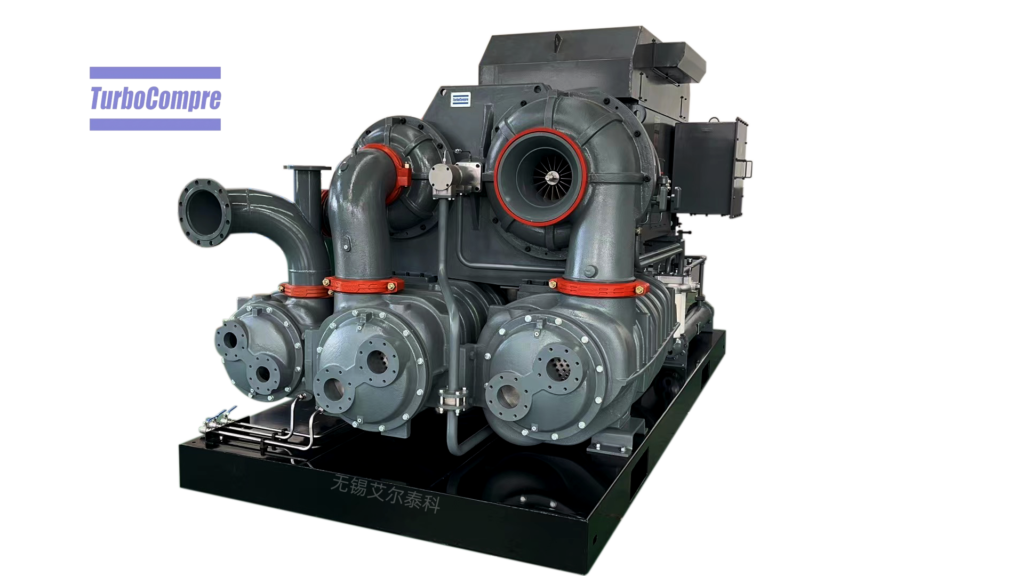
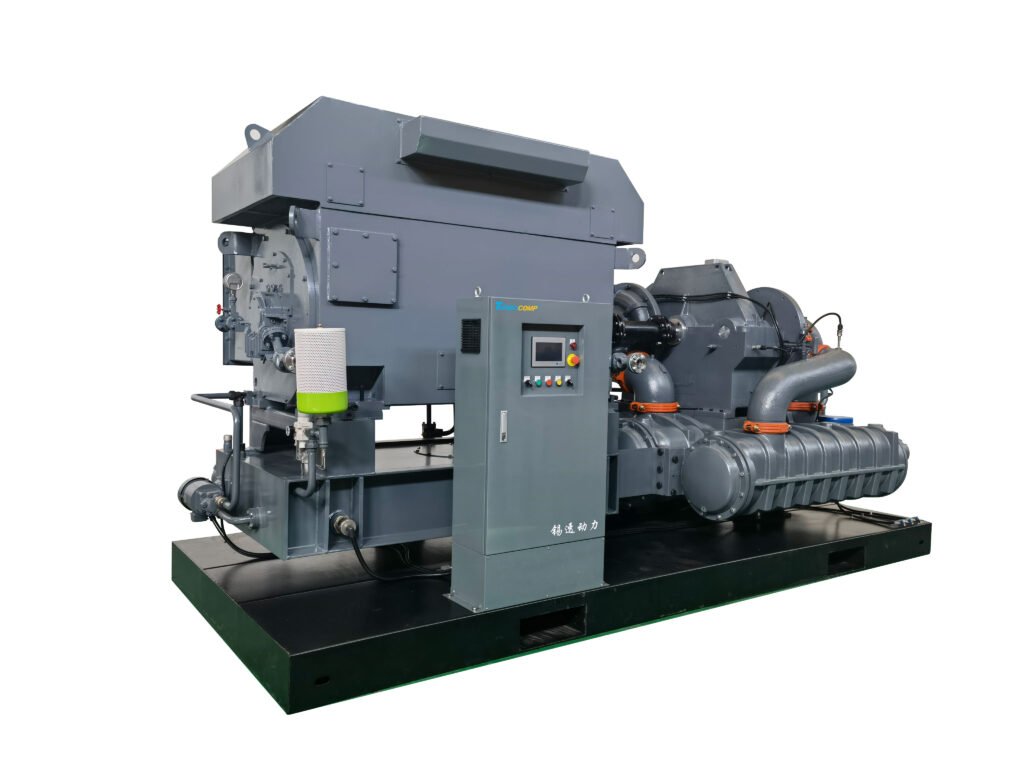
- High pressure ratio and fast pressurization speed, perfectly adapting to high-pressure process requirements of chemical and air separation industries
- Ultra-wide adjustable operation range, stably coping with fluctuating production loads and variable working conditions
- Pure oil-free compression process, fully meeting ISO 8573 Class 0 clean air standards for pharmaceutical and food industries
- Simplified and reliable mechanical structure, low failure rate, and ultra-long service life
- Support variable-frequency energy saving and intelligent anti-surge control, effectively reducing long-term comprehensive energy consumption
Scenario Complementarity Explanation
In a very small number of extreme ultra-large fixed-flow scenarios such as power generation and aviation testing, axial compressors show slight full-load efficiency advantages. However, these niche scenarios are completely isolated from conventional industrial production. For most industrial projects, centrifugal compressors adopt a comprehensive and optimized structural design, with far stronger practicability, compatibility, and operational stability than axial models.
4. Turbo Compre
Relying on the mature R&D and manufacturing system of Turbo Compre, we benchmark the craftsmanship of world-leading brands and develop a full range of centrifugal compressors in strict accordance with API and ISO 10439-1 industrial standards. Equipped with high-quality inlet guide vanes (IGV) and staged pressurization structures, the units deliver both anti-surge performance and long-term energy efficiency, suitable for complex working conditions in chemical, air separation and heavy industries across multiple regions.
